Asianart.com | Associations | Articles | Exhibitions | Galleries


Visitors' Forum

Asian Art  Forums - Detail List
Asian Art Forums

Message Listing by Date:
Message Index | Back | Post a New Message | Search | Private Mail | FAQ
Subject:Was Kaolin clay used in Zhou bronze cores???
Posted By: Doug Sat, Jun 09, 2012 IP: 66.68.166.146

Hello all.

This may be a really odd question and perhaps nobody knows the answer, but we'd certainly appreciate any insight.

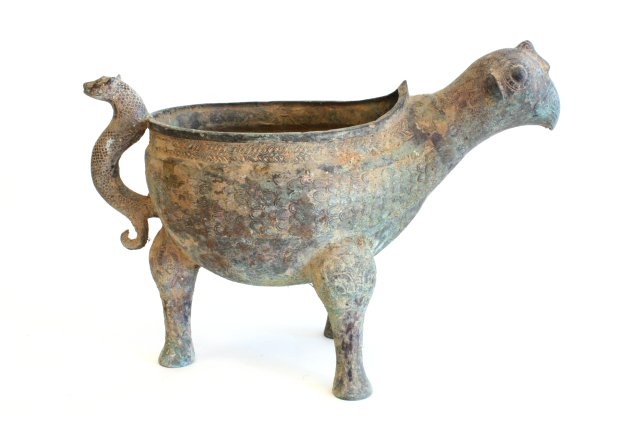
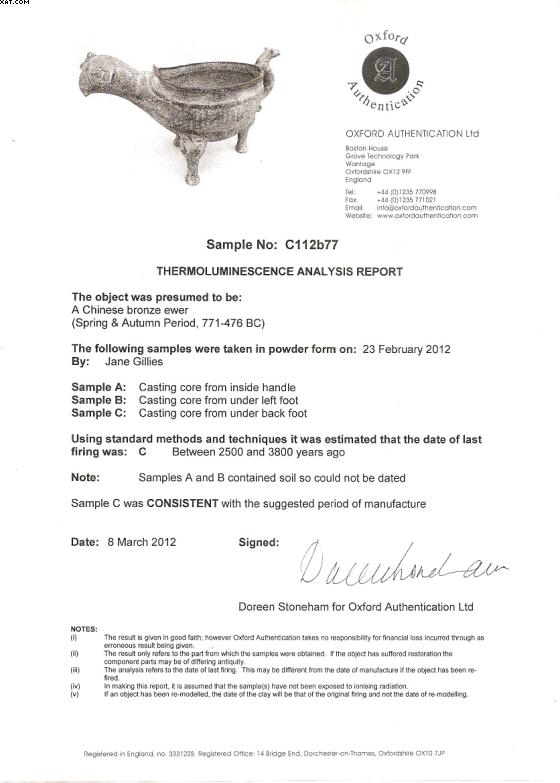
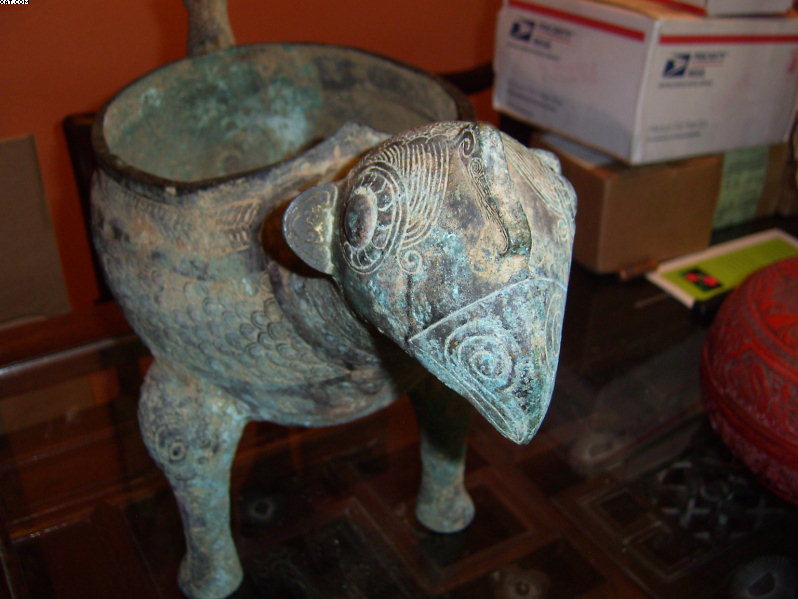
We have an archaic bronze ritual vessel - a YI in the shape of a bird with a pig dragon handle and taotie mask tripod legs. The piece passes all the tests in Tony Allen's excellent book (coherent non-reactive patina with malachite, azurite, etc, triangular vent or chaplet holes, clay cores in the legs and handle, air bubbles, crisp molding, bald patches, and so forth). It looked so good that we had an Oxford Authentication TL test done on the casting cores, and the results were good with a firing date from 2500 to 3800 years ago.

A very knowledgeable bronze collector questions the authenticity of the piece, and one of his arguments centers around the color of the clay cores in the legs. The clay in our piece is very white, and the expert collector says that all of the authentic pieces he has seen have terracotta red cores, so this must be a fake.

As a side note, another well known academic expert has stated that our piece looks authentic to him, and was probably Spring and Autumn period from Yan State in Northern China. White Kaolin clay was first discovered in northern China, and we wonder if this might be an explanation???

Does anyone have anything interesting to share?

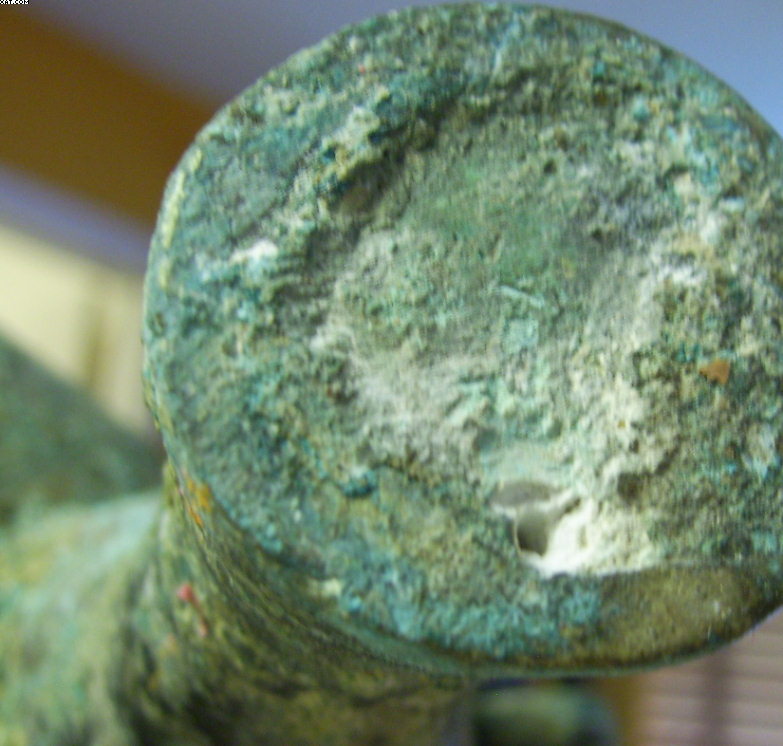
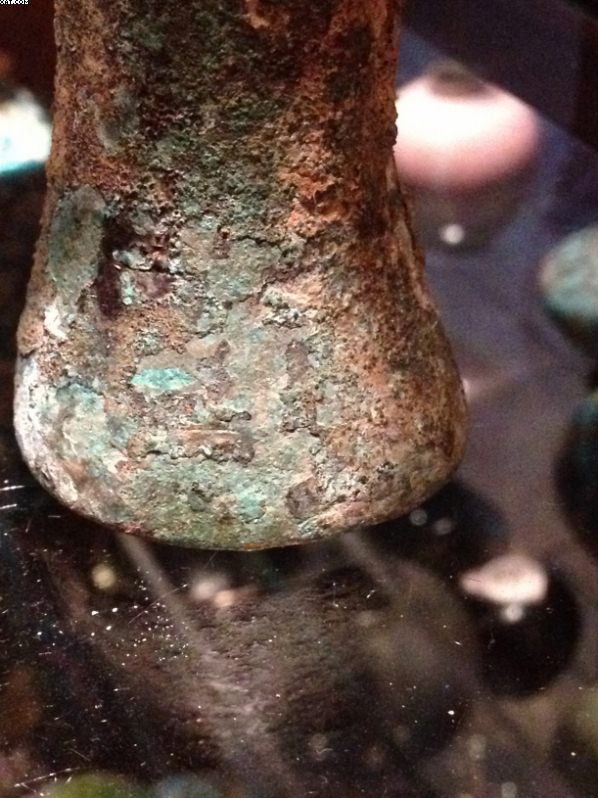
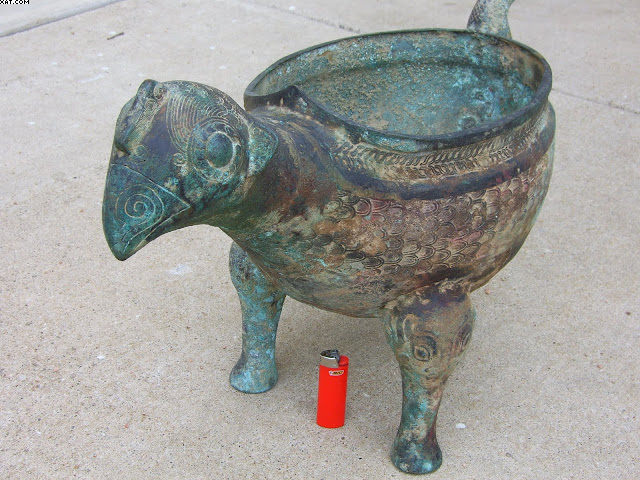
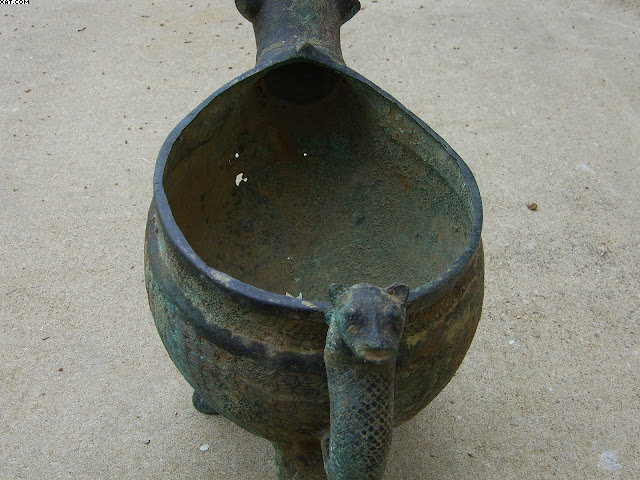
Here is a photo of the bottom of a leg showing where the TL sample was taken. For your interest, here is photo of the whole piece.

Thanks all.

Doug


Subject:Re: Was Kaolin clay used in Zhou bronze cores???
Posted By: YVES ROBERT Mon, Jun 11, 2012

I think that you'll have to ask one of the most famous expert in archaic bronze in the world, Christian Deydier in Paris:
galerie@deydier.com
Best regards

Subject:Re: Was Kaolin clay used in Zhou bronze cores???
Posted By: Doug Wed, Jun 13, 2012

Thank you for the useful suggestion Yves.

Doug

Subject:Re: Was Kaolin clay used in Zhou bronze cores???
Posted By: pierrevdw Fri, Jun 15, 2012

Hello,

Interesting piece.
I have never encounter white clay cores neither.
But that does not means it doesn't exist.

I can't tell for sure from your photo, but do I see some malachite on the clay core?
Because that is not a possible natural corrosion.
Maybe that green stuff on the white clay is something else?

Subject:Re: Was Kaolin clay used in Zhou bronze cores???
Posted By: Doug Sat, Jun 16, 2012

Hello Pierre.

Well this has certainly been interesting, and the story is still evolving. It turns out that Oxford Authentication made a mistake and mislabeled the sample areas on the TL certificate. It seems that the legs had UNFIRED material in them, and the antiquity readings were from the clay core in the handle which is a traditional terracotta color. I don't really know why the legs were filled with unfired material, nor do I know if this was done recently or in antiquity. With the level of counterfeiting going on in Chinese antiques, this is suspicious, and indicates that additional testing should be done. I plan to get Oxford University to run a series of metallurgical tests on bronze samples from the feet, handle and body.
This should verify that the bronze alloy matches ancient samples and doesn't have anything unusual like zinc or silicon in it. The tests will also verify intra-granular corrosion which apparently cannot be faked.

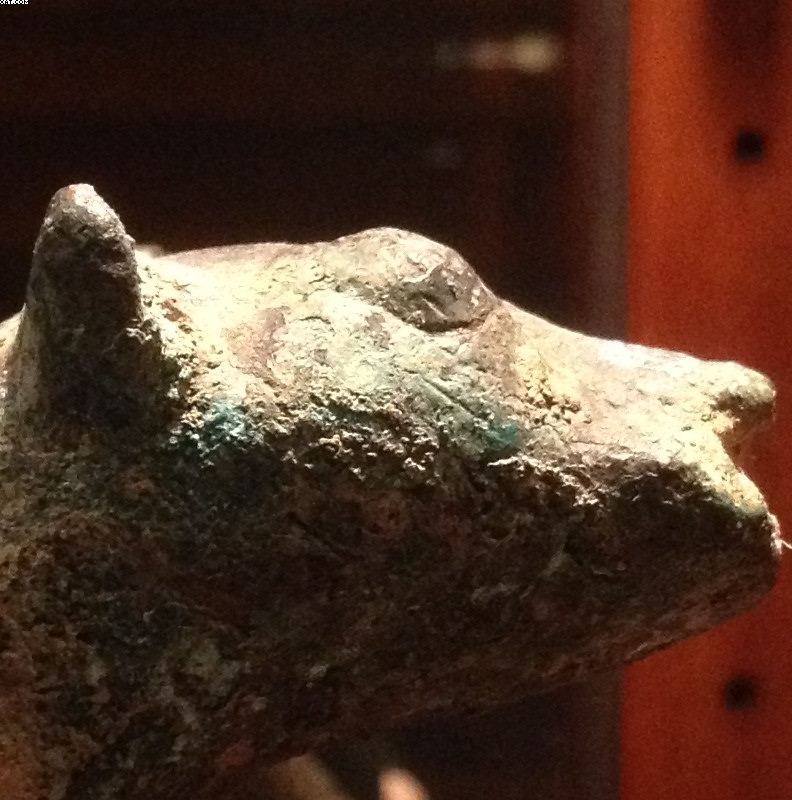
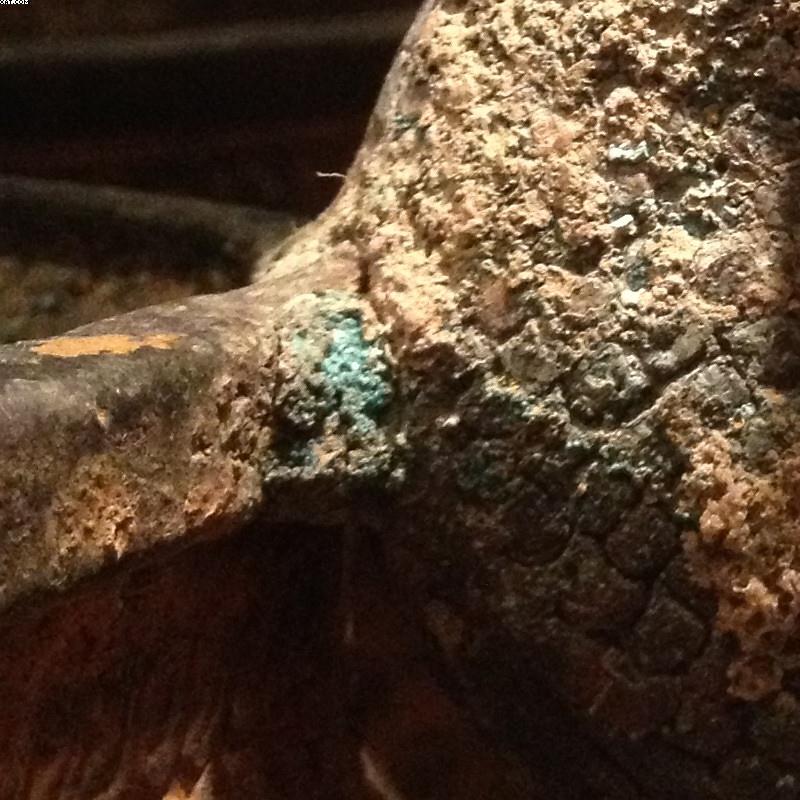
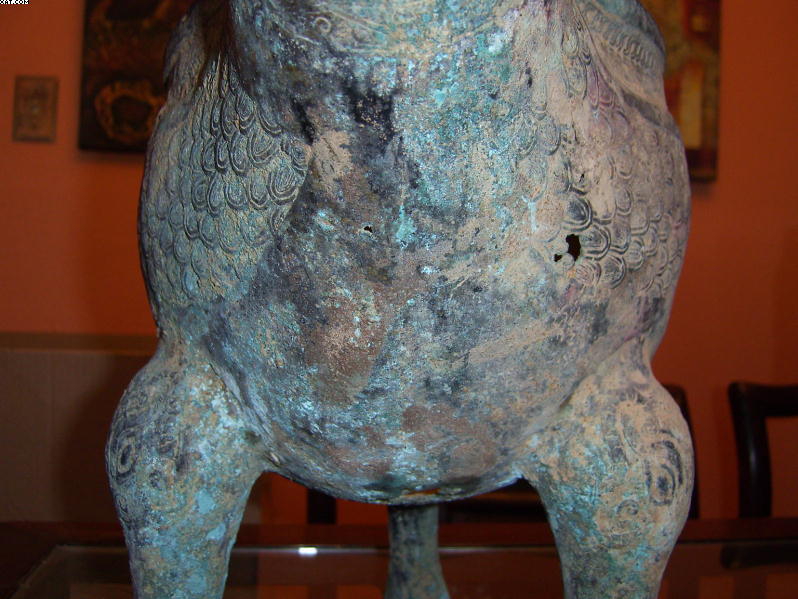
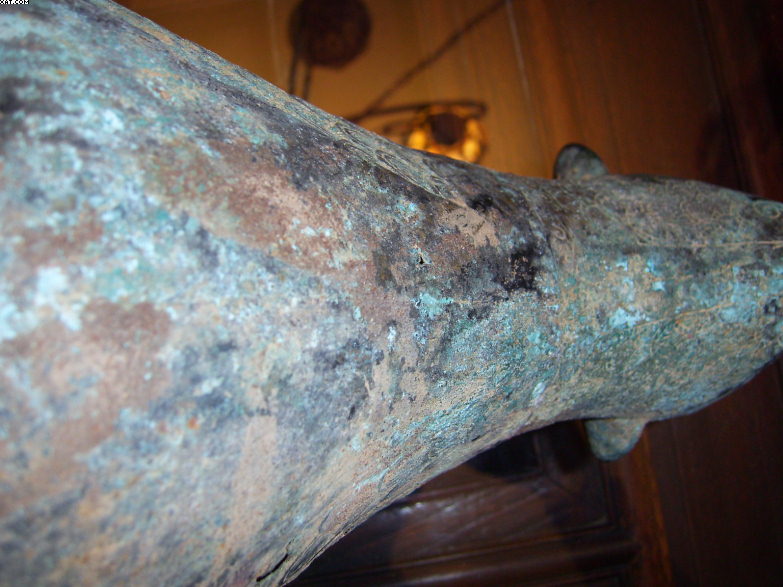
I believe that the green color on the bottom of the leg material is just dust from corrosion products that were cleaned off the bronze post excavation. I have included a couple of close-up photos showing the patina which I believe is authentic.

Cheers

Doug


Subject:Re: Was Kaolin clay used in Zhou bronze cores???
Posted By: YVES ROBERT Mon, Jun 18, 2012

Can you post the Oxford T.L rapport?

Subject:Re: Was Kaolin clay used in Zhou bronze cores???
Posted By: pierrevdw Mon, Jun 18, 2012

Hi,

According to your close up photos, the corrosion seems natural.

The legs were probably filled by the earth/sand present in the tomb. This pieces was buried for thousands of years. It is normal that cavities are filled up by all sorts of materials.

I do not think Oxford Authentication does anything else than TL testing. Therefore it should not be the right place to have a metal analysis made.
U can try www.brussels-art-labo.com

Good luck.

Subject:Re: Was Kaolin clay used in Zhou bronze cores???
Posted By: adam Tue, Jun 19, 2012

I recently saw a western zhou bronze that had some recent(ish) restoration to a foot done in a white kaolin material (however don't know if it had been fired or not)

Subject:Re: Was Kaolin clay used in Zhou bronze cores???
Posted By: Doug Tue, Jun 19, 2012

Thanks for the reply Yves and Pierre.

Yves, here is the Oxford Authentication certificate. A new one is being prepared identifying the handle core as the sample (A) that actually tested to 2500-3800 years old.

Pierre, I am planning to get the bronze metallurgical testing done at Oxford University (Dr. Peter Northover) not at Oxford Authentication which is a private company headed by Doreen Stoneham. Doreen ran the TL lab at Oxford University for many years and created Oxford Authentication Limited as a commercial entity to do TL testing only. Dr. Northover is apparently one of the best ancient bronze metallurgy experts in the world, and I am looking forward to his opinion.

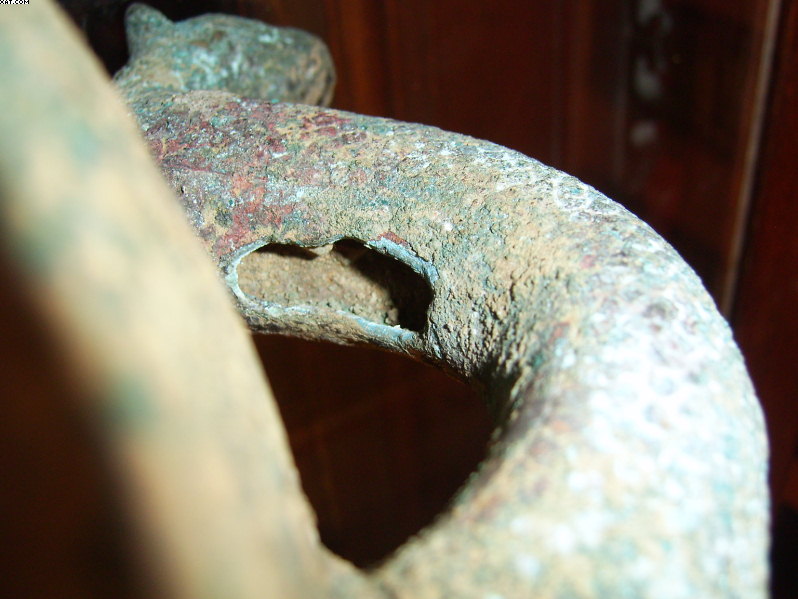
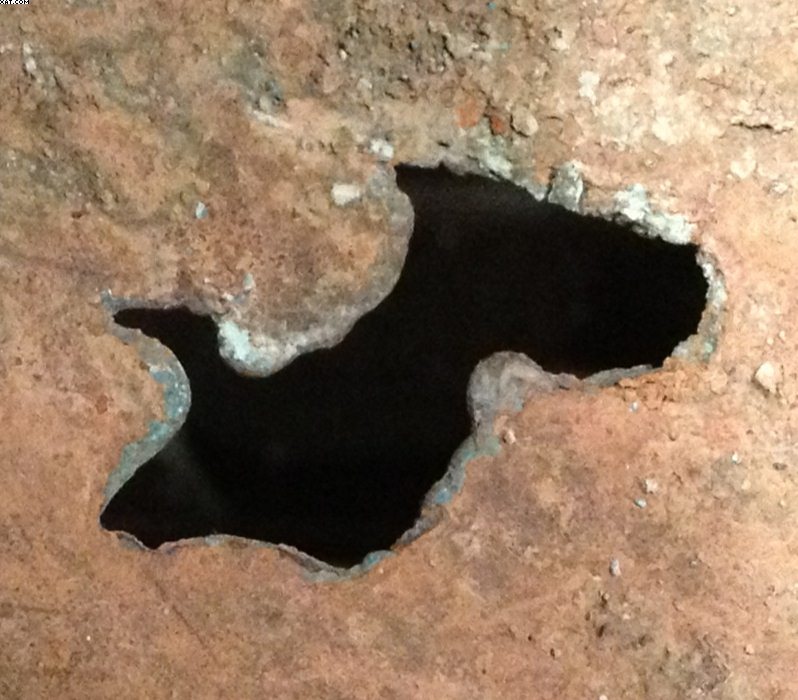
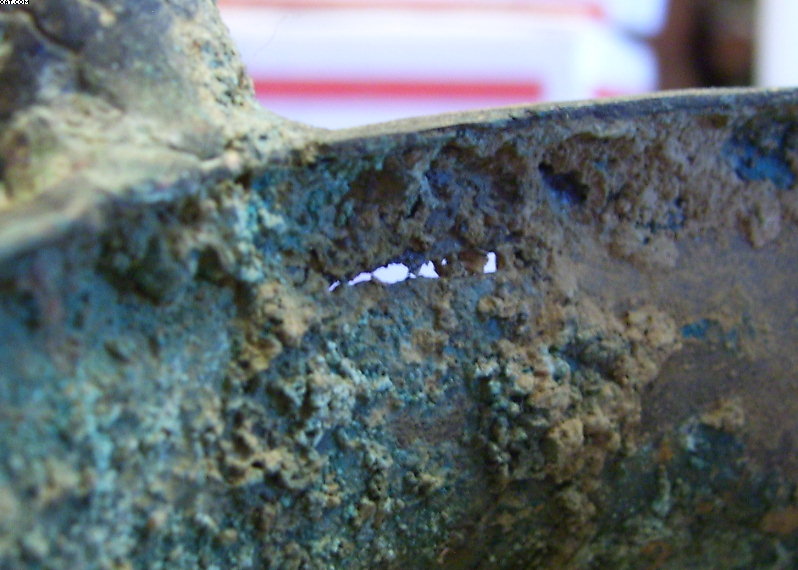
For your interest, I have also attached a few more photos. One of the photos shows a small hole in the bottom of the vessel where the bronze is thinly cast. You can see the bronze has been completely mineralized at the edges of the hole. I believe the hole to be the result of corrosion, and not something cast to deceive.

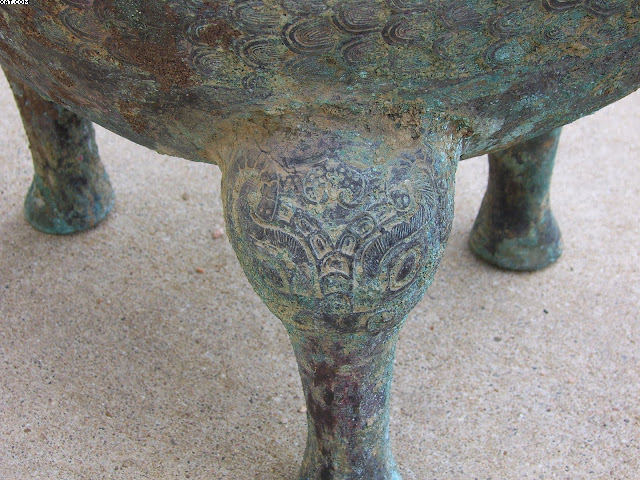
The other photo is the bottom of one of the tripod legs. To me, the appearance of the patina seems consistent with that on the legs of authentic examples, but because of the unfired material in the legs, they are automatically suspect.

If Tony Allen is reading this thread, I'd love to get his comments.

Thanks all.

Doug


Thanks again for your assistance.

Doug


Subject:Re: Was Kaolin clay used in Zhou bronze cores???
Posted By: Anthony J Allen Wed, Jun 20, 2012

Hi Doug,
I hesitate to cast an opinion as I am confused by the colors shown in your photos.
The main photo shows a leaden grey color while the close up of the leg is a distinct malachite green.
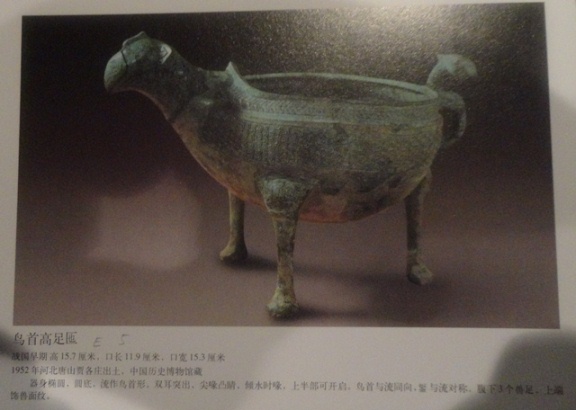
I trolled through almost 500 pages of photos from the most comprehensive Chinese text on the subject, and the attached photo is the closest I could get.
The picture of the head of the bird and the presence of large quantities of dirt suggest to me the possibility of extensive restoration. If you can xray the piece you might settle this point. And if there is azurite (blue) corrosion in the inside, chances are at least some of the vessel is genuine.
I have been fooled in the past by composite vessels, made from both old and new parts, and the unfired kaolin suggest the possibility here.

Sorry I cannot be more positive.
Regards
Tony


Subject:Re: Was Kaolin clay used in Zhou bronze cores???
Posted By: Doug Thu, Jun 21, 2012

Thank you very much Tony, as your expertise is certainly appreciated. I have not yet x-rayed the piece, but I plan to take it over to Texas A&M University Conservation Sciences Research Laboratory in a few weeks.

Your observation on this piece potentially being heavily restored or fabricated from new / old parts is certainly with merit, and hopefully a radiological exam will tell the tale. I will post the results here.

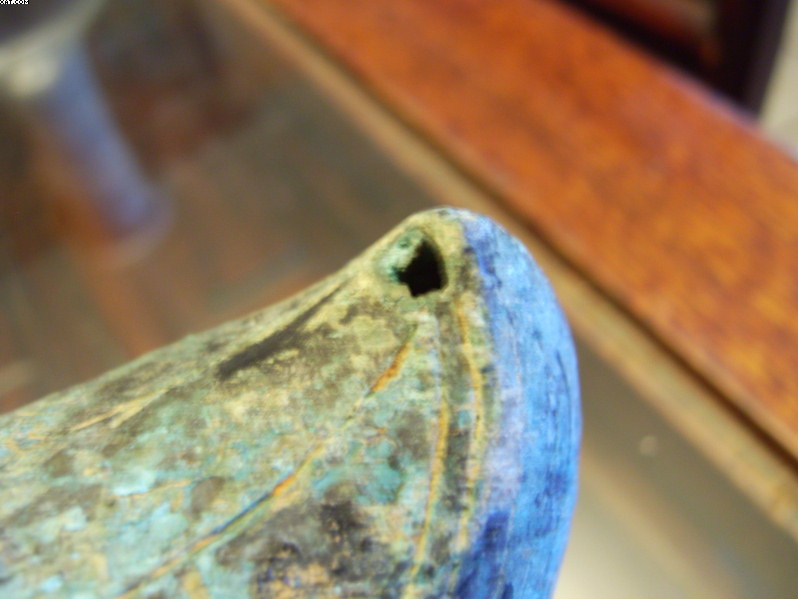
As for the color, the first photo was from the auctioneer and the colors are washed out through use of a flash. The piece shows heavy malachite green encrustation and quite a bit of sand. The patina does not react to water, alcohol, mineral spirits, acetone or natural turpentine. Nor does it fluoresce under UV, nor does it smoke or leave any kind of odor when heated with a butane lighter. Here are a few more photos showing the true color more accurately. Notice a couple of triangular shaped vent holes on the neck, as well as a vertical ridge indicating possible piece molding.

I had also identified the same museum piece as you have noted in your posting. It is a Spring and Autumn ding currently in the Chinese National Museum in Beijing. There are many similarities to my bronze, but a few noteworthy differences. My piece is huge compared to the museum ding - twice the height (36 CM) twice the width (24 CM) and twice the length (53 CM). My piece weighs a hefty 7.2 Kilos.

Another difference is the type of vessel. Mine is a very large Yi (water vessel) with an opening under the beak, and the museum example is a tripod ding with a hinged beak. My vessel has taotie mask legs, and the pattern of the mask is almost identical to several Spring and Autumn vessels in the Shanghai museum.

I guess that the next step will be an x-ray and then a metallurgical analysis. I will update this thread as I get more information.

Thanks so much for your kind assistance.

Doug


Subject:Re: Was Kaolin clay used in Zhou bronze cores???
Posted By: Anthony J Allen Thu, Jun 21, 2012

Hi Doug,
I forgot to ask. Where did you obtain it and how much did it cost?
The uncleaned dirt in my experience usually indicates restoration or fakery.
Having said that, it would not be unusual to find a vessel like this to have been heavily restored.
Regards
Tony

Subject:Re: Was Kaolin clay used in Zhou bronze cores???
Posted By: pierrevdw Sat, Jun 23, 2012

Hi Doug,

Now you got me very confused because of the size of your Yi.
I have one from Spring Autumn too and it is a very practical object to handle and pour water or alcohol. It should be able to be handled with one hand, one finger in the tail to keep the balance.
But yours is so big, it is kind of unpractical.

Just a observation...
Yes , please post some analysis+ x ray results when you have some.
I'm really curious.
Thanks,
Pierre.

Subject:Re: Was Kaolin clay used in Zhou bronze cores???
Posted By: Doug Sun, Jun 24, 2012

Hello Tony and Pierre.

Tony, this piece was purchased from an obscure New Jersey based auctioneer in the fall of 2011. The auction had mostly typical American antique items (furniture, etc), but also a small number of higher end Chinese items that apparently came from a New York estate. I live in Texas, therefore I bid remotely using liveauctioneers.com. I collect Chinese carved lacquer, and I originally was on the live auction application waiting for a cinnabar lacquer piece to come up, when I spotted this bronze just by chance. The photos were horrible, but there was something about the form of the vessel that grabbed my attention. I took a chance and bid for it, and won it against just one other internet bidder for a very modest $450.00.

The interesting thing here is that there were a small quantity of really nice and seemingly authentic Chinese pieces presumably from the same estate. I knew the Cinnabar box I wanted was 19th C and authentic, and believe it or not a full Han dynasty (I assume) Jade burial suit was also sold to a solitary on-site bidder for $145,000. Nobody is going to pay $145K for a jade burial suit without performing due diligence and having some confidence that the piece is authentic. So if the jade suit was authentic, what were that chances that my bronze was real? At least 50/50 in my book.

The bits of sand still encrusted over the patina certainly is something to investigate and presumably the x-rays will be of great value here.

Pierre, yes my Yi is enormous compared to most museum and high end auction pieces. You would need two hands to pour from my vessel, and when it is full of water it must weigh 15 kilos or more. Why is it so large? I have no idea. Professor Gary Todd is well known for photographing and cataloging ancient Chinese bronzes, and his opinion is that my vessel may well be unique - a one off piece unlike any other. (Assuming that it is authentic of course). If you take a close look at the decoration of my piece and compare it to the National Museum Yi that Tony identified, you will quickly see that mine is far more detailed and refined casting. Maybe that's because the large size allows room for more sophisticated decoration - I'm not sure why. If my piece was created as a copy of the National Museum Yi, why would it be so much larger, and why would the decoration be more elaborate than the original? Gary Todd believes that my piece may originally have come from Yan State where the similar museum Yi was excavated in 1923. Were the two pieces contemporaneous, or is mine just a modern copy? Look at the pig dragon handle. Have you ever seen any dragon depiction in bronze that is similar? It looks like a neolithic jade form. And how did the ancient TL tested core material get inside the handle? If an ancient handle was found and someone built a vessel around it, they certainly paid a lot of close attention to the design motifs on the museum yi. And the form of the taotie mask is not random - it is a coiled snake design with inverted ruyi that has been found on only a couple of obscure Spring and Autumn pieces in the Shanghai museum. Someone went to a LOT of trouble to make sure the taotie mask design perfectly fit the Spring and Autumn style of the overall vessel.

The auction company will not tell me who the previous owner of the piece was, so I have no provenance. That is actually a huge problem for me. No large auction company would ever accept this piece without provenance as there is no proof that it was acquired in compliance with UNESCO regulations. Even if the Oxford University metallurgical testing clearly establishes that it was cast from the right sort of bronze material, this (plus the TL certificate) is still not sufficient to overcome the lack of provenance.

Thanks again, and I will update the thread when I have additional information.

Warmest regards,

Doug


Subject:Re: Was Kaolin clay used in Zhou bronze cores???
Posted By: Anthony J Allen Tue, Jun 26, 2012

Hi Doug,
While I remain confused by the various colors you have managed to show, particularly of the head, I think the price paid is giving a good indication of its authenticity (or lack of). A huge vessel of this form, if genuine, is going to sell for thousands if not tens of thousands of dollars. Who in their right mind is going to leave it encrusted in dirt, unless they are concealing restoration or fakery?

The dirt filled parallel lines above the eyes (eyebrows) are also out of place with the other decoration.

Had I been offered this piece, I regret I would have rejected it. At best I think it may be a composite piece of old and new parts.

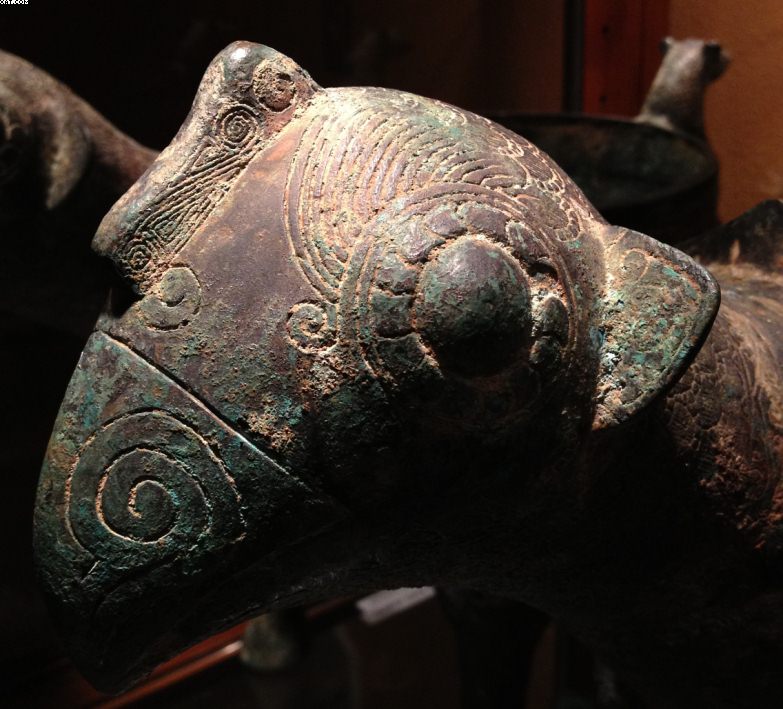
But I am looking at photos of irregular quality and I leave it to you to provide xray or other evidence that I am wrong. The encrusted head in photo 3 looks nothing like the head in photo 11?

Regards
Tony

ps A jade suit turned up in an auction in Auckland about 8 weeks ago, selling as I recall for less than USD$500.

Subject:Re: Was Kaolin clay used in Zhou bronze cores???
Posted By: Doug Thu, Jun 28, 2012

Hello Tony.

I certainly respect your opinion Tony, as you wrote the book on authenticating ancient Chinese bronzes. Believe me, I've been through your great book a dozen times cover to cover.

You are probably right, and perhaps this piece is a fake or pastiche. The additional testing will assist.

Just to clear up a few things, the head in photo 3 is a greatly enlarged head from the dragon handle in the back - not the bird head shown in photo 11. In fact, several of the photos show high magnification, and the actual crustiness of the patina is not as pronounced in person.

With regards to the design elements on the head - the "eyebrows", I'm not sure what seems out of place. Here are two photos. The first photo shows the head of the National Museum of China piece that you found. The second photo shows the head on my piece. Other than a slight beak variation, what's the difference? I don't see anything on my piece that seems out of character for the Spring and Autumn period.

Cheers

Doug


Subject:Re: Was Kaolin clay used in Zhou bronze cores???
Posted By: Doug Wed, Jun 27, 2012

Capturing the true colors on this vessel is difficult. It varies so much from lighting and type of camera. Here are a few more photos that were taken in natural light, and these seem to match what my eye sees. Note the number of small pinholes in the body visible on one of the photos. I hope to prove that the body thickness varies by x-rays, but overall I'm amazed at just how thin the body is.

Doug


Cheers

Doug


Subject:Re: Was Kaolin clay used in Zhou bronze cores???
Posted By: Doug Thu, Aug 09, 2012

UPDATE

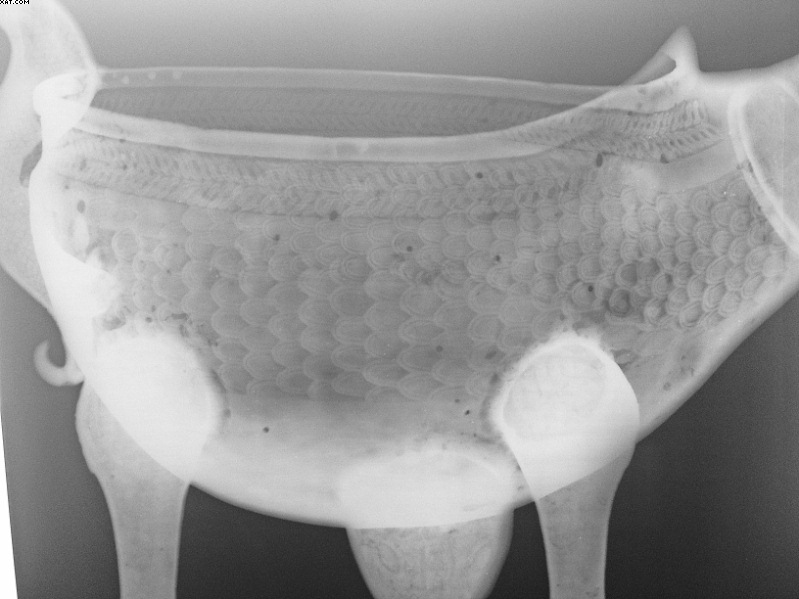
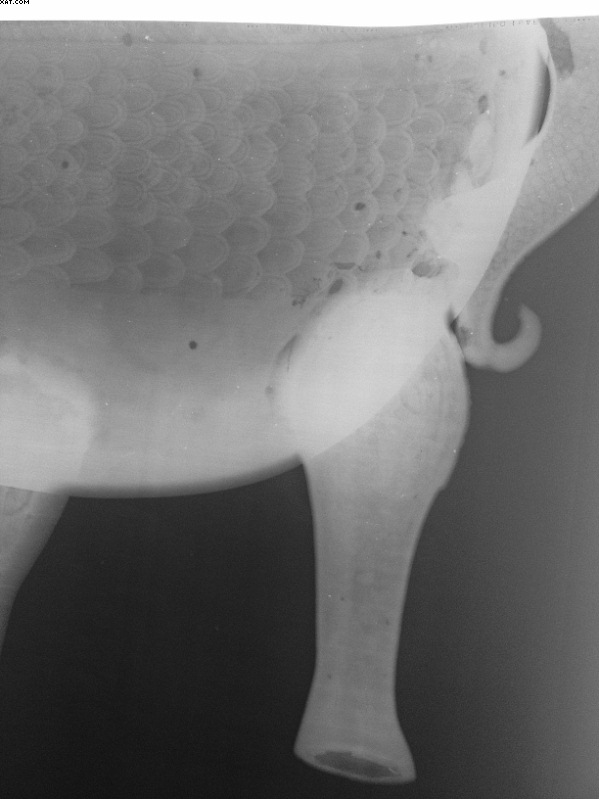
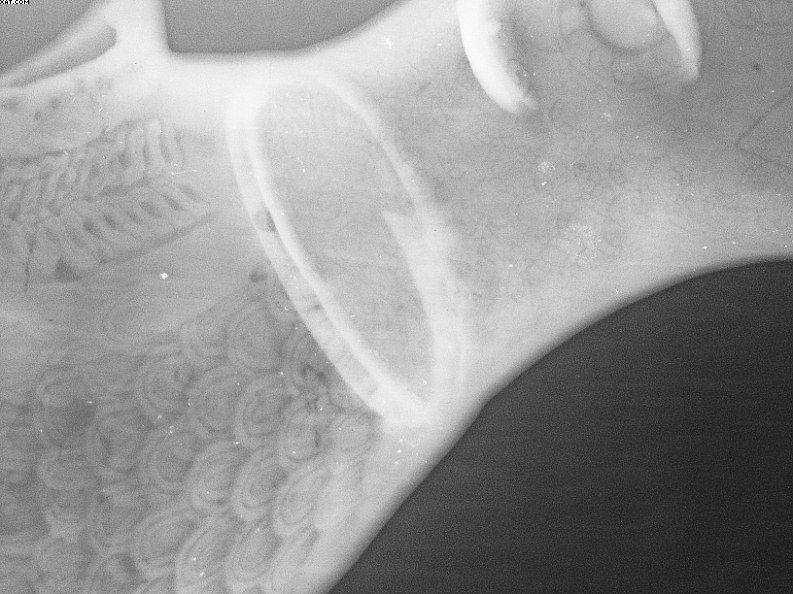
I took the piece to Texas A&M University Research Lab, and it was extensively X-rayed.

The results are as follows. The piece is whole (unrestored). It is not a pastiche. It shows uneven wall thickness. It shows many air bubbles. The braised areas also show many air bubbles - a sign of old style welding. This piece passes all the tests in Tony's book.

Cheers

Doug


Subject:Re: Was Kaolin clay used in Zhou bronze cores???
Posted By: rat Tue, Aug 14, 2012

interesting Doug, thanks for posting, I know you've been working on this piece for a while now, hope it goes your way.

Subject:Re: Was Kaolin clay used in Zhou bronze cores???
Posted By: Doug Mon, Oct 22, 2012

It's a FAKE.

Hello all. To make a long story short, on the advice of Dr. Peter Northover, the head of Material Sciences at Oxford University, we took the piece to a local metallurgy test group and subjected it to a handheld XRF analyzer. The piece was examined in several spots - body, legs, handle, head - and the results were disappointing and similar. Copper - 63%, Zinc - 33%, Iron 1%, Nickel .5%, traces of Cobalt. In other words, the piece is not bronze but is BRASS - high Zinc brass to boot. The Chinese were not capable of smelting Zinc to high concentrations like this until at least the MING DYNASTY. The fact that it had been seriously corroded and made to look like it was excavated was a complete deception. The piece is apparently newly made and has had the original cores replaced with old material.

So after a YEAR of exhaustive testing and literally thousands of dollars down the drain, the piece proves to be a well executed fake.

That's it for Chinese Bronzes. No more. We are sticking to lacquer and preferably Japanese lacquer. We've had enough of this deceit.

If fraud is this bad with Bronzes, one can only guess how bad it is with porcelain.

Warmest regards,

Moyra and Doug

Subject:Re: Was Kaolin clay used in Zhou bronze cores???
Posted By: Yves Robert Wed, Oct 24, 2012

I am sincerely sorry for you. It's really important to ask serious and well known expert's opinion before buying chinese pieces.
Best regards

Subject:Re: Was Kaolin clay used in Zhou bronze cores???
Posted By: pierrevdw Wed, Oct 24, 2012

Hi Doug,
Sorry to hear that.

From one of your previous post:
"Even if the Oxford University metallurgical testing clearly establishes that it was cast from the right sort of bronze material, this (plus the TL certificate)..."
So who can we trust?

Sad + amazing.

Subject:Re: Was Kaolin clay used in Zhou bronze cores???
Posted By: YVES ROBERT Thu, Oct 25, 2012

How can we explain the OXFORD T.L that was OK for one sample?
May be , it would be good to ask Doreen Stoneham.

Subject:Re: Was Kaolin clay used in Zhou bronze cores???
Posted By: Doug Sun, Oct 28, 2012

Hi Yves and Pierre.

Thanks for the kind words.

Dr Northover postulated that the original casting cores were all removed and replaced with old clay material - knowing that collectors and dealers often take a TL test at face value and stop authenticating once they have positive results.

Do you have a 3,000 year old clay carving if the piece was recently carved from a 3,000 year old brick? Unfortunately not. The fact that the clay cores in the legs were white and did not test old was suspicious to us and other people. The clay core in the handle was not white unfired material and did indeed test old. But we x-rayed the piece and the handle does not appear to be some old handle brazed to a new body. And besides that, the handle XRF tested positive for large amounts of zinc, so we know it cannot be old.

Yes, we could have kept our mouths shut and sold this piece "as is" with the TL certificate to some unsuspecting buyer. But that would have been very dishonest. We think it is important to warn collectors that bronze fakes are so good that the level of authentication needed to clear them is tremendous. It will be a long time, if ever, before we buy another archaic Chinese bronze.


Doug and Moyra


Subject:Re: Was Kaolin clay used in Zhou bronze cores???
Posted By: LEE Sun, Oct 28, 2012

Hi Doug, it is indeed sad that there are so many pieces of these fakes that are collected from places like Hong Kong and Guandong that are sitting in collections by collectors that have paid a premium for them, trusting the color and granular nature of the patina, with all the right features even the red under the green and etc. All these features can be faked with the appropriate chemicals and technique. Even you can add some old fabric and roots to the patina. Such fake bronzes have been around for at least 50 years.There are also numerous number of fake pottery horses and wood artifacts that are very cleverly manufactured even the expert that view them on the internet will be bluffed. Ceramics are also widely faked even mingyao republic and guangxu period ones that are hardly worth much are also faked. There are also fake bamboo and zitan brush pots and ivory brush pots that are carved so well you have to inspect it for a week before you realize there is something wrong. Later bronzes like incense censers are also widely faked. White hetian jade that are carved to very high standards from cheaper white Russian nephrite jade are also very hard to tell apart these days. Just about any form of collectable are faked to high standards these days.


Asianart.com | Associations | Articles | Exhibitions | Galleries |