Asianart.com | Associations | Articles | Exhibitions | Galleries


Visitors' Forum

Asian Art  Forums - Detail List
Asian Art Forums

Message Listing by Date:
Message Index | Back | Post a New Message | Search | Private Mail | FAQ
Subject:Chinese Green Vase
Posted By: Eric Sat, Sep 08, 2012 IP: 72.130.137.231

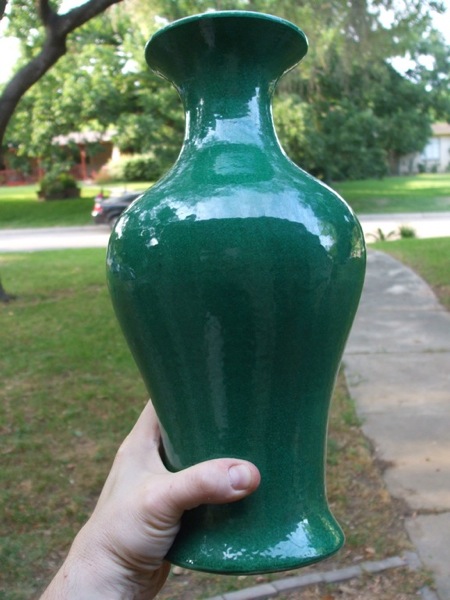
This vase is 13.5 inches tall, is very crazed and has a very thick white underglaze that gives it a wavy feel. I think it is an early form of a Mei Ping vase. I also think it may date from the Ming dynasty. Thanks for your input.


Subject:Re: Chinese Green Vase
Posted By: Bill H Mon, Sep 10, 2012

The vase's shape was being made earlier in the Qing dynasty but enjoyed a resurgence around the Xuantong reign (1909-11) and stayed in production during the Republic period. Some catalogs call it a 'long-neck vase' but it's basically a baluster form with elongated trumpet neck. While inviting correction, I'm of the opinion that its unctuous green glaze post-dates the Ming dynasty and may belong to the apple-toned and other greens that were innovated during the Kangxi and Yongzheng eras. Considering overall conditiion, I'd be inclined to date this one to around the first quarter of the 20th century.

Best regards,

Bill H.

Subject:Re: Chinese Green Vase
Posted By: Eric Tue, Sep 11, 2012

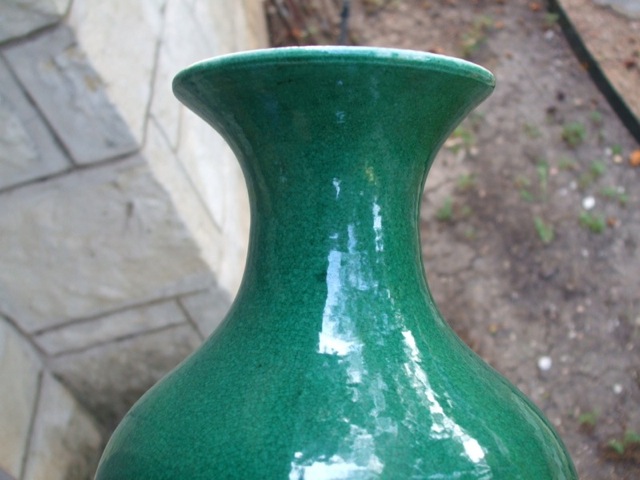
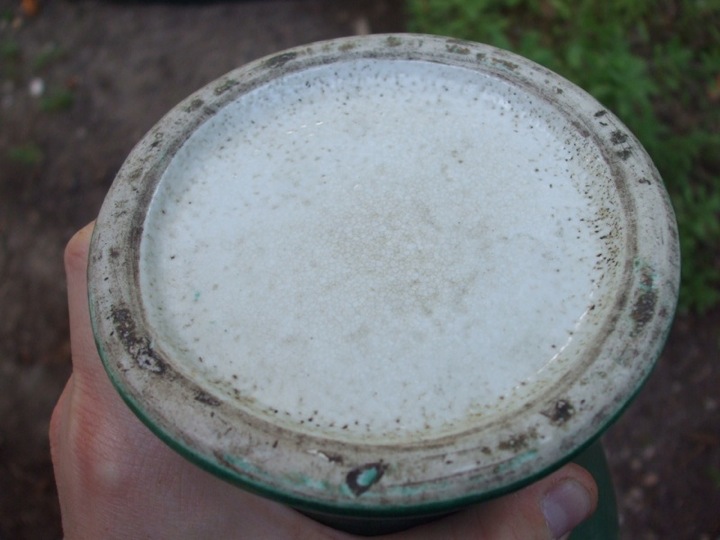
The rings created during it's making are very obvious at the top where the green is thinner. It does not sit flat. It is about a millimeter off and rocks back back and forth. The bottom rim is missing a piece where it was removed from the kiln. I've read that the underglaze during the Ming dynasty was unusually thick like it is on this one. If this doesn't change your opinion, I'd like a reference to take it somewhere for an on site exam. Thanks Bill.

Subject:Re: Chinese Green Vase
Posted By: Anthony J Allen Tue, Sep 11, 2012

Hi Eric,
Sorry to also be the bearer of bad tidings, but this is nothing like a meiping vase, which has a narrow mouth at the top.
There are to my eyes other problems with your interpretation.
1. This green color is not one I associate from the Ming dynasty.

2. It is way too shiny for porcelain of the Ming period.

3. The grey glaze of the underside is more reminiscent of the Daoguang period (1820 to 1850).

4. But the turned back greyish glaze indicates a later date.

5. As does the "powdery" foot rim, which as I have said before, indicates modern levigation of the paste.

6. Then ask yourself how the crud got up under the underside from sitting on a table or shelf, the answer being it was deliberately applied.

And I think you will come to the same conclusion I reached; this has little age, probably late 20th century.

I think Bill was a little generous in his dating.
Regards
Tony

Subject:Re: Chinese Green Vase
Posted By: JLim Wed, Sep 12, 2012

Dear Tony

I am interested in your comments on the footrim.

By “powdery”, do you mean that the levigation of the foot gives it that “plaster of Paris” excessive smoothness?

By “crud”, do you mean that the darkish stuff on the raw footrim was deliberately applied? How can you discern the powderiness under the “crud”?

Rgds

JLim

Subject:Re: Chinese Green Vase
Posted By: Anthony J Allen Thu, Sep 13, 2012

Plaster of Paris is a good description. Check out old vases and you will find the grains can be felt or seen. I use the word "powdery" as the unglazed foot is very smoothe.
Crud is the dirt on the underside. Applied to make the piece look age, it could be soil, engine oil, muck from the sewers etc. Whatever, it doesn't naturally remain on the high points, and in this case looks like it may have evaporated.
Regards
Tony


Asianart.com | Associations | Articles | Exhibitions | Galleries |