Asianart.com | Associations | Articles | Exhibitions | Galleries


Visitors' Forum

Asian Art  Forums - Detail List
Asian Art Forums

Message Listing by Date:
Message Index | Back | Post a New Message | Search | Private Mail | FAQ
Subject:Swatow Bowl
Posted By: Michael Sat, Jun 04, 2005

Dear Sirs,

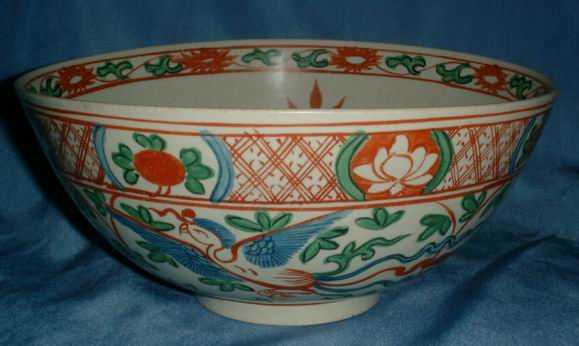
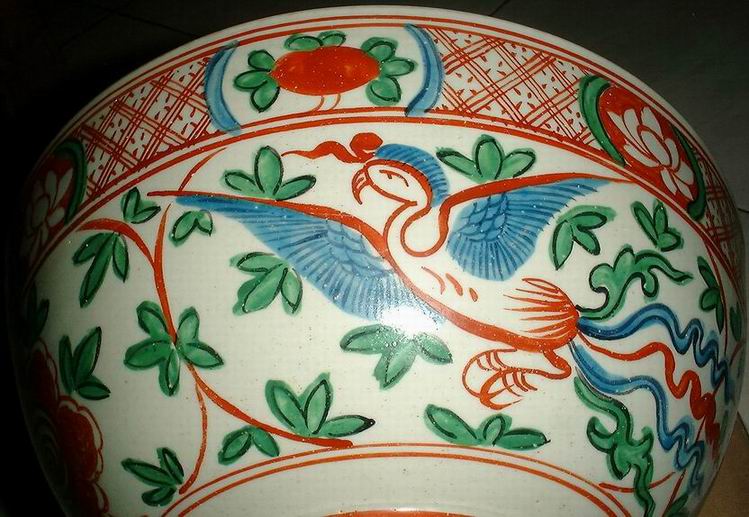
This one is one of my great grandfather's collection preserved in the cupboard before my father was born. My father, in Indonesia, called it "Swatow Bowl". Please suggest how and what this bowl.

Regards,
Michael


Subject:Re: Swatow Bowl
Posted By: PyroManiac Mon, Jun 06, 2005

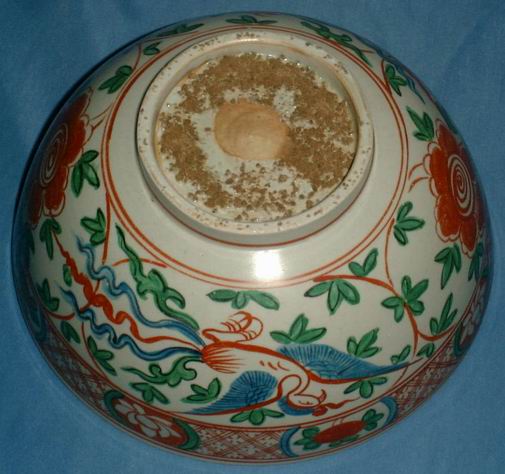
Swatow wares are generally considered to fall into a catagory of late Ming to Transitional period wares made in Fujian province. They are all utilitarian objects. Quickly made, painted with a free hand and widely exported to SE Asia. They can be blue and white, monochrome, slip painted, carved decoration or polychrome. One characteristic of Swatow wares are kiln grit adhesion on the base. Popular with SE Asian collectors and Japanese collectors. Polychrome and monochrome pieces tend to be high fired while for some reason blue and white seem to have larger amounts that are underfired. Why? Don't know. Maybe to save production costs in terms of fuel for the kiln. This bowl is trying to be a Swatow piece. But enemal color and it's translucency as well as kiln grit in the wrong area as well as color of the "white" glaze leads me to believe it is of Indonesian manufacture. Which is also very commonly found in these parts.

Subject:Re: Re: Swatow Bowl
Posted By: Lehren Mon, Jun 06, 2005

How do you know this swatow ware produced in local kiln, Indonesie? What do you mean enamel color and its translucency as well as kiln grit in the wrong area? Was the kiln grit made intentionally by potters?. "White" glaze leads is wrong? How do you differ between the glaze of Swatow and Kraak wares?. You must say logic explanation since this swatow ware is rare to be found, but the similar ones have been preserved in the several museums.

Regards,
Lehren

Subject:Re: Re: Re: Swatow Bowl
Posted By: PyroManiac Mon, Jun 06, 2005

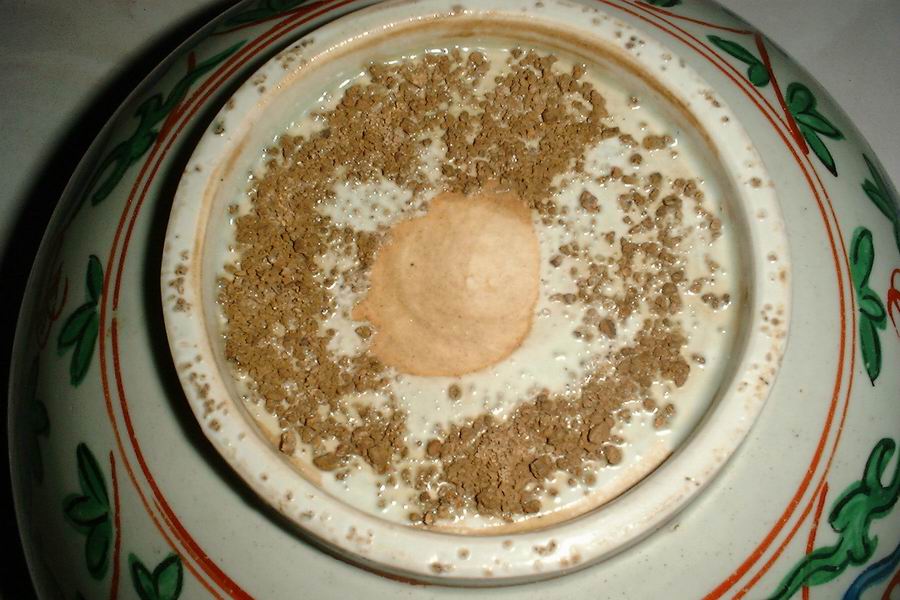
Kraak wares as we know it comes from Jingdezhen and are true porcelain and thinner potted. Swatow wares come from Fujian Province, South China and sometimes are porcelain but not always and always thicker potted. Different region of China different clays used. Kiln grit was put there by Swatow potters intentionally by potters to seperate the items fired from the kiln of the floor so the plates will not get stuck to the kiln's floor. Look at the base of your bowl, the kiln "grit" is everywhere on the base EXCEPT in the areas where there is direct contact between the bowl and the kiln floor... i.e. the bowl's footrim. That makes no sense whatsoever.

The glaze on Swatow wares are generally thick like melted vanilla ice-cream and not too smooth with uneveness. The enamel color is wrong, the red is wrong, the green is wrong. It's too bright, crisp and clean because it is modern enamel. I don't know how I can further explain that in a way that any clearer. Just because it looks like something found in museums, does not mean it is, especially when it comes to chinese ceramics. If you really want to learn more on Swatow wares, try to get the book "Zhangzhou (swatow) Ceramics" by Sumarah Adhyatman and published by the The Ceramic society of Indonesia or do a Google search on "Swatow wares" or "Zhangzhou wares" on the web.

Subject:Re: Swatow Bowl
Posted By: Wusqo Mon, Jun 06, 2005

Michael,

Don’t be pessimist on your rare ware. Again, since your great grandfather’s collections are extremely good condition, some people guess them as reproduction or modern ones. I just try to guess the images you showed that your item is not from local I have ever seen, especially the brushstroke of painting of your piece. Your piece is typical Wucai type since it is painted in underglaze blue combined with overglaze enamels.

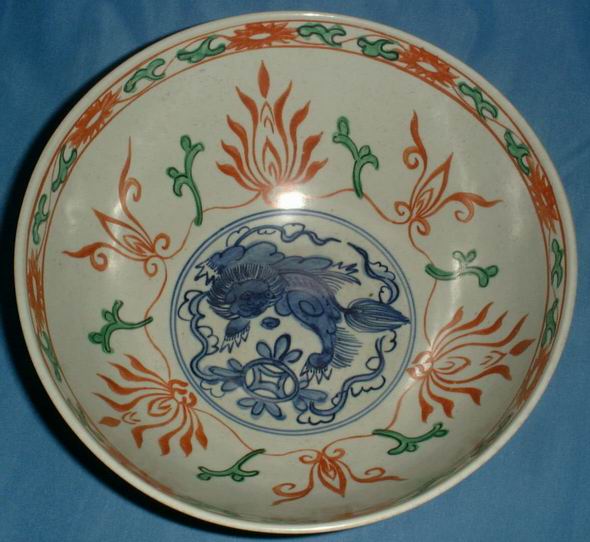
Your bowl has rounded sides and tapering foot ring coated with the thick dove-gray glaze, not white glaze, that is one of features of Swatow glaze. When seeing the several Swatow wares in the Museums, there is no precisely same tone of gray tone of glaze on Swatow wares. However, having seen the brushstroke of painting, glaze and design this work exhibits features different from those typical of Jingdezhen wares, moreover from Indonesia. You may see the outside of vessel decorated with eight peony flowers, each flower bracketed, and, cross and diagonal diaper within the double circle line around the rim, and two birds flying on the floral are seen. The inside is painted with a comical or conventional lion-dog around auspicious, and the base reveals with unglazed portion, which was subject to staining from impurities in the materials used for firing in the late Ming periods, not intentionally by potters, and you are not able to remove them by your hand, even though with a knife. All designs are unorganized manner painted in freely style hastily executed designs, which often occurred on the late Ming wares, notably for export ware to Japan and Southeast Asia countries in the late Ming to early Ching periods.

Swatow (In Chinese: shan tou qi) wares were primarily exported to Southeast Asia and Japan. It has been believed that these types of wares were produced on the coast of Guandong and Fujian provinces and were thus named after the city of Swatow (now called Shantou). However, since the 1990s, kiln sites have been discovered in the area of Zhangzhou in the south of Fujian, with different tone of dove-gray glaze, thus these wares are now called Zhangzhou wares. From this archaeological evidence, we have to know that this ware was produced at Zhangzhou in the Fujian province.

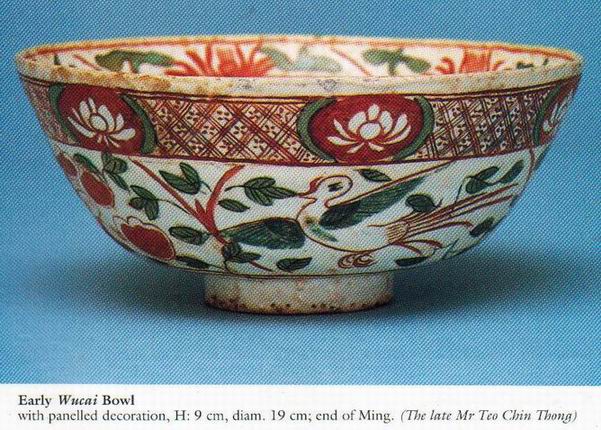
I recall the similar bowl painted with two flying birds and panels around the exterior, painted in Wucai style and hastily executed designs like yours, dated in the late Ming period, now is preserved in The Lee Kong Chian Art Museum, In The Light of Recent Archaeological Discoveries, National University of Singapore, LuYaw, 1990, p. 216.

If you compare the glaze of Zhangzhou wares preserved in the several museums, it has different tone of dove-gray glaze, not “white”. You may find the large “Swatow-type” serving dish painted in polychrome enamels, hastily executed designs, which was bough in Indonesia, now is preserved in the British Museum, London, Ming Ceramics, Jessica Harrison-Hall, 2001, pp. 337, Note: 11: 63.

Good Luck.
Wusqo

Subject:Re: Re: Swatow Bowl
Posted By: Michael Tue, Jun 07, 2005

Dear Mr. Wusqo,

Thanks for you greatly precise evaluation for my piece, and I personally appreciate it. Now, I know the different Chinese ceramics preserved by great grandfater, and am be able to distinguish between clay and paste from Zhangzhou and Jingdezhen, moreover another countries.

You did not mention the right or wrong, but you also reveal the archaeological evidence, which I have never got from others.

Could you please mention how to buy the Chinese ceramic book you said above? Can I send a private e-mail to you for my ceramics?

Again, thanks for your great help and effort.

Yours sincerely,
Michael

Subject:Re: Re: Swatow Bowl
Posted By: PyroManiac Tue, Jun 07, 2005

When I was mentioning the "white" I was refering to areas of plain glaze not covered by any enamel decoration. Like a person mentioning blue and white wares do not mean that the white found in blue and white wares are all pure white! I did not explain that further simply because I thought there was no need to explain something that was so obvious. No matter which term you use to describe these wares as "Swatow" or "Zhangzhou" wares it matters little as for any collector of Chinese ceramics will know exactly what you are talking about. I still use the old term "Swatow" simply because that was the term I grew up with and darn it's easier to spell too! I enclose images of an authenthic Swatow large dish with fairly similar patterns as Michael's so you can see for your self the difference in the character of enamel and the transparency and the smoothness compared to late Ming enemals used by the Swatow potters. There is a BIG difference. I also enclose images of the base of the dish so you can compare it to the base of Michael's bowl and see how the kiln grit attatches to the base on a real item and not just on the interior of the base rim leaving it neat and tidy. I'm not doing this to make Michael feel bad or anything of that sort. But it is important for him to know and for all to learn. I believe it is better to tell a person that he has a fake, learn why it's a fake and thus avoid future bad purchases if he wishes to collect similar items. Rather than let them believe everything is fine and continue as they were.


Subject:Re: Re: Re: Swatow Bowl
Posted By: Wusqo Tue, Jun 07, 2005

I don’t understand why you compare Michael’s bowl with your “Authentic” piece. I don’t understand what you mention “Authentic” of your piece. Thanks for your “Authentic” and nice piece. I do understand your honest intention to warn Michael to do better when purchasing other collections, but you may not evaluate this item as fake, modern, moreover from local production. Have you ever seen the local production wares having similar with that of Michael? If you compare millions of Zhangzhou wares founds with your “Authentic” piece, of course, they have different glaze, shape, gritty base, and design. It doesn’t mean your piece is “authentic” and others and Michaels are fake, repro, and local kiln.

As I mentioned on the above explanation that the glaze tone of Zhangzhou wares have different tone and colors, all are not the same. When you read and see the archaeological Zhangzhou/Swatow wares found in Asia countries, you will be swayed by different dove-gray glaze tones of those wares whether your piece is authentic or ………
The color of glaze tone depend upon the temperature of glaze firing (you shao), and the firing atmosphere whether it may be an oxidizing or reducing one, which generate different dove-gray glaze color tone. Not just simple suggest me to see your “authentic” piece, and it should be similar glaze with yours you showed for my benefit. When you read the book “Zhangzhou (Swatow) Ceramics, Sixteen To Seventeen Centuries Found in Indonesia, by Sumarah Adhyatman, there is no uniform color glaze of these wares, moreover the gritty base like yours. I bet on Michael’s bow, if he is able to remove the gritty base, it is hard to do it even though with a knife or scalper. You may read and see the glaze of Zhangzhou wares found in the archaeological sites, now are preserved in the Lee Kong Chian Art Museum, Singapore, LuYaw, there is no uniform dove-gray glaze color on the plain areas, moreover like yours. In addition, the wares in the British Museum also have different tone of dove-gray glaze colors on the plain areas. Since there was no strictly control on the design, firing and glazing of these Zhangzhou wares, all millions of these wares are no uniform glaze and gritty base. This is why these wares were hastily executed by potters and artists in Zhangzhou kiln. You must read and see archaeological founds, not seeing your own “Authentic” and nice piece, so you may distinguish “BIG” differences, and you may evaluate more scientifically manner based on archaeological artifacts.

The term of Zhangzhou wares is not from my imagination. You are surprised and feel strange with this term? If you read some Chinese ceramics archaeologists from China connoisseurs and archaeologists, this term was beginning in 1990s since kiln sites have been discovered in the area of Zhangzhou in the south of Fujian. You may read some books more than 10 book authored by Wang Qingzheng, a Connoisseur and Curator of Shanghai Museum, and has played an important role in building and developing Chinese ceramics collection.

Again, when evaluating the pieces, you must consider overall elements on the piece, regarding with stylistic of designs, colors of enamels, the base and foot ring, and other elements compared with Museum and archaeological founds, not rely on your own “Authentic” piece. If you don’t rely on archaeological and scholarly literatures on this discussion, I give up………

Subject:Re: Re: Re: Re: Swatow Bowl
Posted By: PyroManiac Wed, Jun 08, 2005

So now I'm guessing that you are saying my dish I posted is a fake. A very interesting way to twist the argument I have to admit. Declare any examples given as a counter-argument as a fake in order to try to neutralize opposing points and eliminate it from the original argument. What is fake is now real and anyone that comes along and argues against the fact is brushed off. Do this enough times and suddenly the fake starts to become real and factual. You indicated, "I don’t understand why you compare Michael’s bowl with your “Authentic” piece." Let me put it simply. If you have a fake bowl and want to undrstand and see the difference, wouldn't it be better to compare the fake bowl to a real one and SEE the difference? That's why I posted a real item. I chose the closest Swatow item I had in my collection to Michael's bowl. I did not have an identical bowl but I had the dish. It's no use comparing a blue and white Swatow dish to Michael's bowl because it is different! If Michael's bowl was blue and white, I would have instead showed him a blue and white from my collection to compare. I am not relying on my own one authentic piece and using that single piece as the corner stone to judge all Swatow wares and anything that is different is judged a fake as you so elequently put it! And you are right! Swatow wares have all kinds of "white" glazes. All the swatow wares I have in my collection from blue and white, slip design, monochrome and polychrome have varied glazes. You keep bringing that same point up over and over again. We already know that.... And besides, I was showing Micheal so he could compare it with his bowl. About the kiln grit that you don't seem to be able to understand. Michael will not be able to scrape it off since it was fired with it. The grit has already fused to the bowl's glaze... just like on a real item. The fake maker purposely put it there because he KNOWS that one of the features of many Swatow wares are a dirty grit encrusted base. But he made a vital error. He sprinkled the grit only on the inside of the glazed foot, leaving the footrim itself mostly free of the grit and unglazed. What's wrong here? IF the footrim is already unglazed they can fire the item in the kiln with little worry that the item will get fused to the kiln floor during firing. There is no need for sprinkling grit on the kiln floor. Yet here we have a bowl with both an unglazed straight form footrim WITH kiln grit. Why? It makes no sense because it is wrong! A real Swatow dish or bowl with kiln grit on the base WILL ALWAYS have a glazed over footrim with the kiln grit ON the footrim! But wait a minute you say! There are Swatow items with NO kiln grit! Yes that's true also! And these pieces WILL have an unglazed footrim with no grit because there was no need for it! And that's a fact. Don't believe me? Try and find Swatow ware shards from archaeological sites that have both an unglazed footrim in combination with with a dirty gritty base. The book “Zhangzhou (Swatow) Ceramics, Sixteen To Seventeen Centuries Found in Indonesia, by Sumarah Adhyatman which you talked about. Good book. I have a copy and assume you have one too since you brought it up. Turn to pages 19 and 20 where the author shows two examples of fake Swatow wares. They look good don't they? Look authenthic. The style of painting is just like real Late Ming Swatow wars because they are modelled from real pieces! Also about this book, you mentioned "there is no uniform color glaze of these wares, moreover the gritty base like yours". Are you blind!?!? You did not see the many examples of gritty bases of the many different dishes illustrated in this book including shots of the base. No gritty base? Unbelievable! Turn to pages 168, 169, 175, 176 and I could go on for there are many other pages. Do you have the book at all? And about the term "Zhangzhou ", I know it's not from your imagination and am not surprised or feel strange about the term. I damn bloody well know that the more modern term used for Swatow wares is Zhangzhou wares and you don't have to explain why to me either. You are nit picking your arguments! No matter which term you use, any collector of Chinese trade ceramics will know exaclty what you are talking about if you use Swatow wares or Zhangzhou wares! You went further in stating, "Have you ever seen the local production wares having similar with that of Michael?" Yes! I have! All the time! That's why I'm so sure the bowl is of local Indonesian manufacture. I live in Malaysia, one and a half hours by road from the Indonesian border. Over in Indonesia, there is a town called Singkawang that has a long ceramic history. They make all sorts of pottery from storage jars to flower pots including Swatow ripoffs like these. I can buy these fakes for US$10 each. When I go ceramic hunting, I get people trying to sell me these fakes all the time. I know thay are from Singkawang because I talked to the sellers who were selling these fakes to the tourist shops. They got it fresh from the factory at Singkawang. You yourself stated, "when evaluating the pieces, you must consider overall elements on the piece, regarding with stylistic of designs, colors of enamels, the base and foot ring, and other elements" Also true as any ceramic collector would agree. So lets see the facts compared to the points you brought up. Stylistic Design: It's good as it copies a known original Swatow bowl design. The design is not unique. No problems here. Colors of Enamels: Problem! The thickness, transparency and colors of the enamels do NOT match the original. And I'm not comparing it to my one Swatow dish either! The iron red is too orangy. The green is too bright. The baby blue... well there's not supposed to be baby blue in Swatow wares. It's supposed to be a teal color! And all the enamels are too smooth with no variations in the surface texture and thickness with no impurities or dirt. Base and Foot Ring: Also big problem as I have mentioned above and given precise reasons as to why it is not right. Using your own method, this bowl already has 2 out of 3 areas where there are problems and cause suspicions. No collecter in their right mind would purchase any item when there are such discrepencies! And I agree with what you said that if one does not rely on archaeological and scholarly literatures on this discussion as well as common sense, you can't argue with the person. So yeah, I'm giving up. I feel like I'm beating a dead horse here. This one ain't gonna go anywhere! I'm sorry Michael that the posting of your bowl caused this little debate. But you have to decide for yourself who is right here. I tried to the best of my ability to explain things in a clear factual manner with precise images for comparisons or you can go with the repeating blabber of the other end of the argument. I hope to see other items you might want to post and maybe there will be better news and less contravesy than this bowl. PyroManiac

Subject:Re: Re: Re: Re: Re: Swatow Bowl
Posted By: Michael Wed, Jun 08, 2005

I do know what the different clay and paste of Chinese and Indonesia porcelain. As what Mr. Wusqo stated is right that my bowl is not from local, it is from China as what Curator of National Museum Jakarta stated that this bowl is Swatow or Zhangzhou ware.

When I was removing the gritty on the base, it is very...very...difficult to do it, and my fingers are injured. In this case, no other country wares such this Swatow/Zhangzhou bowl. I know what Pyromanic said because there a lot of fake swatow and craak wares reproduced in East Kalimantan (Boerneo), but again, it is different designs and clay materials.

I borrowed some books what Mr. Wusqo suggested, and I was really aware this shape, glaze and design is slightly similar with Singapore Museum.
You buy it for $US10?. Wow.....

My father do know what his grandfather had. When I send the images of my other rare collections to OxfordAuthentication since I would get them authenticated, several its staff will come to my collections through The Museum in this week because several experts recommended me to do it. Oxford asked me to send the images for the possibility of authentication whether they are possible to be tested.

Thanks for PyroManiac, you may go to Kalimantan (Borneo)/ Singkawang kilns reproducing the style of Swatow and Kraak porcelain, and compare the paste clay. One of my family also have produced these wares marketed for local from generation to generation.

PyroManiac, don't be lying that you have ever this bowl all the time. Yes, this unique Swatow design is presumable to be fake by you. But if you see the Bowl design in the Lee Kong Chian Art Museum, Singapore, this bowl is similar unique.

Thanks for all both contribution.
Regards,
Michael

Subject:Re: Re: Re: Re: Re: Swatow Bowl
Posted By: Michael Wed, Jun 08, 2005

Here the large image of the gritty on the base, which made my fingers injured.


Subject:Re: Re: Re: Re: Re: Re: Swatow Bowl
Posted By: Michael Wed, Jun 08, 2005

Please find my bowl detailed strong enamels as you said. If we compare with archaeological artifact, even though this bowl was found underground, the strong enamels are visible. Please find the bowl preserved by Lee Kong Chian Art Museum.


Subject:Re: Re: Re: Re: Re: Re: Re: Swatow Bowl
Posted By: Fujimato Wed, Jun 08, 2005

Execusme, I am from Japan and live in Philippine. I agree with Wusqo's opinion that Michael's bowl is indeed Swatow ware made at late Ming. When seeing the uneven glaze of bowl base with gritty, and design technique as well as panels, this bowl is similar shape and technique with what I have seen in the several museums in Japan. In my country, the collector say it "fu yo de" or "go su de". The wares painted in this technique were often exported to my country and Asian. Many strong enamels, including bright green painted on this wares. I do not believe this bowl from Indonesian country.

Best regards,
Fujimato

Subject:Re: Re: Re: Re: Re: Re: Re: Swatow Bowl
Posted By: Kelly Wed, Jun 08, 2005

Sorry Guys,
But I am with pyromaniac on this. Bowls of Michael's type, which as the last photos show have some similarities with the genuine Swatow wares, in my experience appeared in the 1990's, and regularly appear on eBay, offered as genuine antiques.
The color of the glaze, and the enamel colors, all differ slightly from the originals, but particularly note the lack of imperfections on Michael's example.
Regards
Kelly

Subject:Re: Re: Re: Re: Re: Re: Re: Re: Swatow Bowl
Posted By: Lehren Thu, Jun 09, 2005

Hi Kelly, could you refer the website to me this similar bowl sold on e-bay regularly? All members have to raise a reasoble argument! Non all pieces are exactly similar glaze and desgin if we compare one to other one. What pyromaniac guessed is wrong with this bowl, concerning with strong enamel, vanilly glaze and gritty on the base, etc.

I, personally, appreciate Michael could show the comparison when pyromaniac said it as wrong glaze, enamels, etc. If you always critize it comparing to other one, of course, no item by images on this forum is right and original, even though the property of museum.

Lehren

Subject:Re: Re: Re: Re: Re: Re: Re: Re: Re: Swatow Bowl
Posted By: keith jennings Thu, Jun 09, 2005

Michael, If you believe your bowl is real then I suggest you take it to one of Sotheby's or Christies auction houses and see what they have to say about it. You can even email photos to Christies these days and they will give you an auction estimate. I think you will find your bowl is a modern reproduction and only has ornamental value. keith

Subject:Re: Re: Re: Re: Re: Re: Re: Re: Re: Re: Swatow Bowl
Posted By: Michael Thu, Jun 09, 2005

Thanks Keith, unfortunately I don't like to get my collections authenticated by images. Even though three of my imperial collections were appraised by one of Chinese art appraiser and Auction House in London and New York as "Right" Xuande box, Sung vase, and Yongzheng dish through images, he suggested me to send the pieces to him for authenticity. I still need the reliable scientific test since he also needs TL test for confidence in selling my antique. Sotheby's and Christie's are Auction Houses, which the result depends upon any circumtances. Maybe, the real antique will not automatically realize the expected price. I also has ever sent the images to Prof. Zhu Gen Bao, Senior Researcher at Shanghai Museum and Professor of Art and History at Shanghai Museum. He is also one of primary auction houses consultant. He confirmed my Ming vase as "Right", and estimated more than US$200,000.

I agree with you for these Auction Houses, but I need confidence of test, by OxfordAuthentication. I just contacted Oxford and sent the images of my collections to Oxford, and its staffs confirmed that my several collection are possible to be tested. This week the staff will come to my collections. I understand your opinion on my bowl, but usually images sway people as "right", "wrong", "local ware", and "modern".

For the case, when one of Stone Sculpture of Borobudur from Indonesia (owned by one of French collector, probably) was appraised and sold at Christie's New York as "Right" estimated US$300,000, but according to Indonesian local producer this stone sculture was made by him, and it was bought by tourist. This depends on "circumtances".

On this forum, we can get who is more reliable and scientifically reason for the items, not fake, reproduction, local and others without firsthand inspection, provenance, and history.

OK, thanks for all contributions for hot discussion on this forum. Next time, I will show my several items having strange features, shape, marks and history. Of course, I don't mind some people give their opinion, but it should be reliable and scientific, honest not harsh statement. I think Europe, USA, East Asia have the certain characteristics on Chinese art, and Asia have one. All depend upon history of Chinese art in the past history.

Again, thanks...and thanks...for all of your opinions.

(Michael)

Subject:Re: Re: Re: Re: Re: Re: Re: Re: Re: Re: Re: Swatow Bowl
Posted By: Kelly Thu, Jun 09, 2005

Michael,
I just had a look on eBay and can find no Ming Swatow enamelled wares, either fake or genuine in the current listings or the completed auctions.

But there are several underglaze blue pieces, of which our business sold six (one is possibly not Swatow), and I personally had the opportunity of handling them.
The link while it is alive is here. If you look closely at these photos you will notice a number of features which are absent from the copy, including:
1. A thick sometimes milky glaze.
2. The underglaze blue color varies between pale and dark, whereas the new one is relatively constant.
3. There are numerous firing faults, which may include warping, crazing, glaze crawl, potato eyes, grit adhesions, kiln adhesions etc

I hope this helps.
Regards
Kelly

Subject:Re: Re: Re: Re: Re: Re: Re: Re: Re: Re: Re: Re: Swatow Bowl
Posted By: Kelly Thu, Jun 09, 2005

The link didn't seem to print for some reason. Here it is again:
http://search-completed.ebay.com/swatow-ming_W0QQampq3bsspagenameZhQ3ahQ3aadvsearchQ3aUSQQcatrefZC5QQfbdZ1QQfclZ3QQfisZ2QQfromZR6QQfrppZ200QQfsooZ1QQfsopZ1QQftrtZ1QQftrvZ1QQpfidZ0QQsacatZQ2d1QQsacurZ0QQsadisZ200QQsaslopZ1QQsofocusZbs

Subject:Re: Re: Re: Re: Re: Re: Re: Re: Re: Re: Re: Re: Re: Swatow Bowl
Posted By: keith jennings Thu, Jun 09, 2005

Michael, I am sure I am speaking for everyone when I say we would love to see your Xuande box, Sung vase, and Yongzheng dish. keith

Subject:Re: Swatow Bowl
Posted By: Oliver Watson Thu, Aug 28, 2025

Completely agree with what you say.In New Zealand in the 1970's vast quantities of I think Swatow ware exported to S,E.Asia made its way to New Zealand.The variation in quality was enormous and the dove grey really tells us very little by itself as all firing in those days was empirical.That imho is why Chinese fakes today can still be dated accurately by sight and feel,though some of the blue and whites are getting hard


Asianart.com | Associations | Articles | Exhibitions | Galleries |