asianart.com | articles
Articles by Ian Alsop
Download the PDF version of this article
August 21, 2026
Originally published in the September 1993 issue of Orientations
Among the ethnic groups that have contributed to the culture of Nepal, the Newars of the Kathmandu valley are pre-eminent. Their achievements in the arts have left the public spaces of the valley crowded with gilt-roofed temples and sumptuous carvings, and the private sanctums of households and temples filled with vibrant and energetic paintings and sculptures of the gods of the Hindu and Buddhist pantheons. The Newars received the original impetus for most of their artistic activity from the great Indian cultures to the south. Not only did Buddhism and Hinduism, which the Newars adopted, originate in India, but also the initial styles of their art. Therefore, while many of the Nepalese masks of the middle hills come from tribal groups only tenuously connected to the Indian traditions and thus seem to be 'primitive' or sui generis, the masks of the Newars exhibit, in both their use and their styles, the influence of Indian traditions, although this influence has been absorbed into a cultural expression unique to the Newars.
Himalayan masks have often been separated into two categories: 'classical' masks, usually Buddhist or Hindu dance masks produced in centres of culture, and 'primitive' masks, those of uncertain origin and purpose produced in villages isolated from the cultural mainstream. Following this division, Newar masks can easily be assigned to the 'classical' category. However, Newar masks are different from the majority of 'classical' Himalayan masks, which comprise mostly masks from areas where Tibetan Buddhism is practised, including examples not only from Tibet but also from Bhutan and Sikkim, and also the finely carved wooden masks of the Monpa people of Arunachal Pradesh in northeastern India. While the Tibetan Buddhist masks are part of a widespread Buddhist dance drama tradition that stretches across East Asia to Japan, Newar masks are distinct in often being Hindu and stylistically isolated from these traditions. While in both the Newar and Tibetan traditions the masks are used in dancing, the Newar dance dramas are quite different from the Buddhist monastery dances and village dance dramas practised by Tibetan groups.
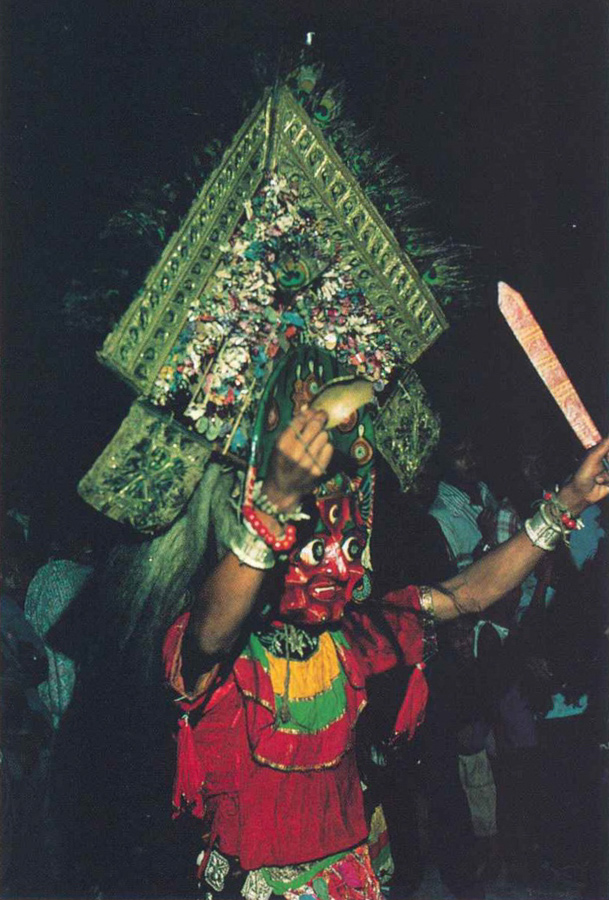 Fig. 1: Mahakali dancer (Chamunda) at the Indra, Jatra festival in Bhaktapur, Kathmandu valley Photography by Jim Goodman |
The age of the Newar dance drama tradition is uncertain. While many of the dances that have recorded dates of origin appear to have been patronized by the Malla kings of the Kathmandu valley of the later mediaeval period (17th-18th century), there is some historical evidence of royal patronage of festivals associated with dancing several centuries earlier. Several of the masks illustrated in this article can be dated tentatively to the seventeenth century but may in fact be earlier (see Figs 12 and 13), and examples of the large Bhairava masks (see Fig. 14) have been attested from the sixteenth century and may have much earlier origins. Thus, it may be surmised that the origins of the Newar dance drama tradition are older than the surviving examples of the masks themselves, and that earlier masks have simply not survived the considerable rigours of their use and worship.
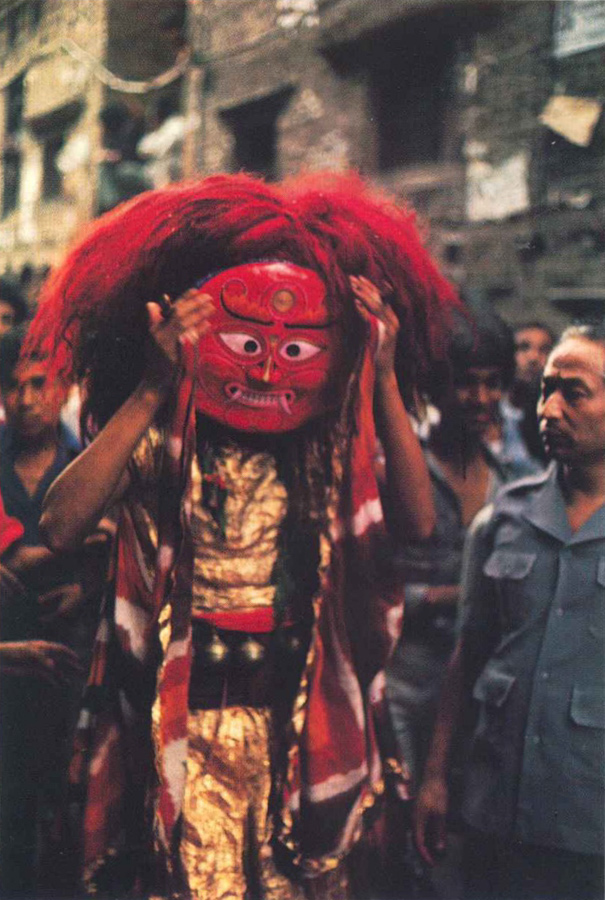 Fig. 2: Lakhe dancer, Kathmandu valley, Photography by Jim Goodman |
The Newar tradition of sacred dancing and masked dance drama is steeped in mystery. Many of the dances are performed after nightfall, the moment that divides religious performances that are open and exoteric from those that are secret and esoteric (Fig. 1). The performances usually imply the possession of the dancer by the god or goddess he impersonates, and often involve blood sacrifice. Even those dances that take place during the day, such as the Lakhe dances (Fig. 2) remain shrouded in mystery and fill the onlooker with respect for, and often fear of, the occasionally violent dancers.
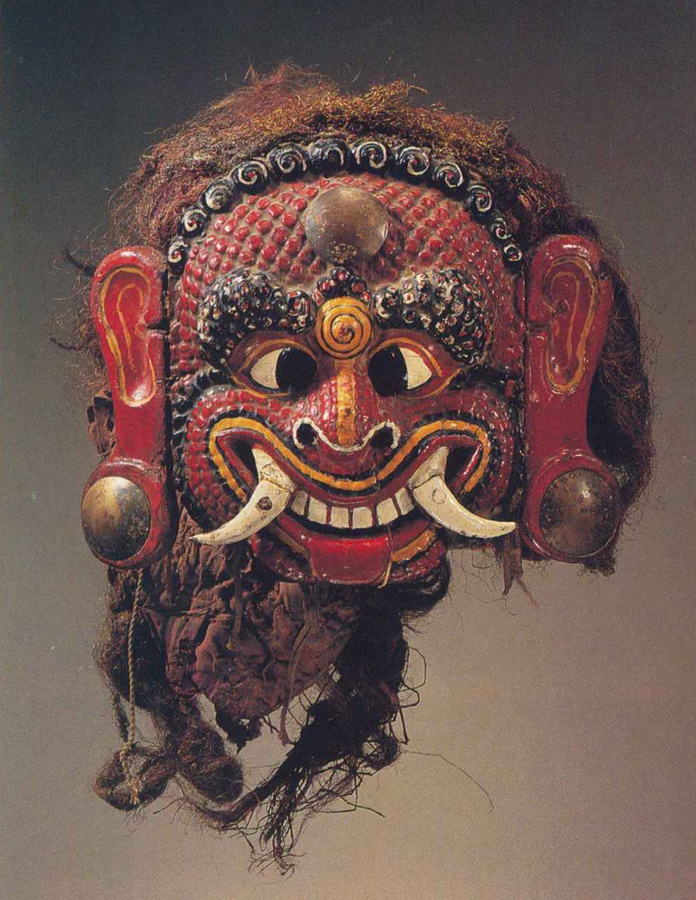 Fig. 3: Mask of a Lakhe dancer, Newar, Kathmandu valley, c. 18th c., Wood with colours and yak tail hair, Collection of Mr and Mrs John Gilmore Ford |
The Lakhe masks (Fig. 3) are unusual and unique. The word lakhe is a Newari adaptation of the Sanskrit word rakshasa ('demon'), and it is indeed a demon that the mask is meant to portray. The Lakhe dances are usually presented as a subsidiary part of a major festival event; they are most strikingly evident during the Kathmandu festival of Indra Jatra, which takes place during the autumn season. The Lakhe dancers, dressed in voluminous robes and often brandishing swords, dance through the streets in pairs, accompanied by a band of musicians. These dances, in which mock battles between two dancers are acted out, are a popular event during the festival, and the group of dancers and musicians is always followed by an enthusiastic crowd of onlookers. The Lakhe dancers are treated with respect, for if angered, they can lash out, in particular, no one will hang a sari out of a window to dry in the path of an oncoming Lakhe troupe, for if a dancer should spy a sari hanging from a window, he will tear it to shreds.
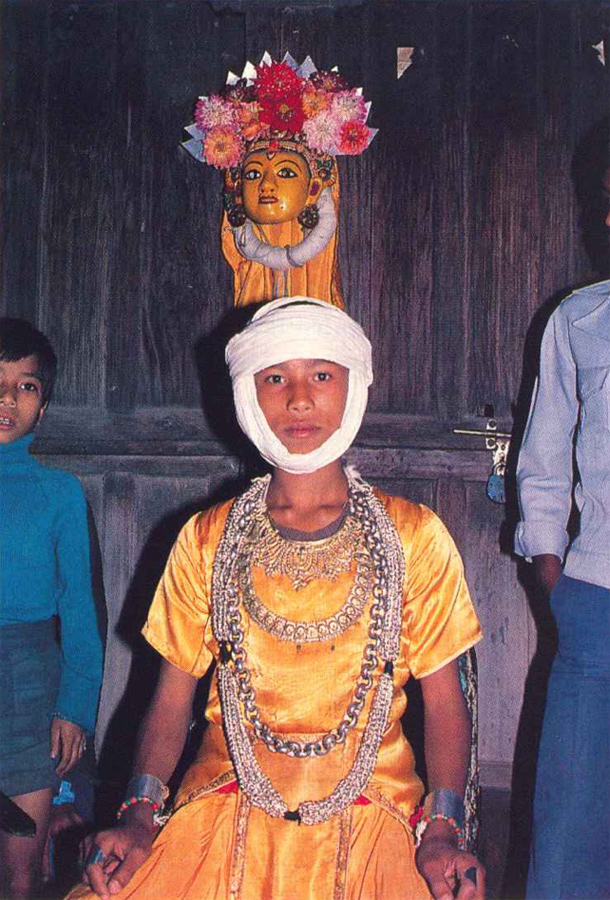 Fig. 4: Member of an Ashtamatrika troupe preparing for dance, Kathmandu valley, Photography by Jim Goodman |
It is in the masks of the Lakhe dances that an Indian artistic influence can be seen, for the faces portrayed in these masks bear a striking resemblance to the faces of demons found in Mughal and Rajasthani miniature paintings. The most typical of the Lakhe masks, such as those seen in Figures 2 and 3, exhibit the same double fanged grin, crossed eyes and bulbous faces found in Indian miniatures from the seventeenth and eighteenth centuries. The indisputable stylistic link would suggest that the Lakhe dance tradition is not an early one, although perhaps nothing more than a stylistic change in the portrayal of a tradition with earlier origins can be seen in this case.
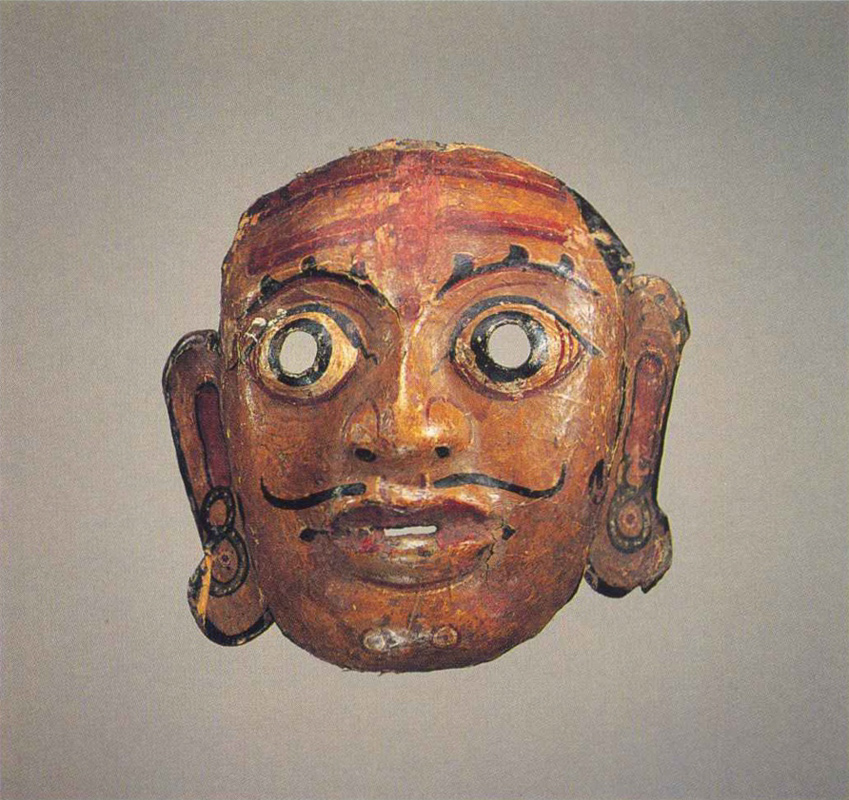 Fig. 5: Mask, Newar, Kathmandu valley, c. 18th century, Repousse brass with papier-mâché and colours Height 18.5 cm, Private collection, USA |
Archetypal of the Newar dance dramas are the dances centering around the Ashtamatrika, the eight mother goddesses. Revered and feared by the entire Newar population, whether Hindu or Buddhist, these eight goddesses represent the female embodiment of the power of the most renowned and venerated gods of the Hindu pantheon. Dances involving these mother goddesses are found in all of the three major towns of the valley and in many of the smaller villages. The troupe of dancers usually includes the eight mothers and sometimes subsidiary characters, such as Bhairava, Ganesha or Shiva. Even though the goddesses portrayed are Hindu, the dances are attended and respected by Buddhist as well as Hindu Newars, and in one remarkable example, the Gan Pyakhan ('Dance of the Group') of Patan, the dancers themselves are drawn exclusively from the Buddhist community. While the deities portrayed by the dancers, or indeed, who possess the dancers, are largely female, the dancers themselves are always men (Fig. 4). Perhaps the most celebrated Kathmandu valley dance ensemble involving these eight powerful goddesses is the dance troupe of the Navadurga (Nine Durgas) of Bhaktapur. In this local tradition, the eight mothers are joined by a ninth and very secret goddess, Tripura Sundari. The Navadurga dance tradition of Bhaktapur brings the dancers before the public as often as forty times a year, in localities all over the mediaeval valley town and often farther afield.
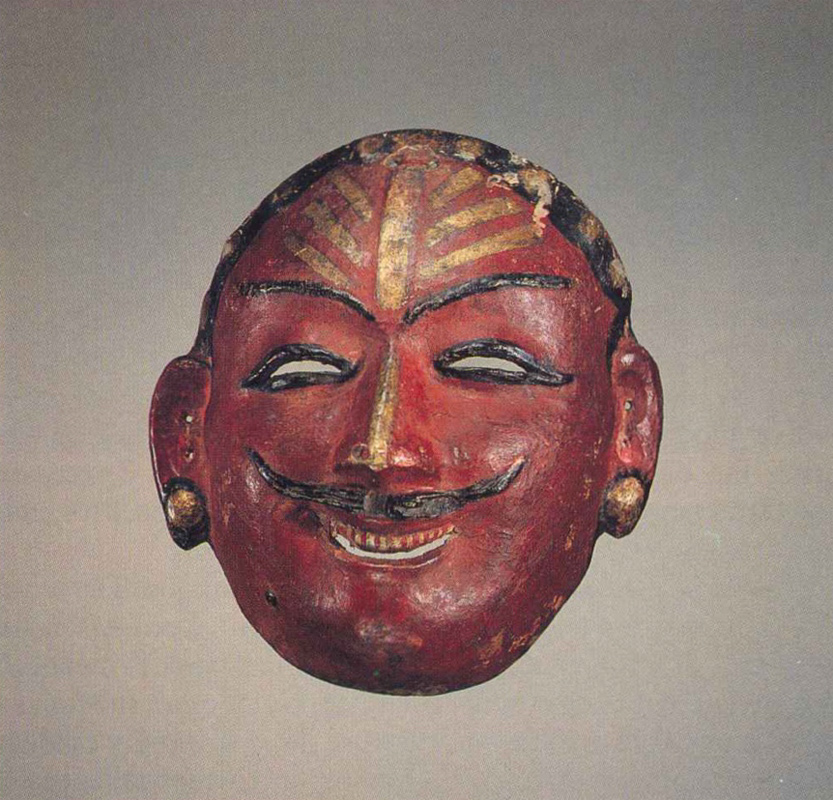 Fig. 6: Mask, Newar, Kathmandu valley, c. 18th century, Repousse brass with papier-mâché and colours, Height 18.5 cm, Private collection, USA |
Another important dance tradition, from the town and temple of Harasiddhi, is the renowned Jala Pyakhan ('Harasiddhi Dance Drama'; Jala is the Newari name for the town), a cycle of dramatic dances performed annually that has long been considered the most important of all the valley's masked dance cycles. The Harasiddhi dances are unusual in that the dramatis personae include gods of the Buddhist as well as the Hindu pantheons. Unlike most of the other dance traditions, the dancers of Harasiddhi are said to become the gods they portray for their entire lives, whereas other dancers are possessed by the gods only for the performance itself or perhaps for a one-year cycle. Figures 5 and 6 are examples of the Harasiddhi type of Newar dance drama masks, distinguished by the open expressions, moustaches and sect marks on the foreheads, although the exact source of these two masks is unknown. The Harasiddhi dancers present little vignettes in which they act out stories and legends of the gods who possess them. Another such dance drama tradition is the Kartika Pyakhan ('Dance Drama of the Month of Kartika') of Patan, a dramatic presentation, held every year in October or November, of a cycle of legends centering around Vishnu, the Great Preserver.
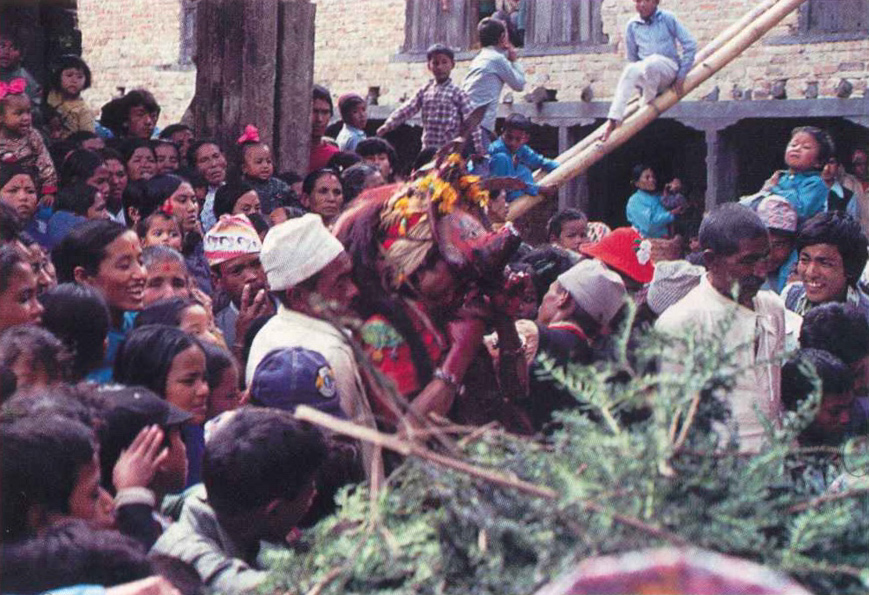 Fig. 7: Shveta Kali (Varahi) dancer at Naradevi temple, Kathmandu, Photography by Jim Goodman |
In all of these sacred dances, the union of the god or goddess with the dancer who portrays him or her is paramount. The dance itself is a ritual, the success or failure of which depends entirely on this union, or possession, taking place. If the deity does not inhabit the body of the dancer once the mask is donned, the ritual and the dance are failures. The most fascinating elements of the dance dramas are the signs of possession overcoming the dancers: trembling and shaking, seemingly superhuman energy, speed and agility, and sometimes a fainting fit when the mask is removed and the god leaves the dancer. The god's entry into the body of the dancer is expressed by two accoutrements of the dance: the anklet bells worn by the dancer and the mask. Indeed the mask itself is considered to be the god by the Newar, and the word dya, or dyo ('god'), refers to a dance mask in the same way that a sacred icon in stone or metal is referred to. Testimony to the sacred nature of the possessed dancer is provided by worshipping devotees.
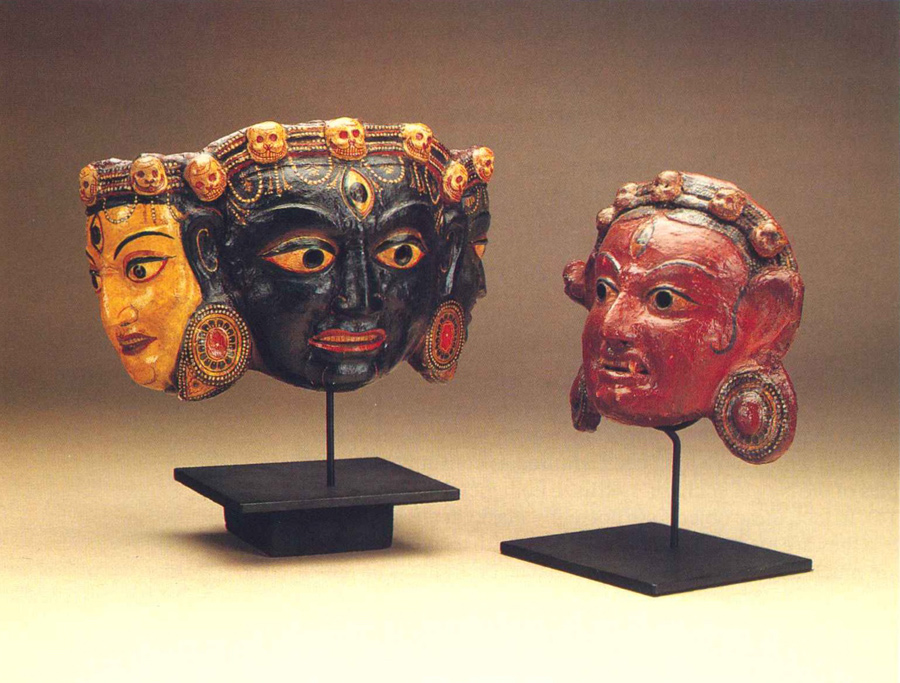 Fig. 8: Masks of Chakrasamvara and Vajravarahi, Newar, Kathmandu valley, c. 19th century, Cloth and papier-mâché with colours, Height 18 cm and 19 cm, Private collection, USA, Photography by R. Faller |
The Hindu dance dramas are largely public, and often form an important part of many festive occasions; indeed they are often to be found at the heart of a religious festival or holiday. An example is the festival of Pahanchahre (The Fourteenth of the Guest [Shiva]'), a festival that takes place in Kathmandu in the early spring and features dances honouring the mother goddesses. The dancing begins towards the end of the day and lasts through the night into the next morning. The dancers assemble in a house not far from the Naradevi temple in front of which the dances are to be performed, and take part in a ceremony that prepares them for possession by the goddesses. After they have been dressed in their dancers' robes and heavy jewellery, they don the masks of the goddess, at which point they are possessed by that deity. To the accompaniment of a repetitive trance-like rhythm of cymbals and drums, they exit into the street leading to the temple dancing area. One by one they appear from the house to join a stately procession of masked and robed figures, each flanked by two attendants who support the dancers' arms. Finally the entire gana (group) is complete; the mother goddesses, accompanied by Bhairava and two dakini figures, and on certain occasions, by Shiva. The dancers tremble under the psychic weight of the visitation of the deities. They advance in procession with slow skipping and twirling movements, in time with the unceasing beat of drum and cymbal. As they move down a street crowded with onlookers, devotees dart in front of one dancer and then another, to place offerings at their feet or to perform a brief ceremony of worship.
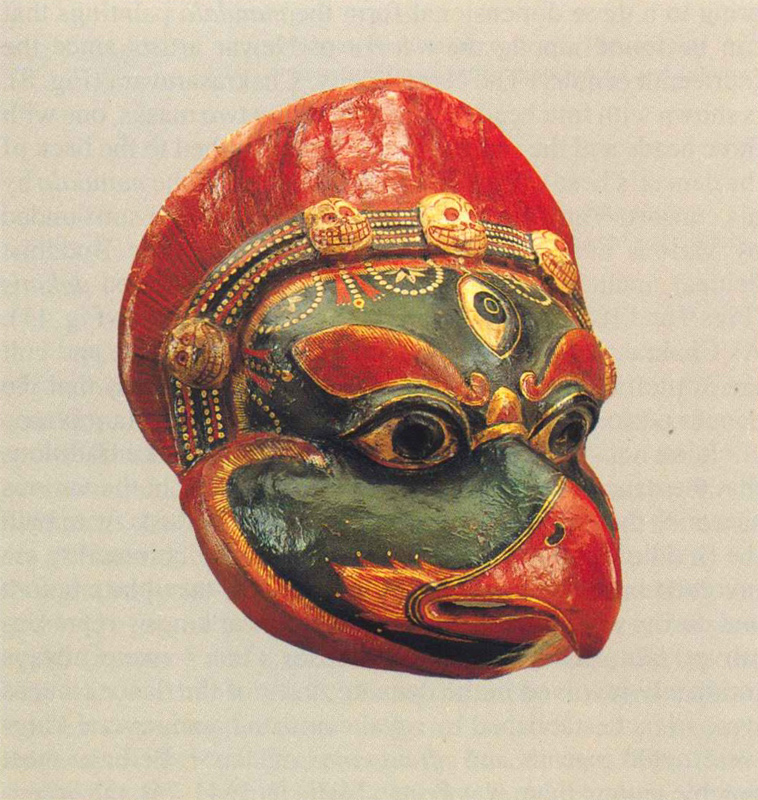 Fig. 9: Mask of bird-headed dakini from the Chakrasamvara mandala, Newar, Kathmandu valley, c. 19th c., Cloth and papier-mâché with colours, Height 22 cm, Private collection, USA, Photography by R. Faller |
Finally the dancers arrive at the small square in front of the Naradevi temple. There, one after another, they perform a stately dance. By this time itis late in the night, and the dances are performed under flickering torches, or, more recently, by the light of hissing kerosene pressure lanterns. Tourists attending are warned not to take flash photographs; the first time this author attended this event, he was warned a second too late and found himself being chased several blocks down the street by the figure of the goddess Kaumari, brandishing her ceremonial dagger. The dances go on throughout the night and climax with an animal sacrifice at which the dancers drink the warm blood of the victim, thus signaling the goddess' acceptance of the proffered gift (Fig. 7). It is said that should a dancer vomit the blood it is a sign that he was not truly possessed by the goddess.
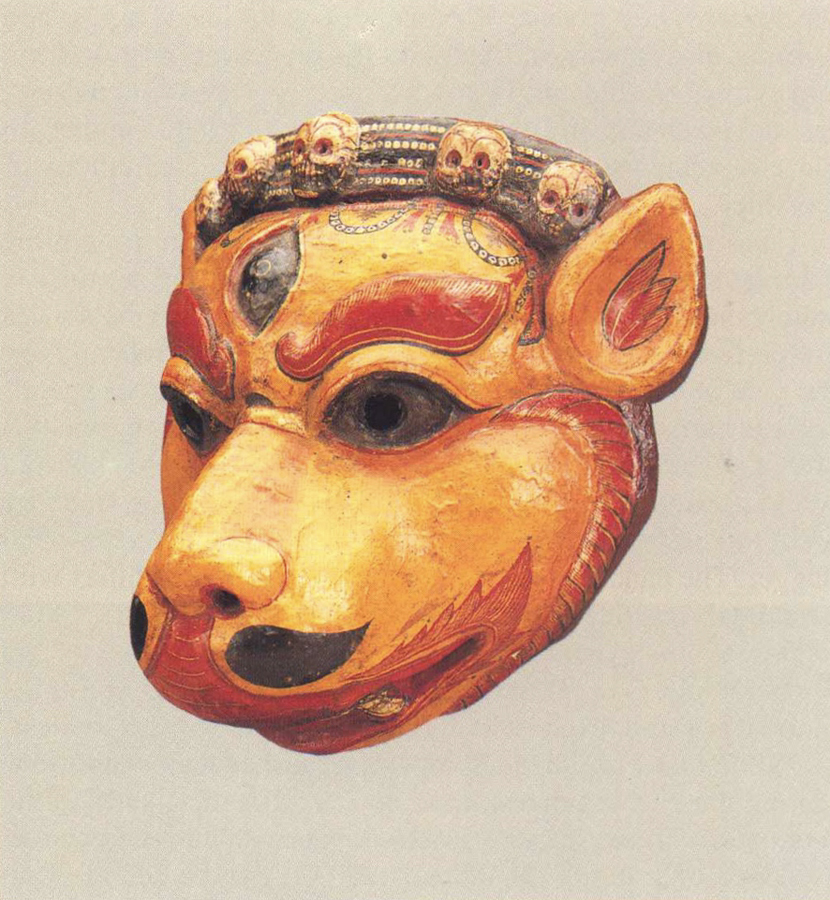 Fig. 10: Mask of animal-headed dakini from the Chakrasamvara mandala, Newar, Kathmandu valley, c. 19th c., Cloth and papier-mâché with colours, Height 18 cm, Private collection, USA, Photography by R. Faller |
While many of the most important masked dance traditions among the Newars concentrate on Hindu deities, such as the Ashtamatrika and Kartika Pyakhan dances mentioned above, evidence of a purely Buddhist tradition can be found in an unusual group of dance masks. These masks form part of a group portraying the esoteric Buddhist deities from the mandala of Chakrasamvara, resident of the agam (secret sanctum) of many of the Buddhist viharas (monasteries) in the Kathmandu valley. This group of brightly painted masks seems to bring to a three-dimensional form the mandala paintings that can be found among the ouevre of Newar artists since the fourteenth century. The central deity, Chakrasamvara (Fig. 8), is shown with four heads (created by usingt wo masks, one with three heads and the fourth smaller head attached to the back of the dancer's head). He is joined in the centre of the mandala by his consort, Vajravarahi (Fig. 8), and the pair are surrounded by various attendant dakas and dakinis (esoteric Buddhist deities), including two bird- and two animal-headed dakinis (Figs 9 and 10), and the dakinis of the eight directions (Fig. 11). As Chakrasamvara is an esoteric deity whose image and cult are not to be displayed except to initiates, it is likely that the dances performed with this set of masks were held in private.
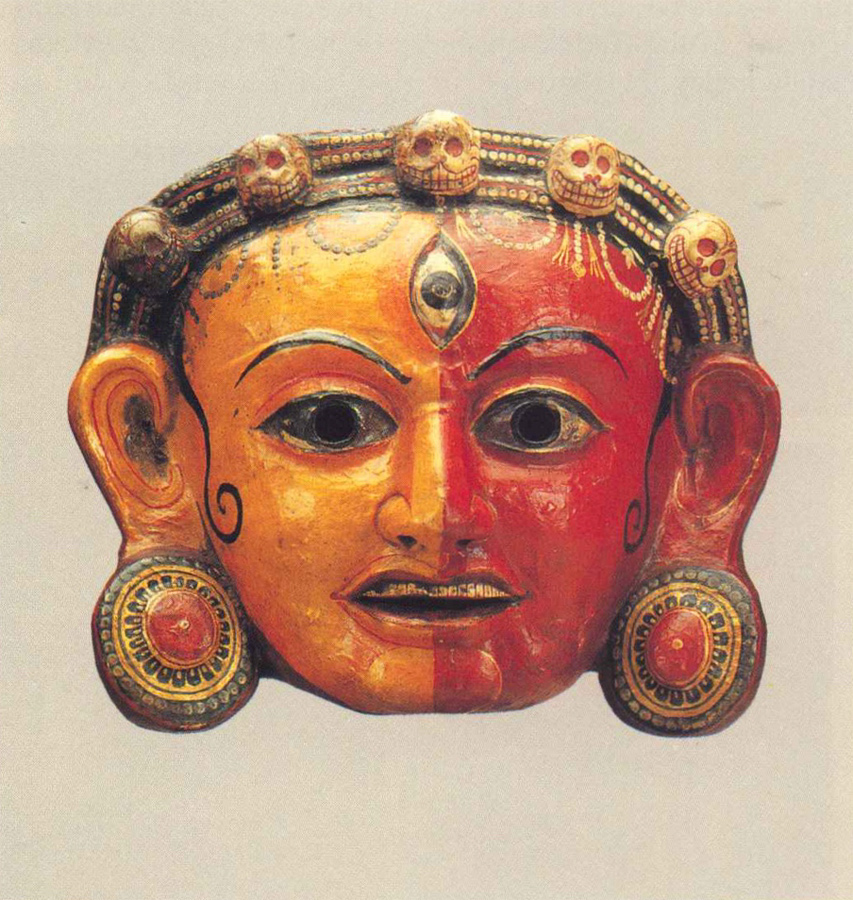 Fig. 11: Mask of the dakini of the southwest from the Chakrasamvara mandala, Newar, Kathmandu valley, c. 19th c., Cloth and papier-mâché with colours, Height 18 cm, Private collection, USA, Photography by R. Faller |
It is a notable feature of the Newar masked dance traditions that the dances unite Newars from many castes in the various activities that are involved in a performance. Priests from both the Buddhist and Hindu sections of the Newar community are involved in the preparations and rituals that take place before and during a dance performance. The Newar kings - representatives par excellence of the warrior class - were always intimately involved in the dancing; most of the dance troupes were in fact established by royal command, and several kings were noted patrons and aficionados of dance. Perhaps most notable among them was Pratap Malla (r. 1641-74), the eccentric seventeenth century poet-king of Kathmandu, who in one performance, in which he himself took part, was possessed by Narasimha, avatar (incarnation) of Vishnu. It is said that the king eventually died at a performance of the famed Jala Pyakhan in divine retribution for making unseemly advances to a young girl in whose form a goddess had resided. The various techniques and materials employed in the production of masks necessarily involved artisans from many ranks of society, from the higher caste metalworkers to the lower caste painters, while the dancers themselves vary from the high caste Buddhists of Patan who perform the Gan Pyakhan to the farming caste Jyapus who make up the bulk of the dance performers in most troupes, and the Ranjitakaras, or cloth-dyers, who perform the Lakhe dances of Kathmandu.
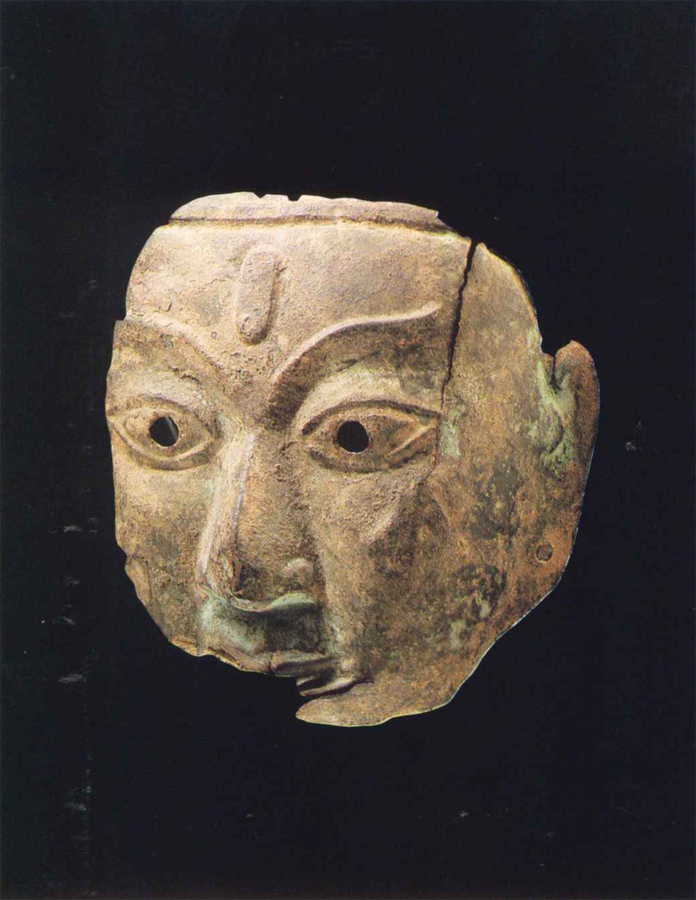 Fig. 12: Mask, Newar, Kathmandu valley, c. 17th/18th century, Repousse copper or brass, Collection Francois Pannier, Paris |
Newar dance masks are made in various techniques. Several masks are made from repousse metal that is then covered with a layer of papier-mâché and painted (see Figs 5 and 6). Figure 12 is doubtless of the same type, although being of considerable age, it has lost its original outer covering and indeed part of the mask itself. Among the oldest Newar masks known is a highly patinated example in wood (Fig. 13), which maybe from the seventeenth century. Newar dance masks in wood are rare, and presently no dance troupe in the Kathmandu valley is known to use wooden masks (an exception being the Lakhe masks such as Figure 3, which are often of wood). The afore-mentioned masks from the Chakrasamvara mandala are made of a mixture of papier-mâché and cloth, while the masks of the Navadurga dance tradition in Bhaktapur are remade annually for each dance cycle of a specially prepared clay mixture that is pressed into moulds, then dried and painted.
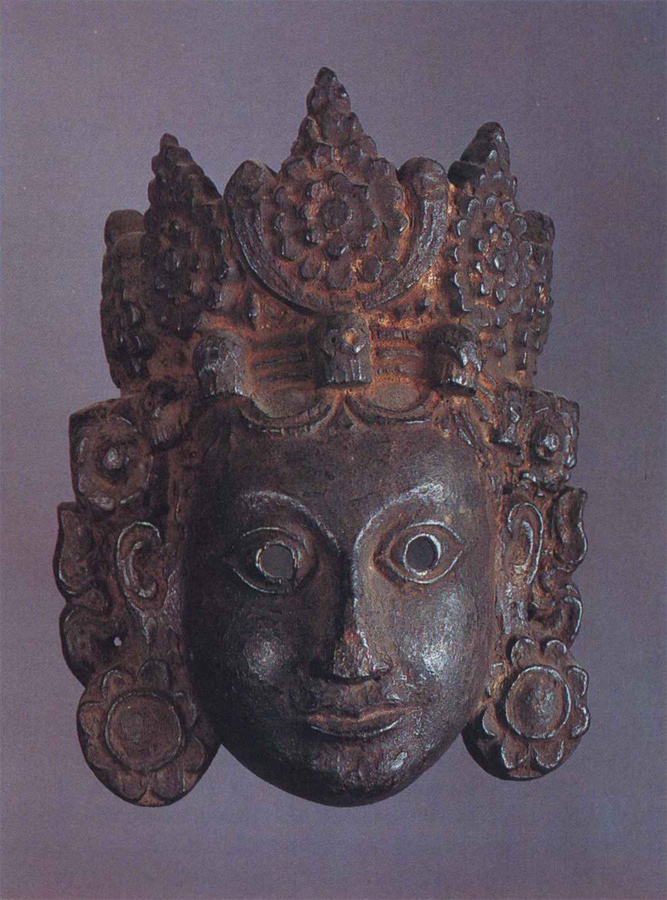 Fig. 13: Mask, Newar, Kathmandu valley, c. 17th century, Wood, Private collection, France, Photography by Frederic Pauvarel |
No discussion of the mask tradition of the Kathmandu valley would be complete without looking at the so-called Bhairava masks that play such an important role in many valley festivities, and which have long been admired as consummate examples of the Newar sculptor's skills in both metal and wood (Fig. 14). In fact, these objects are not really masks at all, in the sense that they are made not to be worn, but to be displayed, and many are much larger than those used in dance or drama. The appellation mask, however, is appropriate to the form of these striking objects if not exactly to their function. These masks of Bhairava are set out during certain festivals, when they become the focus of an unusual ritual celebration. To the raucous sound of a band of often inebriated musicians a stream of beer or occasionally spirits is released from a large jar through a hole in the mouth of the mask into a crowd of celebrants who push and shove for the chance to position themselves before the stream for the few seconds required to get a few swallows. The beer or wine is considered a prasad, or gift of the god Bhairava himself, who is a wrathful manifestation of Shiva.
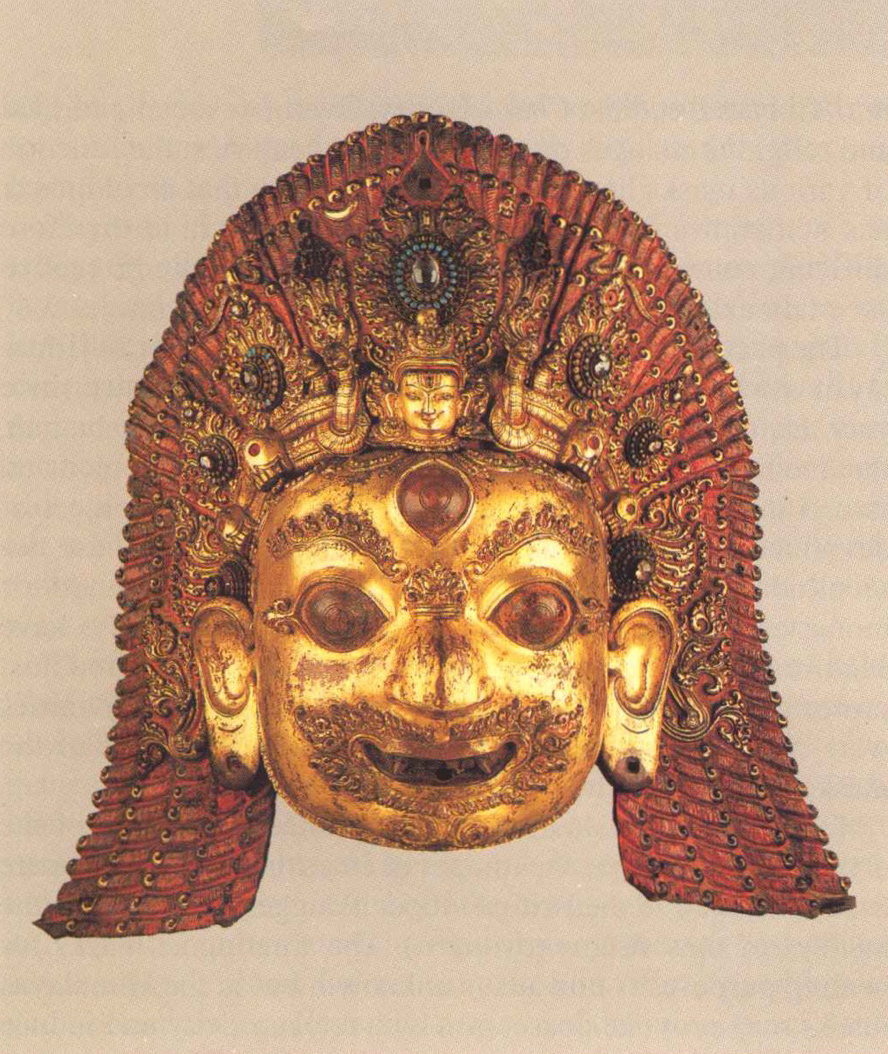 Fig. 14: Mask of Bhairava (Newari, 'Hathvomdyah'), Newar, Kathmandu valley, c. 16th c., Gilt repousse copper with semi-precious stones, Height 79 cm, Musée national des arts asiatiques - Guimet, Paris, MA 941 |
Masks in the art of the Newars are an extension of their art in other areas. As in their architecture, sculpture and painting, the Newars sought in their masks to make a bridge between the human world and the world of the divine beings who controlled the affairs of mortals. Whether displayed before the faithful, as in the case of the Bhairava masks, or worn during festival dances and dance dramas, these masks are seen by the Newars as embodiments of the gods themselves, as worthy of veneration and worship as a painting of the Buddha or a stone icon of Shiva.
Articles by Ian Alsop
asianart.com | articles