Asianart.com | Associations | Articles | Exhibitions | Galleries


Visitors' Forum

Asian Art  Forums - Detail List
Asian Art Forums

Message Listing by Date:
Message Index | Back | Post a New Message | Search | Private Mail | FAQ
Subject: tool marks on antique jades
Posted By: kk Tue, Jan 05, 2010 IP: 76.203.49.130

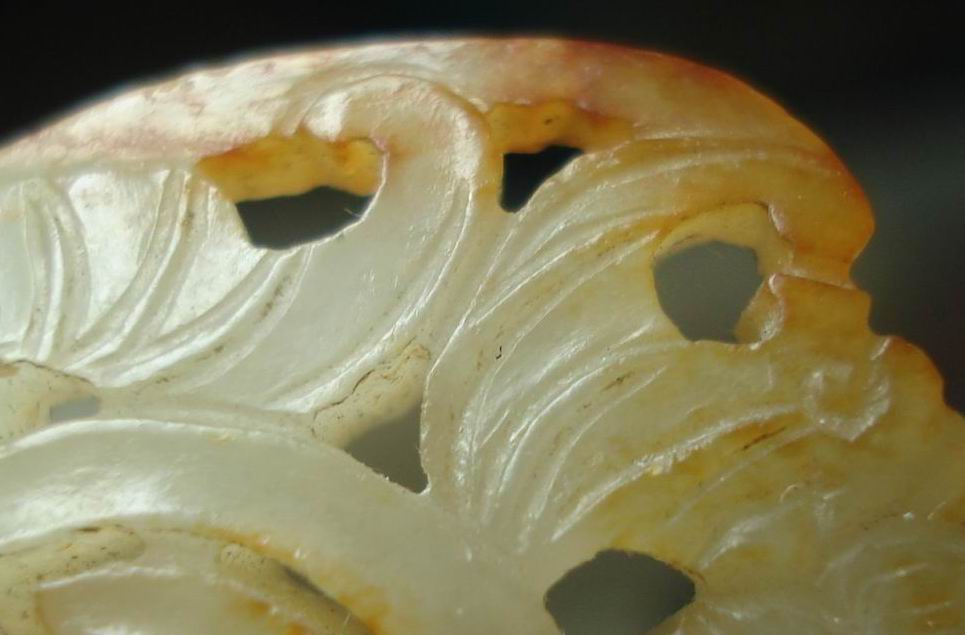
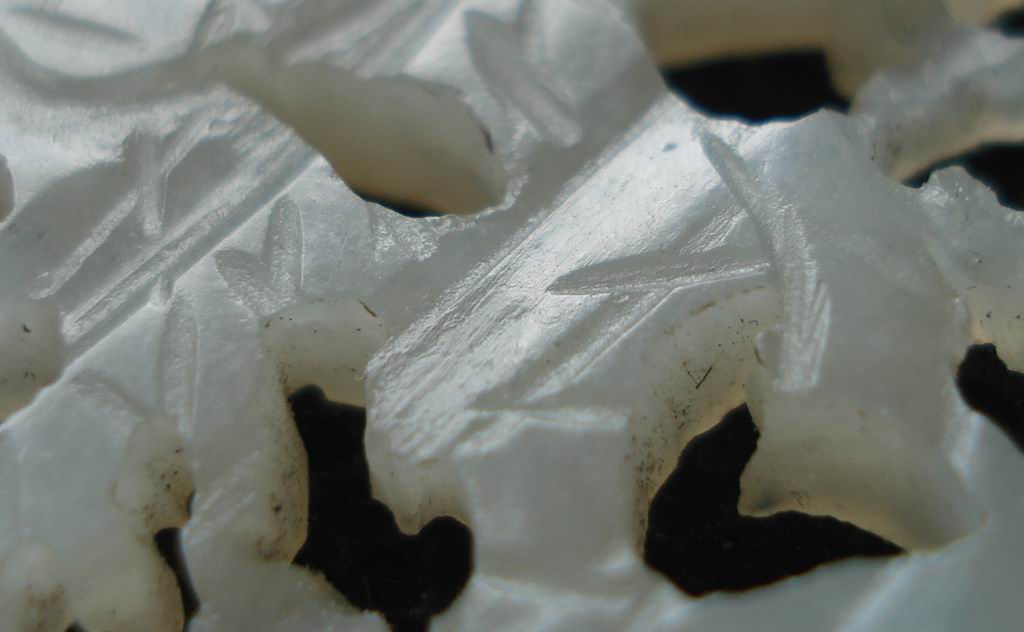
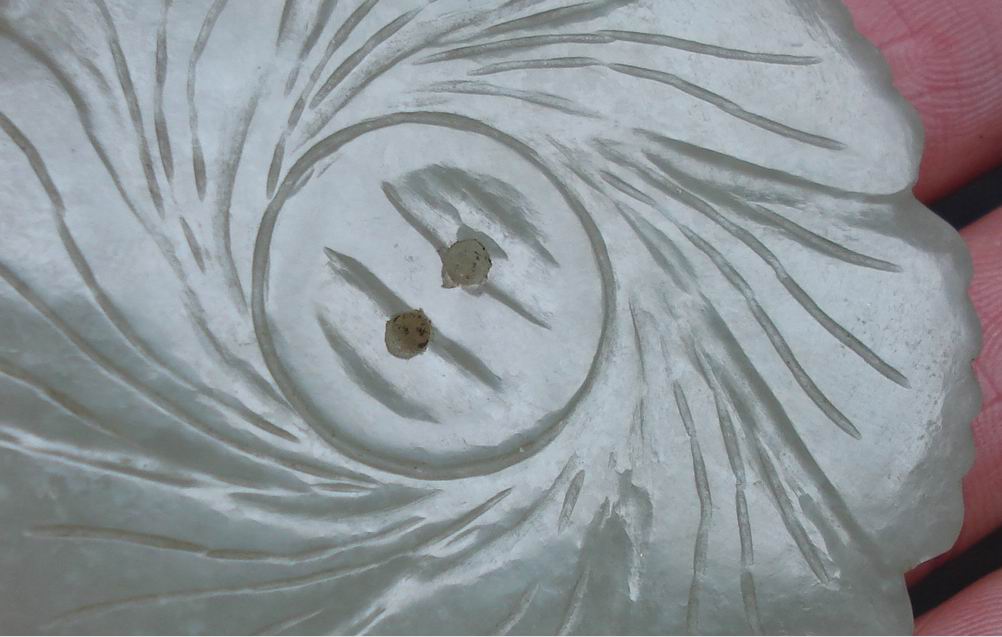
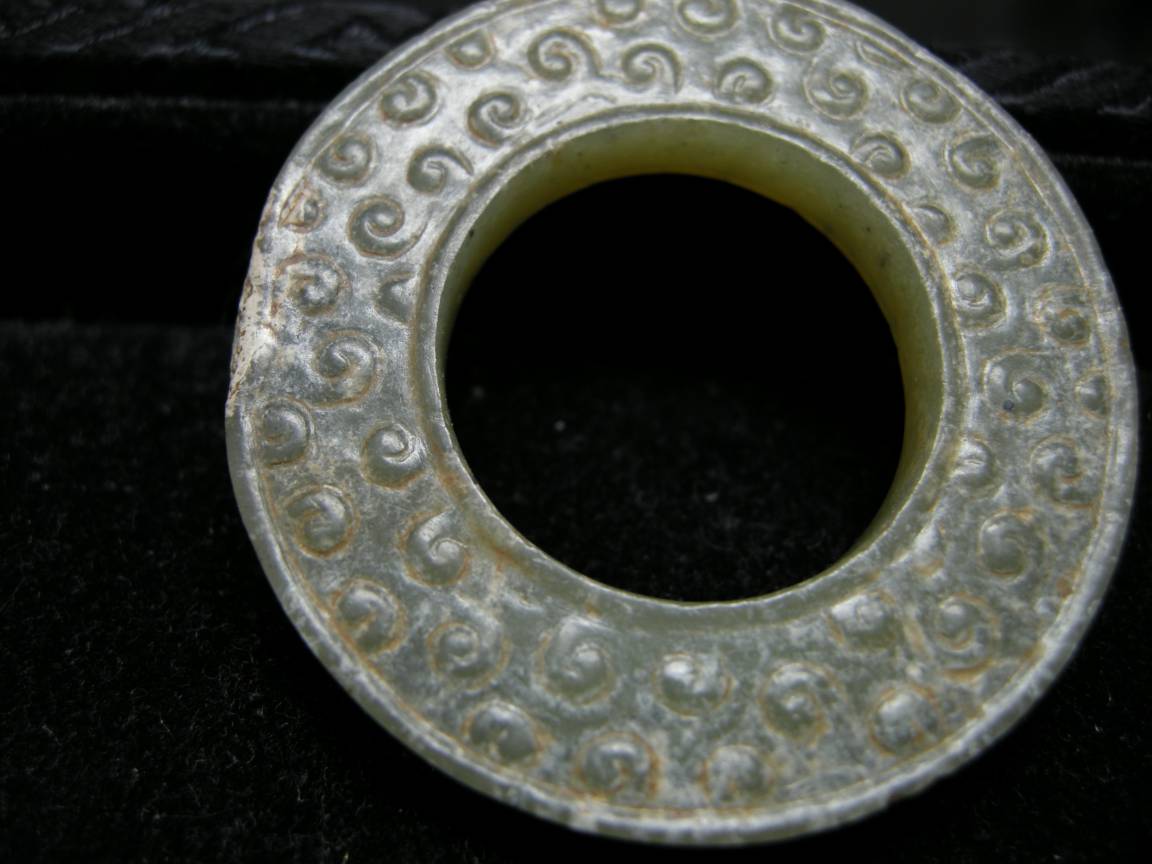
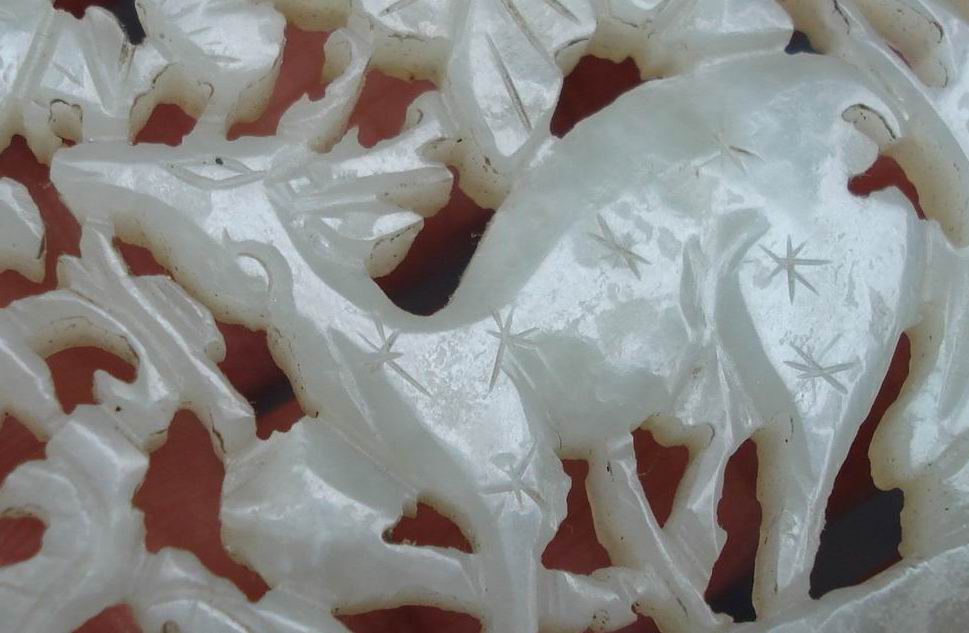
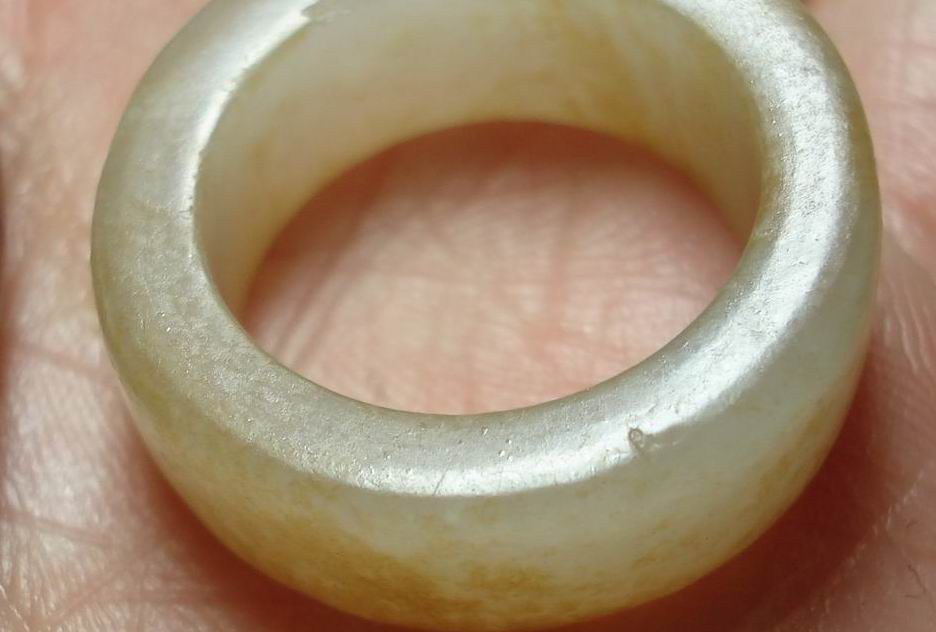
In respond to recent question on jade tool marks, I post some close up examples here. I got a lot of pictures and will post more when this post is up.


Subject:Re: tool marks on antique jades
Posted By: kk Wed, Jan 06, 2010

...............


Subject:Re: tool marks on antique jades
Posted By: kk Wed, Jan 06, 2010

...............more....


Subject:Re: tool marks on antique jades
Posted By: LEE Mon, Jan 25, 2010

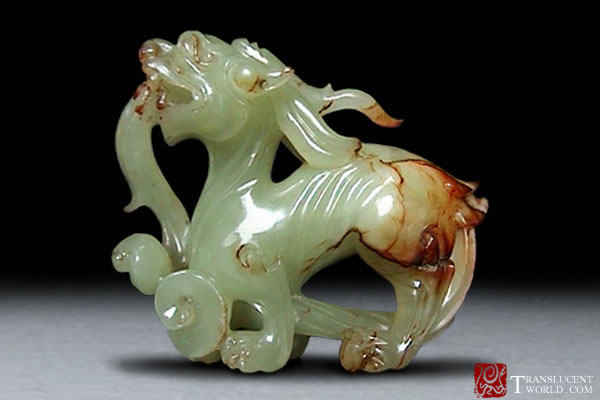
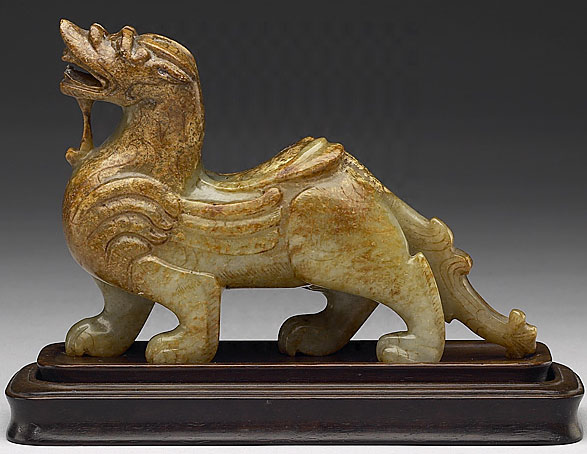
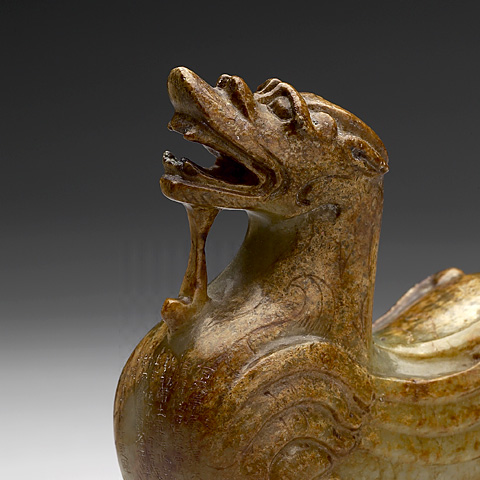
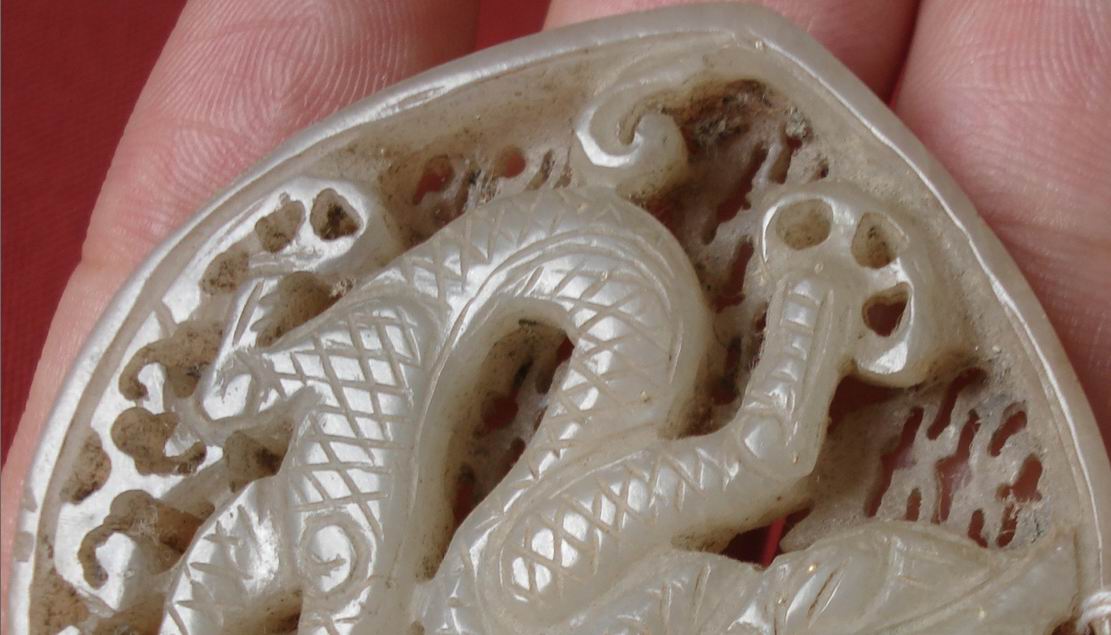
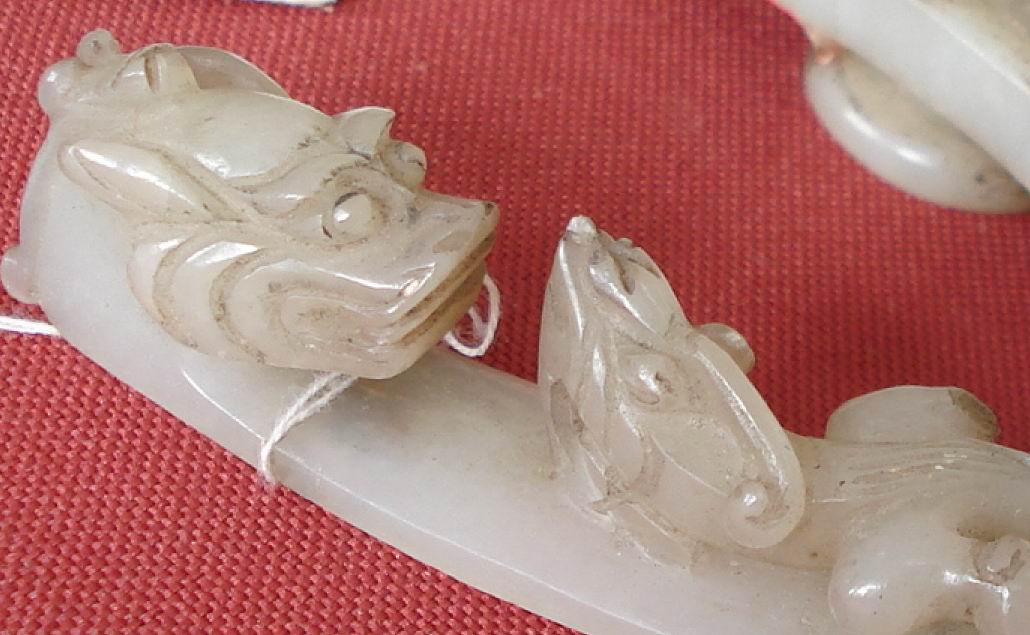
cuts on ming jade chimera. Yuan dynasty fish, Qianlong pendant. notice the rounded smooth cut on the tail fur and the shallow cut around eyes of the fish. Also notice how shallow the calligraphy relief is on the pendant.


Subject:Re: tool marks on antique jades
Posted By: kk Thu, Jan 07, 2010

............


Subject:Re: tool marks on antique jades
Posted By: kk Thu, Jan 07, 2010

.............


Subject:Re: tool marks on antique jades
Posted By: kk Thu, Jan 07, 2010

classic Ming Dynasty


Subject:Re: tool marks on antique jades
Posted By: kk Thu, Jan 07, 2010

.............


Subject:Re: tool marks on antique jades
Posted By: kk Thu, Jan 07, 2010

..............


Subject:Re: tool marks on antique jades
Posted By: kk Thu, Jan 07, 2010

..............


Subject:Re: tool marks on antique jades
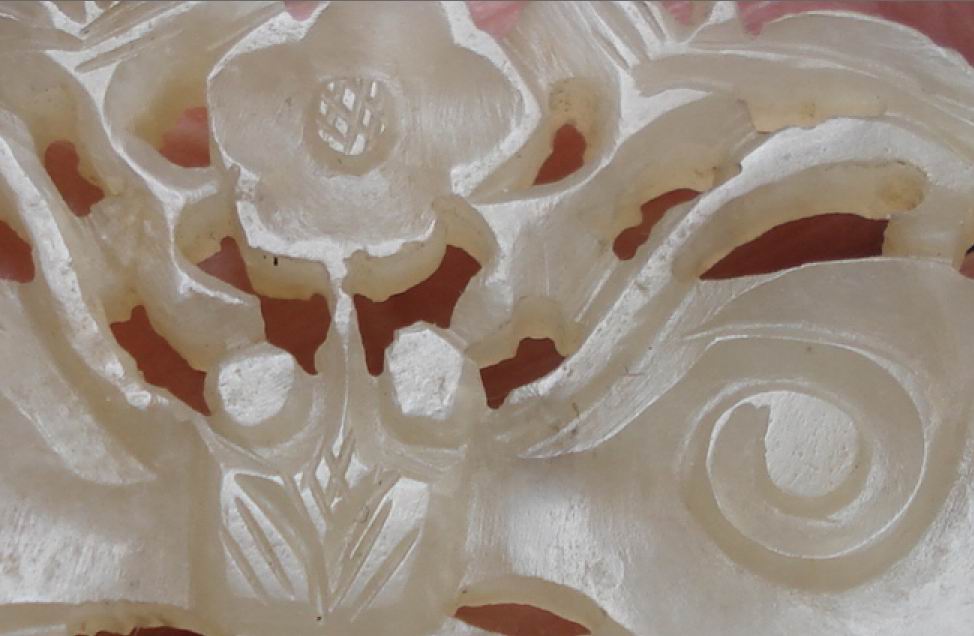
Posted By: Anthony J Allen Thu, Jan 07, 2010

Hi KK,
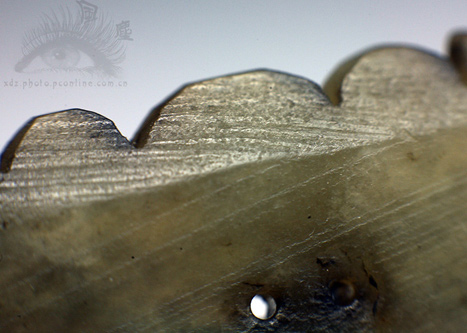
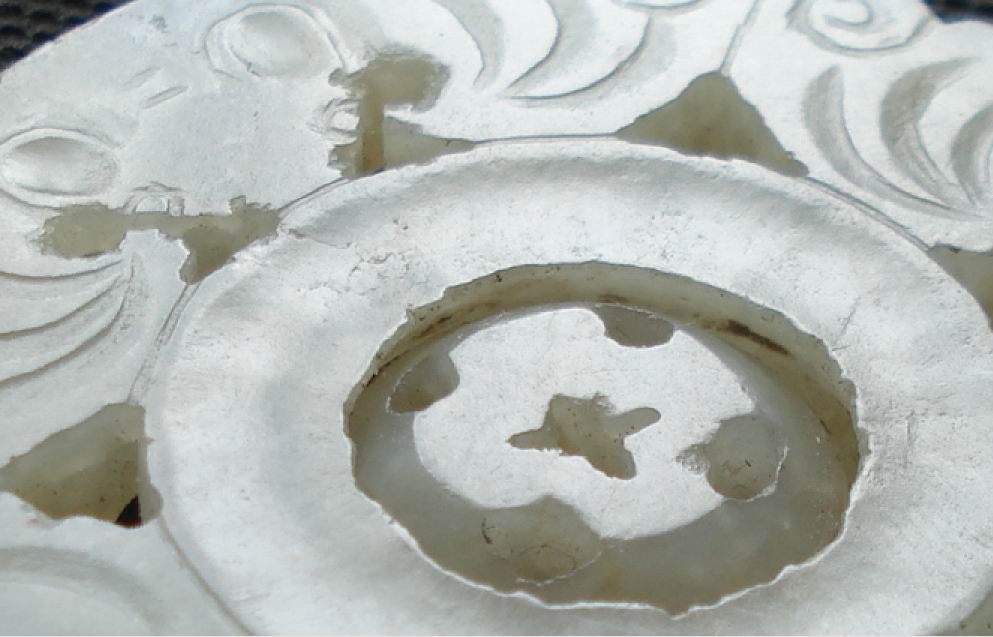
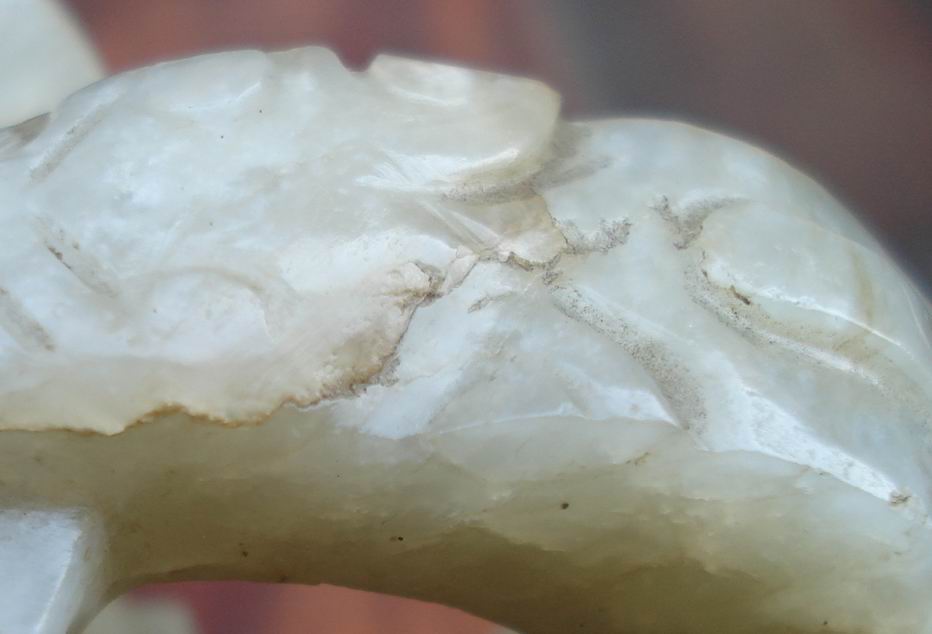
Thank you for posting such clear photos of modern tool marks. One can see the rotating bit marks clearly where they run off line, especially on the curved edges. The scoured bottoms of the cut lines are another immediate indicator.

While I do not wish to get embroiled with discussions with the lunatic jade fringe that seem to be moving their discussions from the Chicochai site to here, it needs to be remembered that the ancient jade craftsmen used an abrasive back and forth rubbing action to form their cut lines. This meant, with rare exceptions, that the bottoms of cut lines were smoothe and there were no chips on the upper edges.

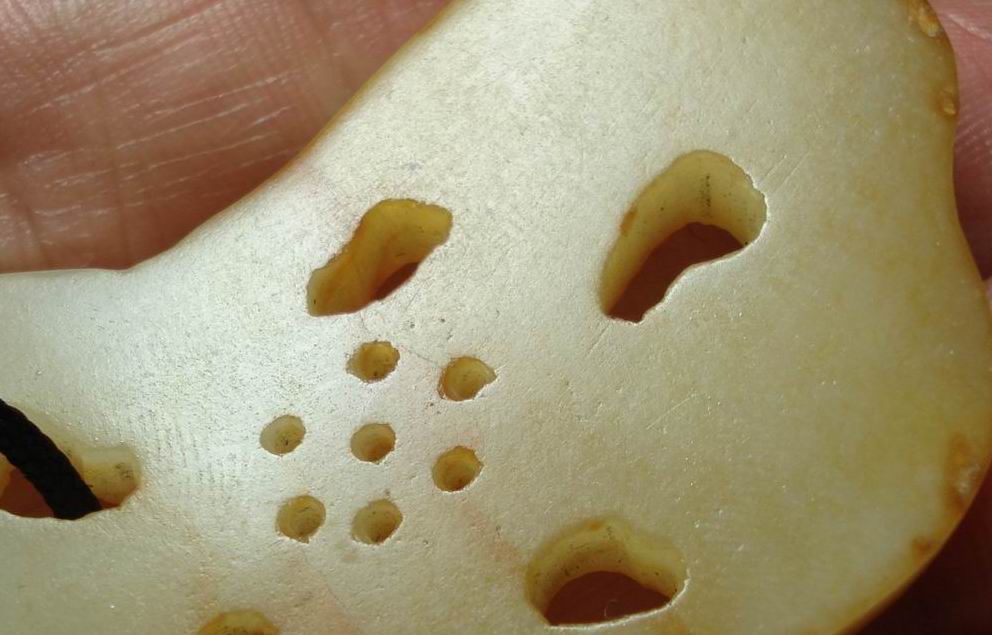
Also, look at the circle in the last photo, bear in mind this in ancient times would have been made with rotating bamboo (and abrasives), and ask yourself how it could be of undulating depth with varying width of cut.

These are in my opinion clearly signs of modern power tool manufacture.

Regards
Tony

Subject:Re: tool marks on antique jades
Posted By: Anita Mui Fri, Jan 08, 2010

Dear Tony

Pls kindly clear the air.

"lunatic jade fringe that seem to be moving their discussions from the Chicochai"..that including me?

I was there to against the flow of fakes for a month.

Rgs
Anita

Subject:Re: tool marks on antique jades
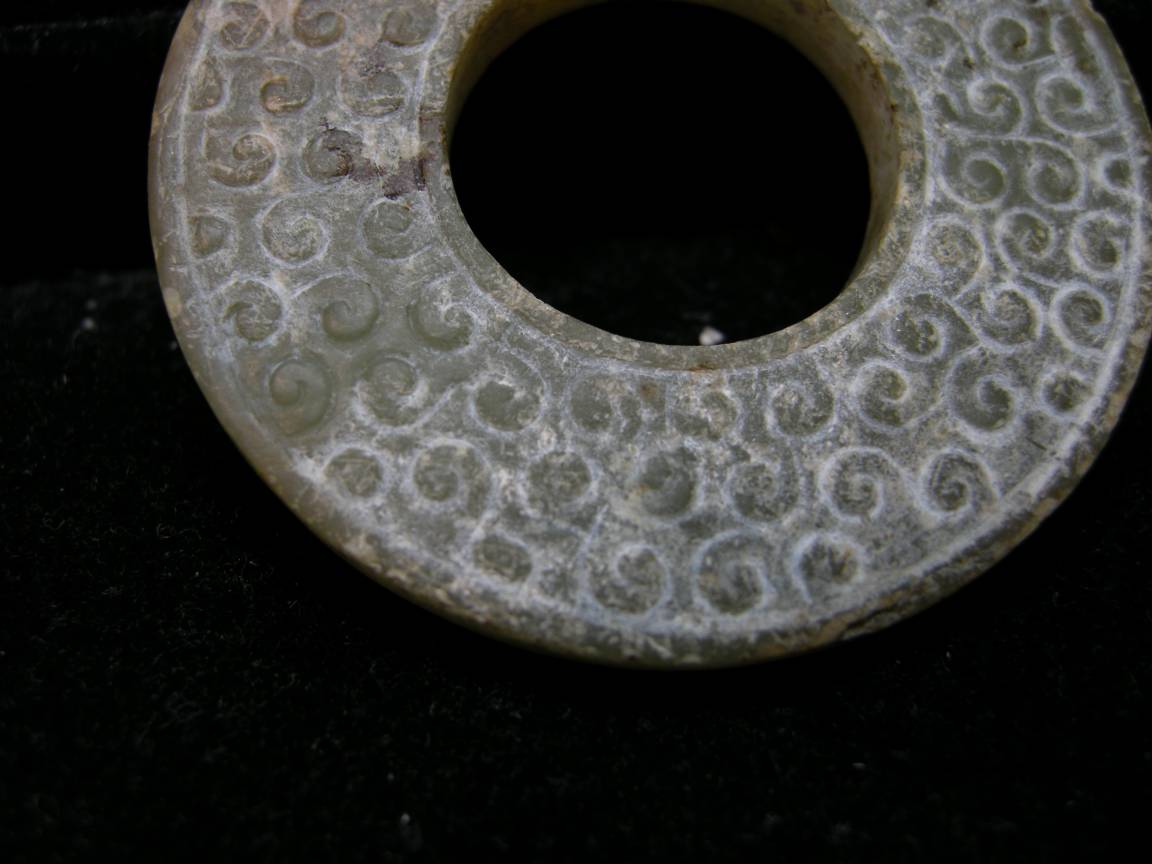
Posted By: Anita Mui Fri, Jan 08, 2010

Dear Tony Allen

Long time no see.

Sorry. I haven't seen the full name on your post, I thought it's a forum moderator Antony M. Lee. No need to answer my question, because I am a big fan of your battle in Choco forum, and I am not that lunatic.

Dear KK

Without personal handling, they all look modern to me, and the white jade you think may be molded and carved Peking glass.

Pls beware of parallel lines.

Have fun
Anita

Subject:Re: tool marks on antique jades
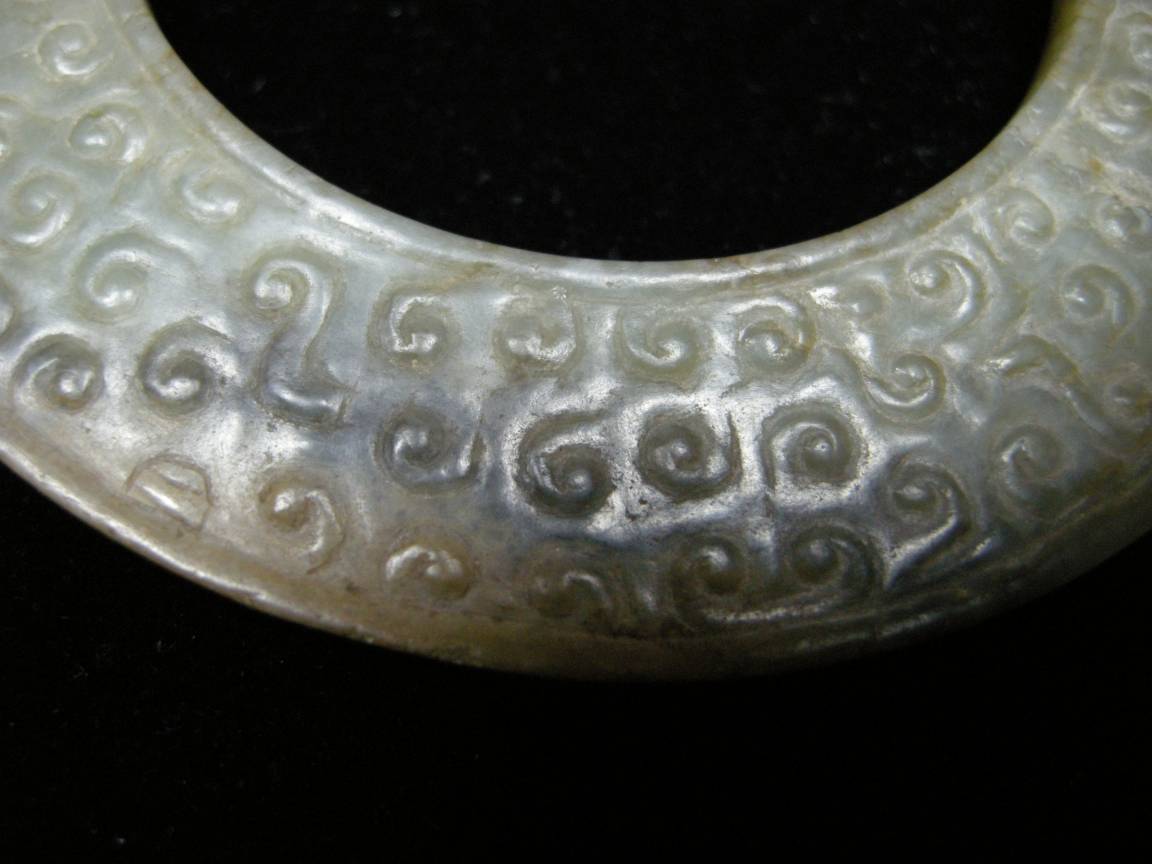
Posted By: Anthony J Allen Fri, Jan 08, 2010

Hi KK,
When I posted the above reply there were only 3 photos showing, so the one I refered to with the circle is now number 3.
All of the other photos (perhaps with the exception of the last archer's ring) show coarse machine carving, unlike the smoothe finished and polished holes left by a traditional bamboo drill.

These all look to be fairly cheap jade carvings similar to those currently available at the jade markets in Hong Kong or Guangzhou.

Regards
Tony

Subject:Re: tool marks on antique jades
Posted By: kk Fri, Jan 08, 2010

Tony,
No Chicochai here. Please take a second look. They are all old Ming/Qing jade and I try to show the more typical pieces here too with various tools marks (not just the bamboo stick technique). Please take a closer look and identify the type jade material. This will answer a lot of the questions.

They are not my pieces and not for sell. There are no or very little old jade was authenticate in this forum since Mr. Antony Lee left about two years ago. Smaller antique jade piece is common find. I just want to share some information with forum members here.


Subject:Tony & Mui - Modern jade carvings with modern tool marks?
Posted By: Bill Tue, Jan 12, 2010

Hi, KK:

I did not get a chance to thank you for posting those Chinese T.V. video links in which they discussed how Hetian jade were being able to transport all the way from the far-away XinJiang during ancient China and were used in the making of archaic Chinese jade carvings. That explained how hetian jade carvings were being found inside the Lady Fu Hao's tomb (Shang dynasty). They are very good links and I wish all jade collectors would take some time in viewing them although they probably would not profit too much from them unless they can understand Chinese. Some of the Mandarian spoken by even some of jade experts in the video were regional Mandarian mixed with their own dialects and was therefore extremely difficult to understand. Luckily with the help of the Chinese captioning, I was able to follow their comments with no great difficulty. Incidentally, Gu Fang was shown in one of the videos in which they were looking for large Kunlun jade boulders. (in a SUV)

It truly amazes me there are so many jade collectors believe they could attribute a jade carving in regard to their ages and material based on pictures only. Mr. Eric Hoffman, one of the most respectable jade experts in U.S., absolutely refused to attempt to attribute any jade carvings based on pictures only. He said it was difficult enough for him to attribut a jade piece even he could examine it personally, to do so with pictures only was just ludicrous.

To hear Tony Allen commenting: "posting such clear photos of modern tool marks" is truly entertaining.

First of all, when I asked one time in this and other forum, what exactly "modern tool marks" were, nobody seemed to be able to answer me and everybody seems to have different understanding of what modern tool marks were or what "modern" meant. When I asked Mr. Hoffman about tool marks and how to tell if they are modern or not. He told me some time you actually could not see any "tool marks" on a jade carving because they were polished off and that was actually a good sign because it might indicate that it was an antique or vintage piece.

Mr. Tony further commented:

"These are in my opinion clearly signs of modern power tool manufacture"

Once again, does modern power tool meant those high rpm carving tools powered by electricity and polished with high-hardness grit? Like the one that were being used after early 60s?

Just want to clarify.

His further comments: "These all look to be fairly cheap jade carvings similar to those currently available at the jade markets in Hong Kong or Guangzhou."

Really? Which one are you talking about? How about the others?

May be KK should really number his pictures so we will know what exactly Mr. Tony thought about each of them.

Now Ms. Mui jumped on the band wagon and could not wait to give her two penny's worth:

"Without personal handling, they all look modern to me, and the white jade you think may be molded and carved Peking glass."

All of them?

Now I am dying to wait for KK to tell us the ages aand materials of his jade carvings. Based on his recent posts and the links provided by him, I believe he possibly knows more about jade, than Ms. Mui and Mr. Allen. Therefore, why would he labeled this post as "tool marks on antique jades" and yet posted the pictures of "modern jade carvings" with "modern tool marks" here like Mr. Tony and Ms. Mui said?

Have fun!

Bill


Subject:Re: Tony & Mui - Modern jade carvings with modern tool marks?
Posted By: Roger Wed, Jan 13, 2010

Bill, I think most of us would appreciate it if you would STOP finding fault with others who participate in this forum. If you want to comment, please do so without researching old postings and attempting to trap individuals. Why must you compare one contributor against another and and ridicule their comments?

You have been involved in this and another forum for about two years, and now you seem to believe you are the "head of the class", offering critiques, correcting, chastising,and offending contributors who meet here to exchange opinions and information on Asiain arts. This is NOT an Ann Landers Column!

Bill, you have become a snippy, nit-picking bore! Learn from others and discontinue the essays. And, perhaps, in another ten or fifteen years, your comments may become worthwhile.

Subject:Disciple?
Posted By: Bill Sat, Jan 16, 2010

Dear Mr.Roger:

May be you should watch the Cardinals got beat badly by the NO Saints today at Phoenix?

You must be a disciple of Ms. Mui because you seem to have double standards in judging her comments and that of others? You see, Ms. Mui was the one who had been acting like the "Jade queen" of the class, calling Trish "Pinocchio", calling Diasai "Mongolian Ninja" and called me name that I could no longer recall. Why did she have to trash other people's jade collections and their jade web sites just because she did not like their jades? Had any of these other jade collectors done anything intentionally to harm her, cheated her or hurt her?

Ms. Mui recently posted a thread in which she warned other jade collectors the danger of asbestos found in "acid-treated fakes" despite the fact that asbestos is not the same as nephrite and therefore you cannot create asbestos by treating nephrite jade carvings with acid or any other chemicals. Did she admit that she was wrong? What made her believe that she would always be right and never be wrong?

She once used Gu Fang as her primary jade authority and praised the "Shang" jade Bi owned by Kevin and authenticated by Gu Fang as authentic and therefore very lucky for Kevin. Then all of a sudden she joined in the witch-hunt for the real and fake Gu Fangs. How in the world one can switch one's belief in such a short time? What exactly did she believe?

On one hand, she used all these jade references written by some unheard of western book writers as references and denounced some of the most respectable Chinese jade experts and refused to accept their conclusions that archaic Chinese jades had been made of Hetian nephrite jade that were imported from XinJiang without presenting any credible evidences in supporting her theory.
Why?

Yet, time after time, she insisted in her absolute authority in everything she said about jade in this forum and ridiculed anybody who dared to hold different opinions than hers. May be I was some time harsh on her, but if you would take some time in reading some of her comments made by her toward me and other jade collectors, may be you would see what I meant.

In short, you are really not that much better than me or Mui, because you have to insult me in your last paragraph. To me that is truly uncalled for especially you seem to have no clue with who Ms. Mui truly is.

B

Subject:Re: Disciple?
Posted By: Roger Tue, Jan 26, 2010

Bill, kindly review your 427 word essay and you will see exactly what I have explained to you. No further discussion on my part.

Subject:Re: Disciple?
Posted By: Bill Wed, Jan 27, 2010

Roger, Roger, kindly review all the messages posted in this forum especially
those that were posted here by Ms. Mui, especially how she invented "names"
for other jade collectors who did not agree with him, you would understand what
I meant. No further discussion is needed. Cheers! B

Subject:Re: tool marks on antique jades
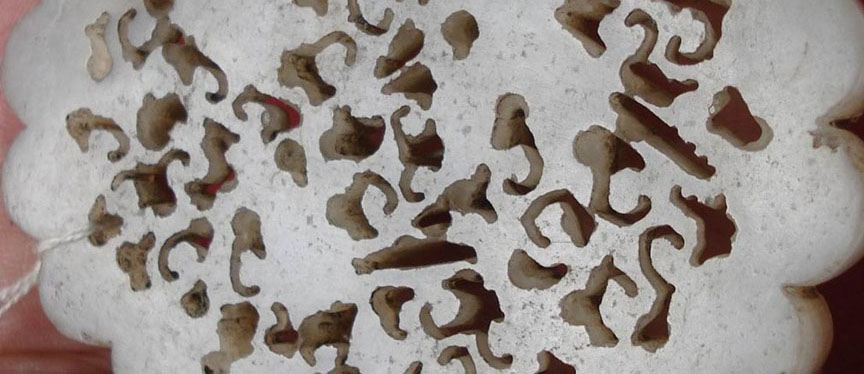
Posted By: Lee Sun, Jan 10, 2010

I obtained this carnelian seal bead with bull motif from Burma and would appreciate any comments whether this is old or new.

Thank you.

Lee


Subject:Re: tool marks on antique jades
Posted By: kk Mon, Jan 11, 2010

Hi Tony and Anita,
I am not surprised that you said they are all new. I had post couple pieces of Qing Dynasty jade on this forum in the past. I know what to expect. Almost all of the jade post on this forum would be consider modern or can’t tell without handling with 1or 2 exception. Not able to tell the old piece from the new isn’t much better than Chicochai. Don't do you think?

The Bi’s are way older warring state/Han Dynasty, but most are Ming/ Qing jades here. As I said they not my collection, but from the high quality picture,it should not be hard to tell most are hetian jades (not the Bi). The tiny fissure, “little cloud inside”, “jade skin” and patina are shown clearly on majority of pictures. I am little disappointed Antia saw Peiking Glasses here! I hope you understand what this mean when comes to dating jade. New fake usually are not made with expensive Hetain jades, but often Russian, Korean jades…

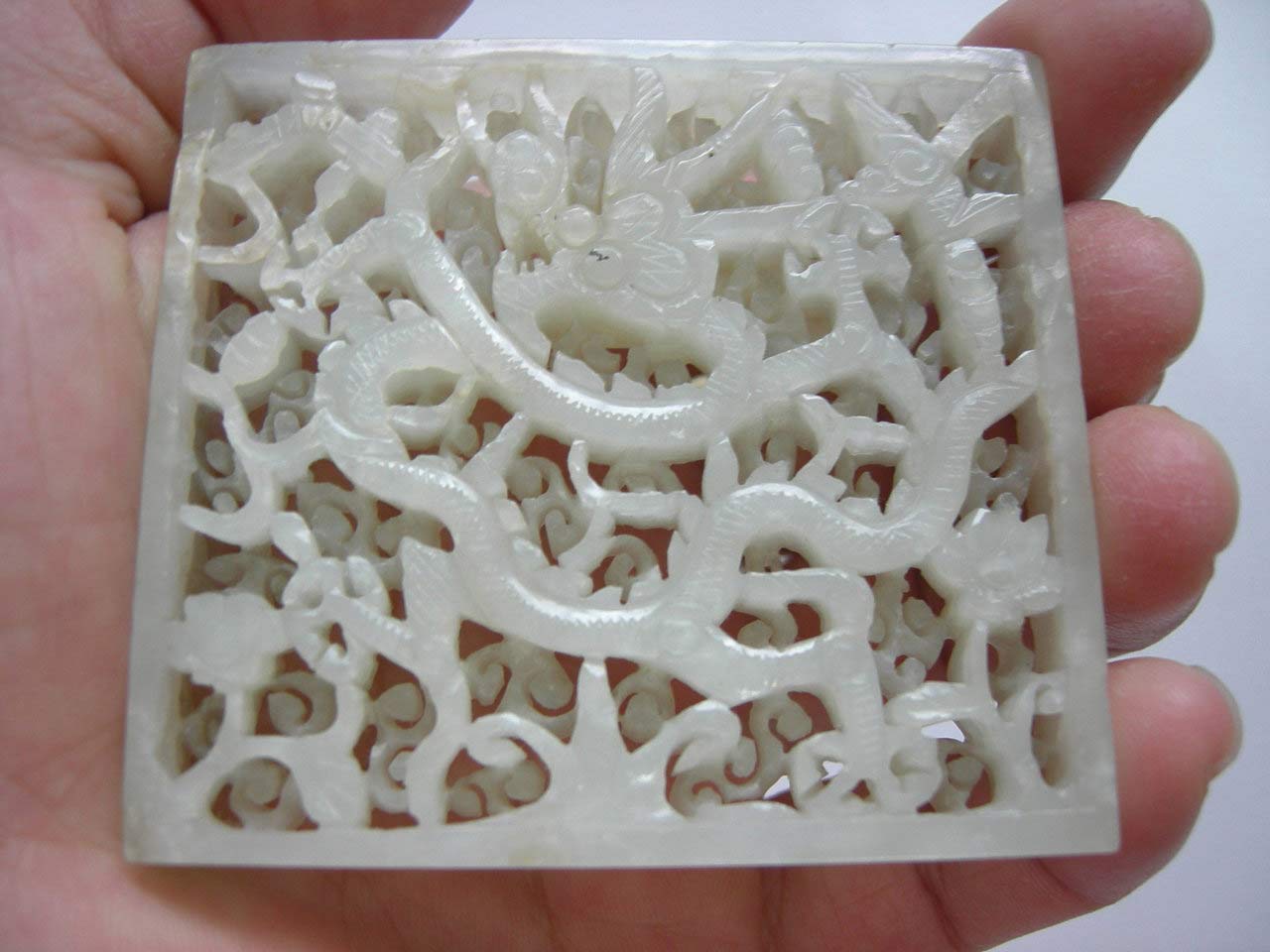
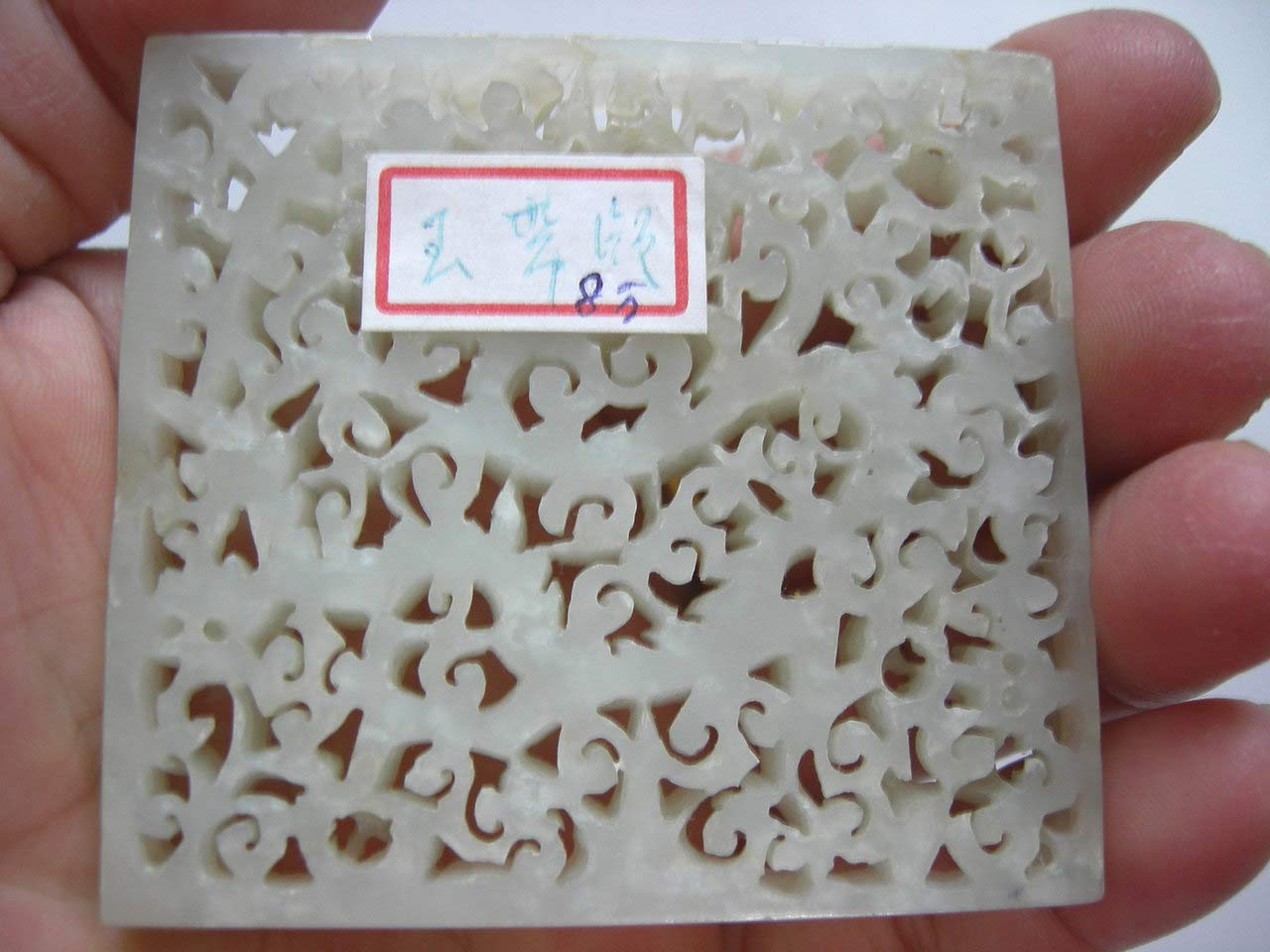
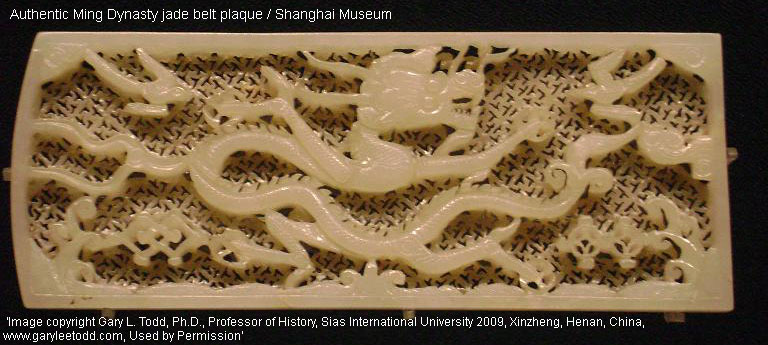
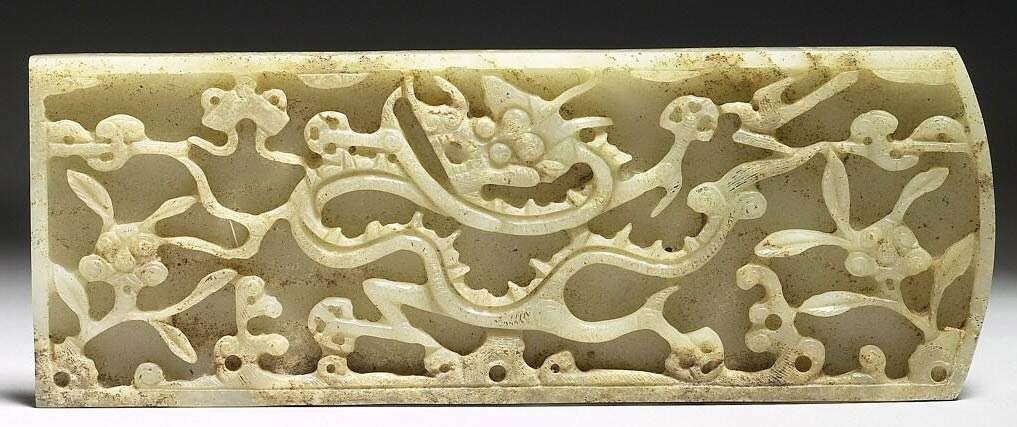
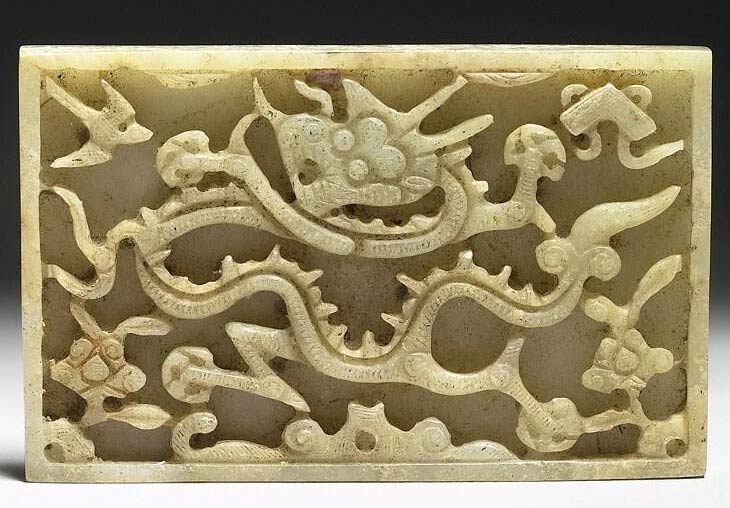
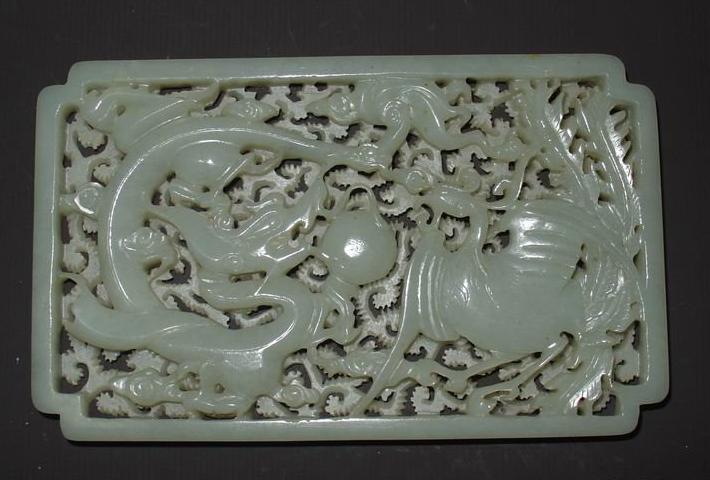
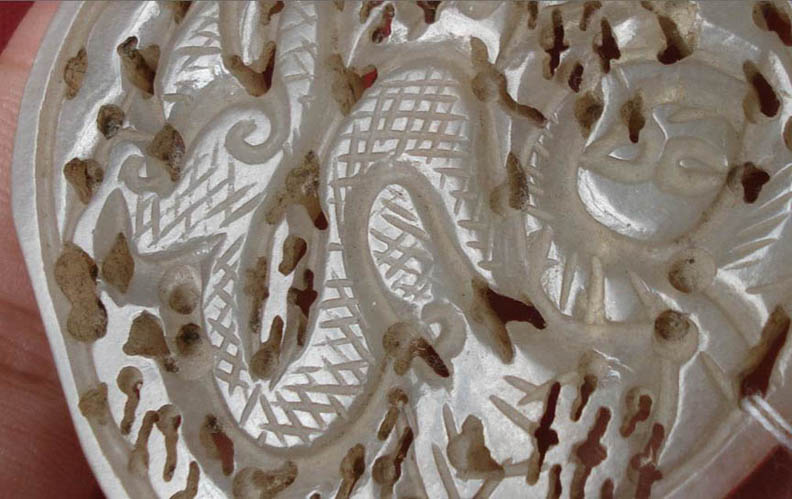
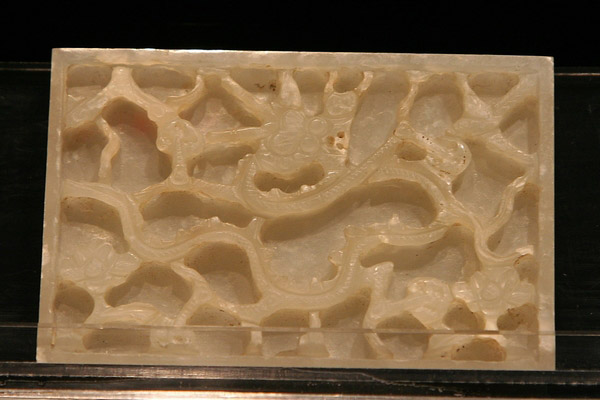
I post a lot of jades here and I will only pick one #17 to talk about. It is a Ming jade belt plague with a dragon design. The skinny dragon is in classic early-mid Ming style, It was done in wire pierced technique which is very popular during Ming period (nothing like the bamboo stick technique Tony mention). This type of dragon belt plague was discovered in many high ranking Ming tombs. I included a few pictures of similar pieces from a Ming tomb and now it was in the collection of Beijing museum.

In jade craving just like porcelain painting, “style” is the key for when coming to determining its age. In this case this skinny but aggressive dragon design was only made in this one period not earlier, not later period.

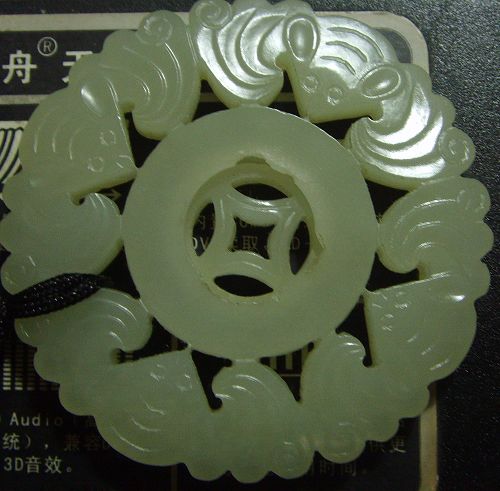
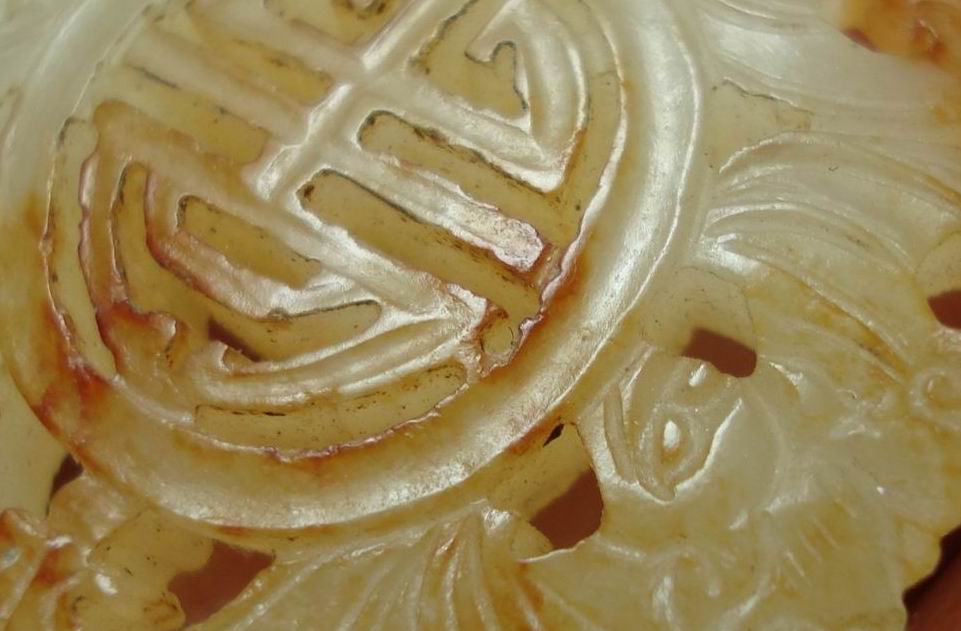
Tony, Jade #3 is a close-up of a “lucky wheel” pendent with rotating core, a fairly common jade design during Qing Dynasty.


Subject:Re: tool marks on antique jades
Posted By: kk Mon, Jan 11, 2010

I will post one more piece here: a classic Ming style belt plague. Please compare the craving to the above samples. For these who collected Antique bronze. It should be easy tell it is an old piece from its patina.

Lee, your piece is old or not really depend on which forum you Post it. Cheer.

A few clear pictures will be nice.


Subject:Re: tool marks on antique jades
Posted By: Lee Wed, Jan 13, 2010

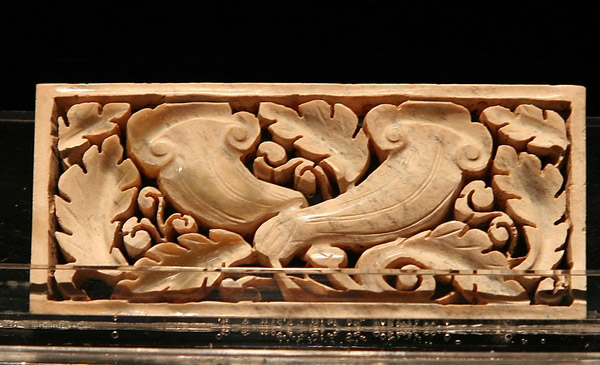
Hi KK, It is nice to see you got a real enthusiasm for jade. However I must warn you that there are plenty of replicas in the market and the ones you have shown the only genuine piece are the last 3 pieces- the jade plaque with the bronze, the set of dragon jade plaques and the bone jade fungi plaque. The rest are replica possibly modern or republic. I have seen modern replicas of such items in Beijing. You got to study the cut lines they mustn't be broad or deep. the ones you shown are cut with a small diamond disc. also there mustn't be any unnecessary cuts.

Subject:Re: tool marks on antique jades
Posted By: Anita Mui Wed, Jan 13, 2010

Dear KK

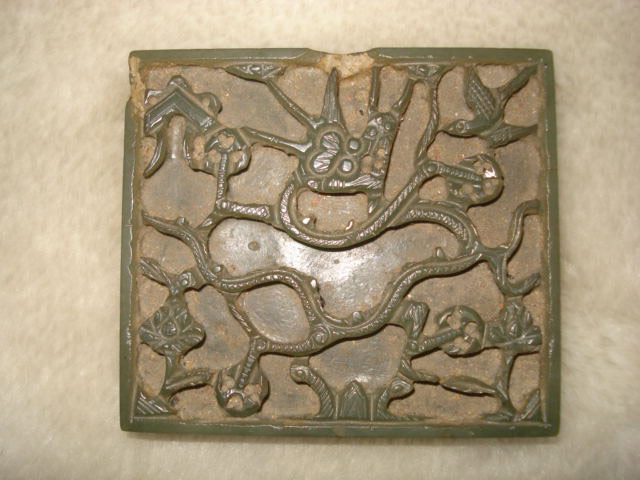
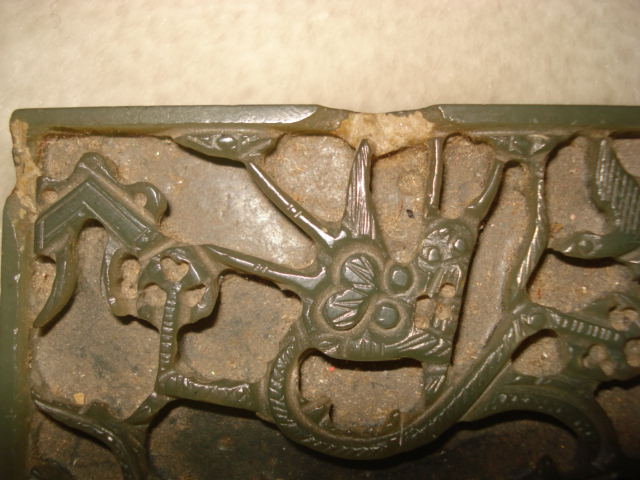
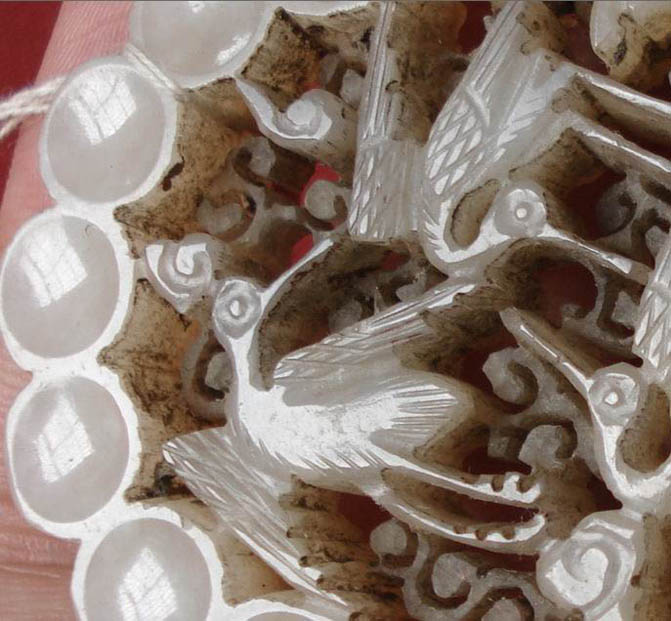
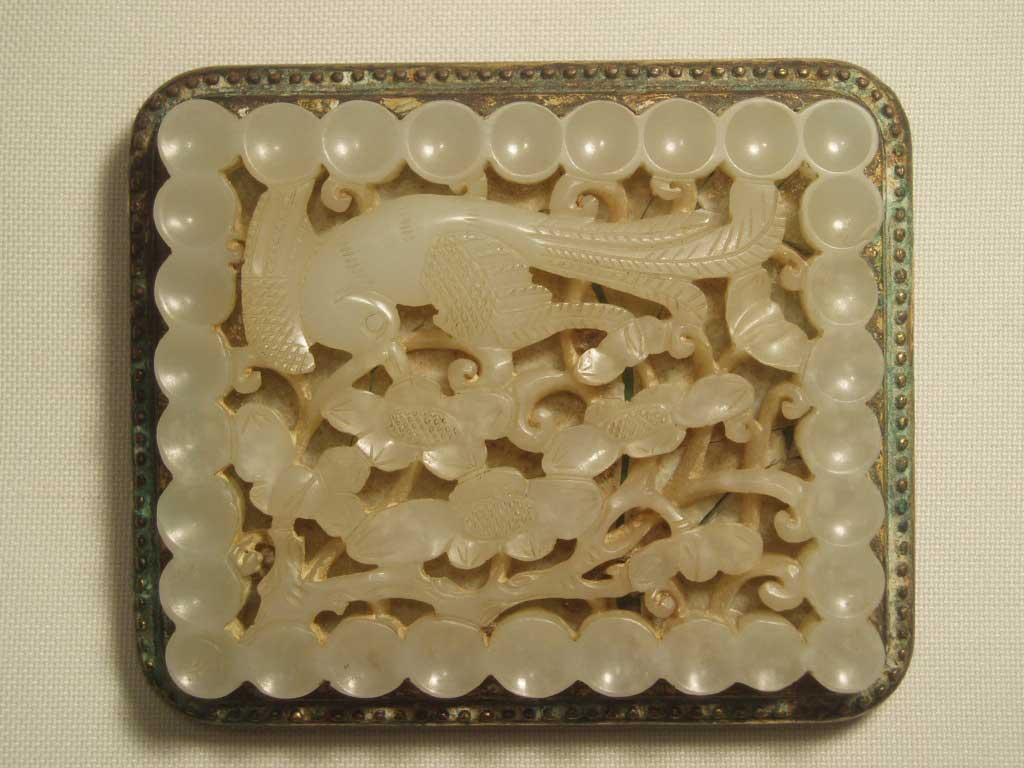
Without personal handling you can not identify good fakes from authentic ones. Viewing at pictures can't say much, unless it is a bad fake like that so-called Ming Dynasty jade belt plaque fitted with bronze you showed, the bird has no head, what that bird possibly be, a phoenix? a magpie? a wood pecker?

A magpie perched on a branch with plum blossoms started as of "The Qing Dynasty". And dug up Qing Dynasty bronze is not that old as your belt plaque.

Have fun
Anita

P.S. Shang Dynasty was at Yellow River valley, and that river originates from Kunlun mountain range...in case Lady Fuhao harvested jade from yellow river base or then walked up stream to the mountain and dug up a jade slab in there. Would she get the same mineral content as Hetain jade? because those stones are from the same mountain range?

So? Two pieces of limestone picked up from Rocky Mountain range at Colorado and at New Mexico do not share the same mineral content?

Subject:Re: tool marks on antique jades
Posted By: Anthony J Allen Wed, Jan 13, 2010

Unfortunately it is not possible to have a meaningful discussion on jade carving without the likes of Bill (experience 3 years, buying on eBay) butting in and questioning the experience and integrity of anybody who does not follow the Chicochai mantra; you can buy real Hongshan jades on eBay.

Why not comment on the carving techniques Bill? They are clearly to be seen in the pictures and as I said previously I can see no signs of bamboo drilling, but rather the clear signs of modern electric power drilling.

Just because Bill still cannot spot these indicators does not mean other more experienced collectors and dealers cannot.

KK, I am sorry I do not agree with you, and the fact that on this occasion Anita and I appear to be in agreement, does not mean necessarily that we always are or will be. However, we both appear to denounce the myth that Hongshan jades can be bought readily on eBay.

Bill, you could make your point (whatever it is) if you targeted the jade rather than the commentator, instead of vacillating between both the for against viewpoints. May I conclude by reminding you that is not all that long ago that your ex-friend B was your mentor.

Regards
Tony

Subject:Re: tool marks on antique jades
Posted By: Oriental Treasures Wed, Jan 13, 2010

While it is difficult to attribute any jade carvings based on pictures only, and especially when the complete items are also not shown, however, it is certainly doable when the photos are so very clear, as in this case, and that the tell-tale forms, styles, etc. are all there. Our comments are as follows:
Picture 1 & 2 – we believe this is Ming
Picture 3 (flower button) – while it has many Ming features, we need to handle and see the piece to confirm it.
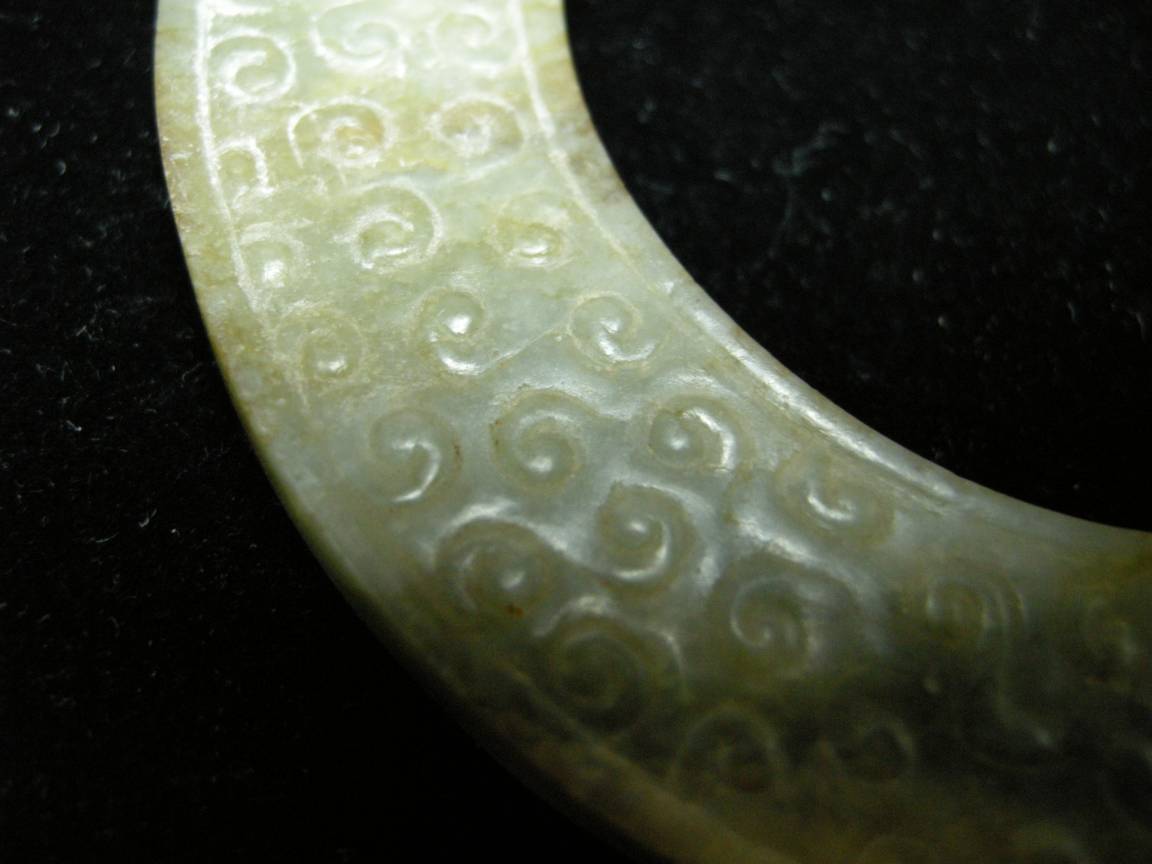
Picture 4 (bi) - This bi appears to be Han based on the very well carved “tad poles” in deep, sure strokes.
Picture 5 (deer motif) - while it has many Ming features, we need to handle and see the piece to confirm it because there are a few points of concern:
1 The surface appears to be rougher and “undulating” than standard Ming.
2 The “stars” appear to be rather deliberately and haphazardly carved as if to make it look like Ming.
Picture 6 – we do not see any modern tool marks and have no reservation as labeling it Ming.
Picture 7 (dragon plaque) – This is classic Ming
Picture 8 & 9 qilung hook) – we need a closer look.
Picture 10, 11 & 12 – we do not see any modern tool marks.
Picture 13, 14 & 15 (bi) – we are comfortable dating them to Han
Picture 16 - we do not see any modern tool marks.
Picture 17 & 18 (dragon plaques) – we consider them as standard Ming.
Picture 19 & 20 - we do not see any modern tool marks and have no problem accepting them as Ming.
Picture 21 (crane plaque) – it has many Ming features, but, the striations on the wings appear different from standard Ming. We need a closer look.
Picture 22, 23 & 24 (bi) – we think these are Han
Picture 25, 26 & 27 - we do not see any modern tool marks.

Tony pointed out the “chips on the upper edges.” In Cantonese we call that ”cheok gong” or pull/jab/saw carving with metal wires that produced those jagged edges. He went on to say “in ancient times would have been made with rotating bamboo (and abrasives),” By “ancient time”, did Tony mean Ming, Shang/Zhou or even Neolithic? As far back as the Hongshan Culture, a duet of square pottery molds were unearthed at the relics of a house at Xitai, Aohan Banner, which is the earliest mold for metal casting, shows that the early people of Hongshan Culture had mastered the technology of copper or bronze casting. Small copper rings were excavated. During the Longshan Culture, bronze forge appeared. There are two pieces of bronze prick unearthed at Sanlihe village, in Jiaoxian County of Shandong Province, which remained from this transitional period between Stone Age and Bronze Age. By the Xia Dynasty, bronze was already used to make weapons and vessels of all types. And of course we all are aware of the fantastic bronze wares of Shang and Zhou Dynasties.
Then, iron was introduced in the Zhou dynasty.
There has never been any evidence that bamboo was used to drill holes. If one looks carefully at the very fine, parallel lines on Liangzhu jades, one would come away with the impression that metal must have been used. The latest consensus of jade experts is that metal was already in use to carve jade during Neolithic period.
Therefore, to suggest that Ming jade carvers were still using bamboo to drill holes is utter nonsense when iron (and maybe even steel) was readily available.

Oriental Treasures

Subject:Re: tool marks on antique jades
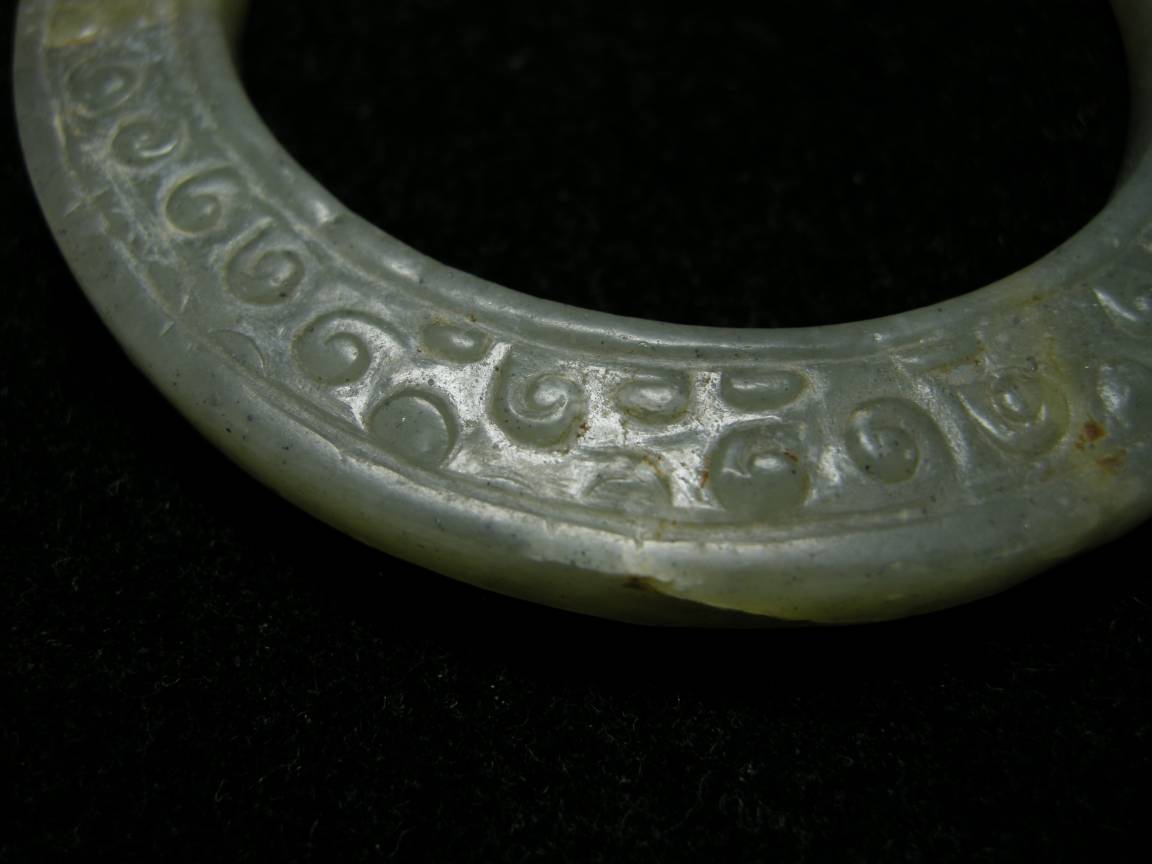
Posted By: Anita Mui Wed, Jan 13, 2010

Dear Oriental Treasures

Are you from website below?

http://www.orientaltreasures.org/main.php/v/Nephrite+Jades/

KK's stuffs look like they are from your collection, aren't they?

------------

About Iron Casting.

During the Shang Dynasty, Chinese people began to learn to use iron. The iron-edged bronze sword unearthed at Liujiahe Village in Pinggu, Beijing, is one of the earliest iron-containing objects discovered in China. The iron blade was cast from smelted meteorite iron, and then inlaid into the bronze handle. The sword is testimony to the fact that people had mastered the fairly advanced technique of iron smelting and casting iron with bronze.

Iron smelting technology made breakthroughs during the Warring States Period (475-221 BC). Technologies for cast-iron forging, and carburized bronze from "block iron" showed a marked improvement. Malleable cast iron products show greater hardness and better ductility. An iron mold from the Warring States Period excavated in Xinglong, Hebei Province, was a standard white-iron casting instrument.

Source:-

China Internet Information Center
http://www.china.org.cn

The China Internet Information Center offers broad access to up-to-date news about China, with searchable texts of government position papers and a wealth of basic information about Chinese history, politics, economics and culture.

The authorized government portal site to China, www.china.org.cn is published under the auspices of the State Council Information Office and the China International Publishing Group in Beijing.
------------------------
About the tooling.

In neolithic China, stone that is softer than nephrite with abrasive was employed for drilling technique. So as to animal horn, animal horns, animal tooth, bamboo, and tree trunk with abrasive were also used.

Animal dry skin, copper, early bronze with abrasive grease were used for sling cut.

In historical period, bronze and iron tool were employed to jade work.

Bronze Flat saw without teeth was used for cutting jade. Rotating bronze disc, bronze chisels, bronze stick, bronze tube, bronze sting were employed.

All of ancient tool marks will show backward and forward grinding.

It is very hard to see tool marks on authentic jades in Museums in China. The easy way to see tool marks on your jade are modern or not, You "must" buy a jade puzzle ball which is selling along China Town, then compare to your so-called ancient jade in your collection.

Hope this help.

Have fun
Anita

P.S. The historical period and pre-historical period were divided by the invention of written language.

Subject:Re: tool marks on antique jades
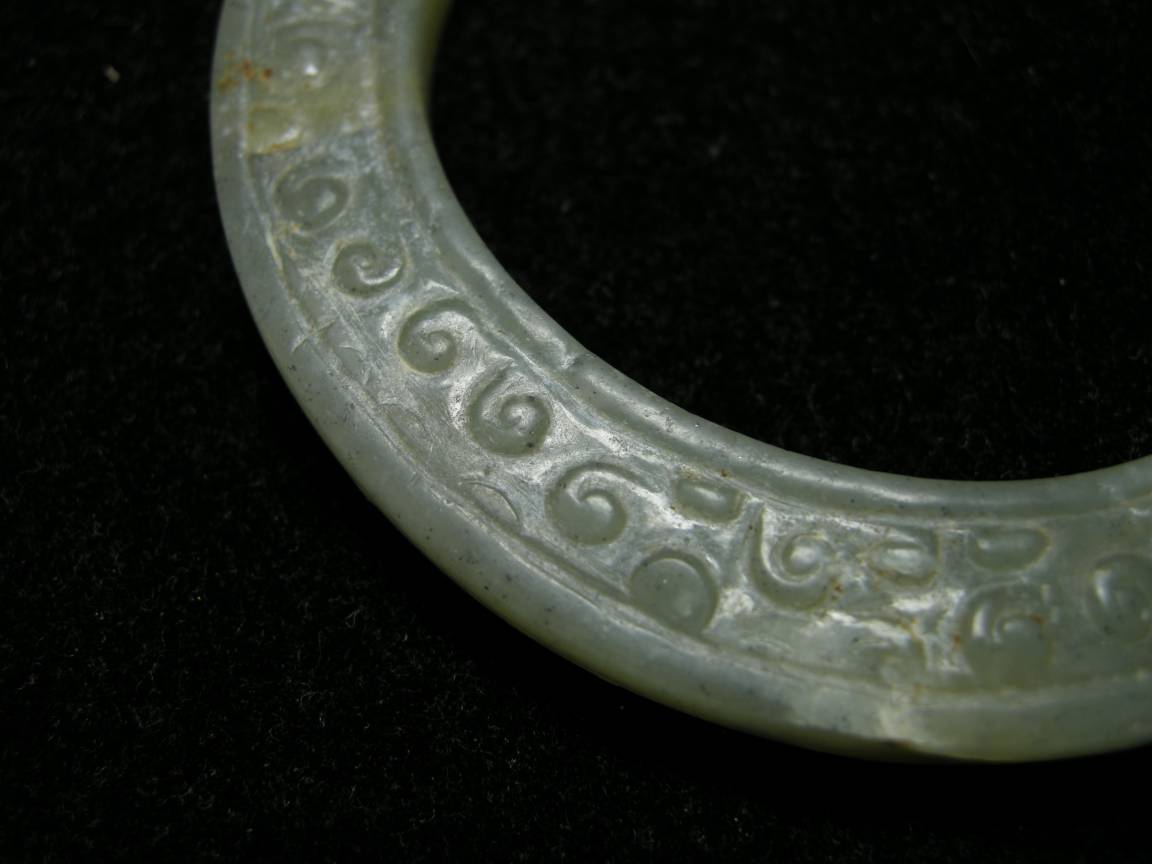
Posted By: LEE Wed, Jan 13, 2010

Oriental Treasure, while you may be right that iron or copper else than bamboo or wood picks were used to drill holes in jade. The abrasive used was the same. The technique was the same and the cut on the jade was the same with bronze or bamboo picks with the same abrasive. copper iron or bamboo cannot cut through nepherite without abrasives like powdered aluminium silicate, or diamond. These were mix with water and applied on the metal or bamboo pick or even a string when cutting the jade. Consequently the cut is very smooth and doesn't have obvious lines . The cut is also gentle and a lot of effort was put into making a cut , consequently line cuts for details like scales or fur are seldom deep, wide or angled. If you study the close ups that KK posted and compare them to the last few photos -plaques on the perspex and the bronze mounted jade plaque that he posted you will spot the difference. The rest can only be learned from handling. Visit auction houses like Christies or sothebys on their open inspection and handle their pieces and study the cut.

Subject:Re: tool marks on antique jades
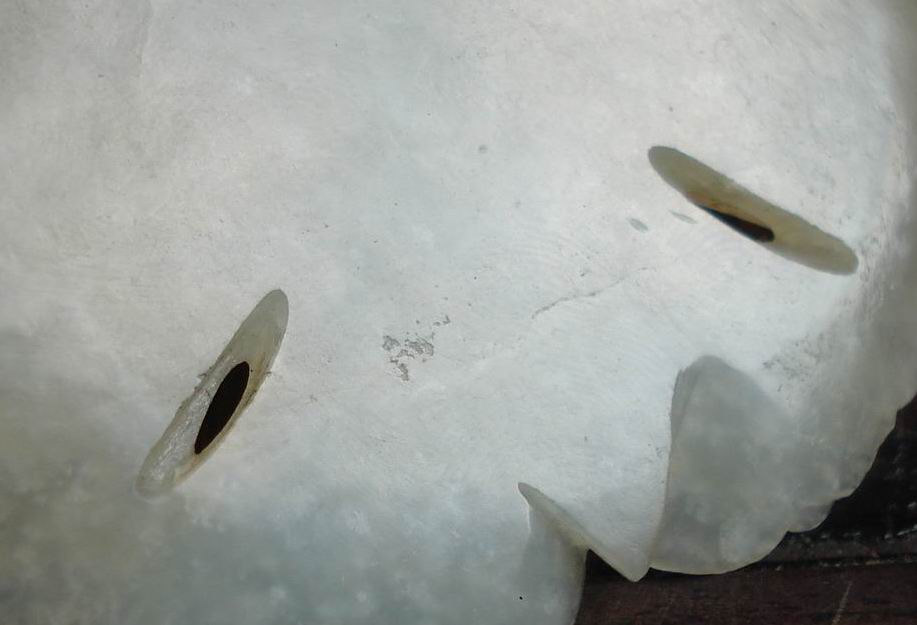
Posted By: kk Thu, Jan 14, 2010

Thanks you all!
I cans see that there are some sparks here. I will stick to the subject and not able to respond to anything other than jade tool marks, style and ages.


Style, style, style, style, style, Ming style dragon!


Here is Fine Ming Dynasty jade belt plague, carved in double layers as # 17, done in wire pierced technique. Please check out the design of the dragon. The third picture is a Ming period jar with similar style dragon design.


Subject:Re: tool marks on antique jades
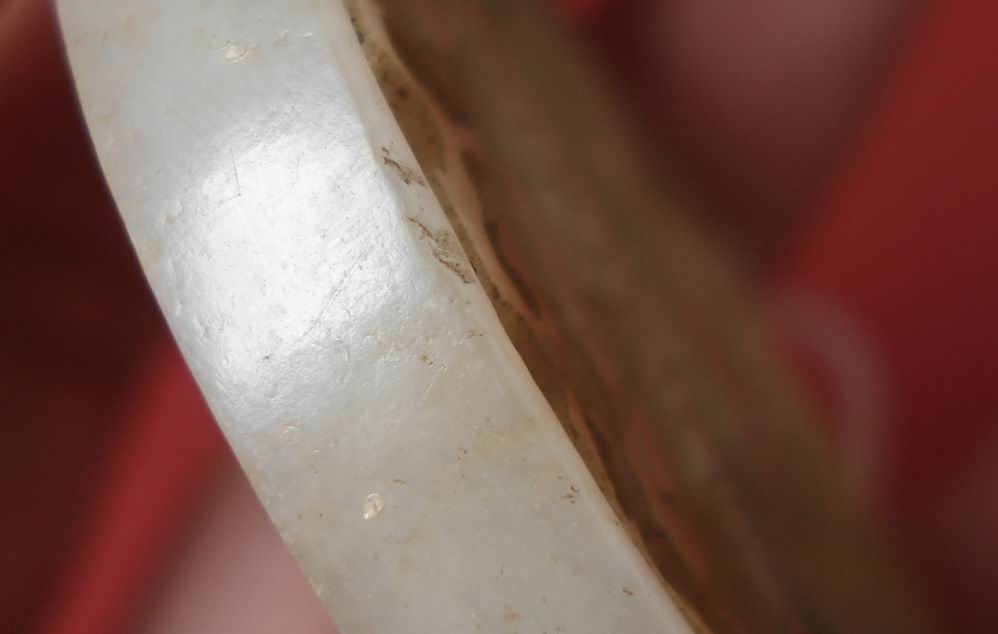
Posted By: kk Thu, Jan 14, 2010

Here is a low end Ming jade belt plague, same period dragon design! This one is well worn.

Anita,The jade/bronze belt plague is also a classic Ming period design. Please do Google search. There many pieces in Antique websites in Chinese language.


Subject:Re: tool marks on antique jades
Posted By: kk Thu, Jan 14, 2010


Tony, This a common Qing Dynasty “lucky wheel” pendent with rotating core. please see the similar chips marks.


Subject:Re: tool marks on antique jades
Posted By: kk Thu, Jan 14, 2010

"electric power drilling"??

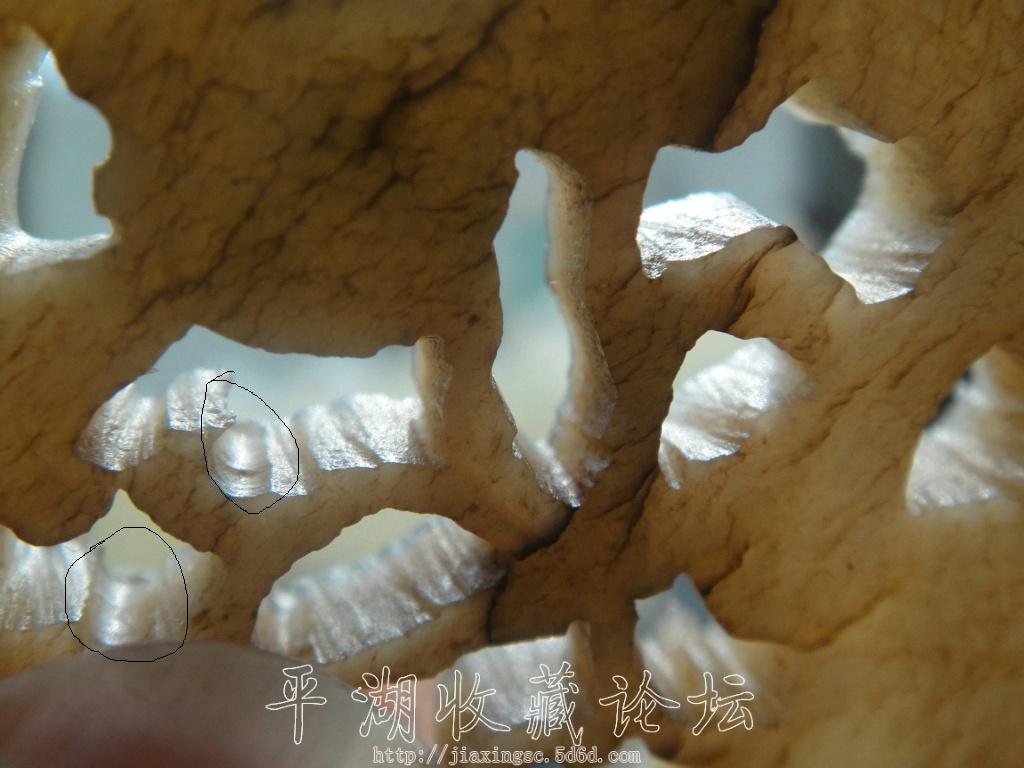
Close up picture shows abrasives drilling holes are circled in thin back lines. Metal wire insert in the holes and push and pull with fine abrasives in various of angles.

Anita "Pls beware of parallel lines"
Sorry, There a a lot parallel saw like cutting lines in Antique jades.


Subject:Re: tool marks on antique jades
Posted By: Anthony J Allen Thu, Jan 14, 2010

Sorry, but I do not know who is hiding behind the pseudonymn "Oriental Treasures". Why not tell us your name and credentials for the assertions you are making?

I find myself agreeing again with Anita's comments about the alleged Ming plaque. Similar bronze backs are regularly used on fake jades, and to suggest that you can tell from this patina that it is genuine, is nothing less than arrant nonsense.

The telltale signs of uncleaned dirt in the recesses is another indicator of modern fakery.

I happen to be in China at the moment, and don't have my extensive library to refer to, but was it not Bernard Laufer who published copies of Qing dynasty prints showing the use of bamboo drills for jade carving?

Regards
Tony

Subject:Re: tool marks on antique jades
Posted By: Anita Mui Thu, Jan 14, 2010

Bill

KK show his jade for discussion, the discussion is on "jade" not "me" and "Tony".

Have fun
Anita

Subject:Re: tool marks on antique jades
Posted By: kk Thu, Jan 14, 2010

Anita and Tony,
Please focus on the subject: jade marks and back up your claim they are all modern. Thanks!
I don't know oriental treasure in any way!

Subject:Re: tool marks on antique jades
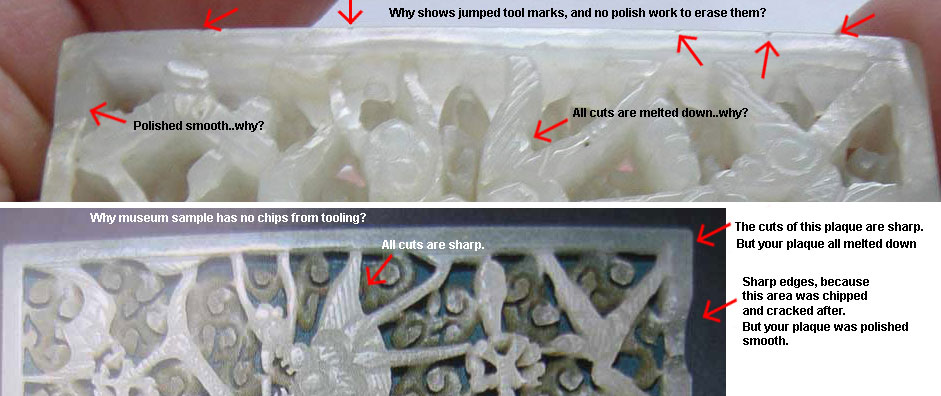
Posted By: Anita Mui Fri, Jan 15, 2010

Dear KK

You said:

Anita,The jade/bronze belt plague is also a classic Ming period design. Please do Google search. There many pieces in Antique websites in Chinese language.

My reply:

In Chinese language website about jades are from sellers who try to push their forgery to be sold as antique. Since the museum samples have none of that tool marks. And it is not my place to agree with your theory, because I am skeptic, I stick to the museum samples and reliable books/source.

AND Chinese History said that Magpie is a bird of the Manju Clan, why Ming used it? a traitor? And Manju will not use jade before they took over China.

Magpie with plum blossom is a Qing Dynasty art, not Ming.
-------------

You said:

Anita "Pls beware of parallel lines"
Sorry, There a a lot parallel saw like cutting lines in Antique jades.

My Reply:

Yes, they are, but the parallel lines I meant is as attached.

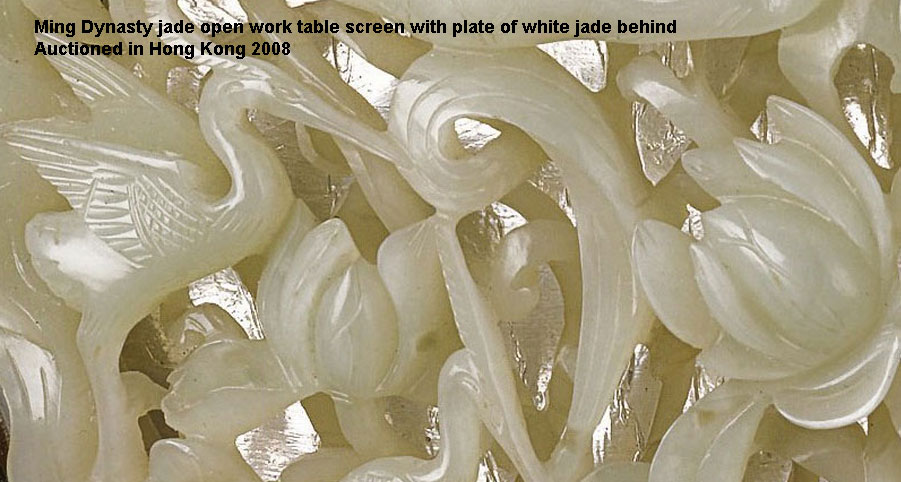
About your white jade openwork with black veins. The stone is already look bad, why make it elaborate and over-work like that?

In case the holes were drilled to insert sling and tied up with bow string to cut jade and make open work on jade, why the artisan will not polish the drilled marks after all the work was done? Just left them ugly like that? why?

------------------------

You said:

This a common Qing Dynasty “lucky wheel” pendent with rotating core. please see the similar chips marks.

My reply:

That newly made lucky wheel has nothing to do with authentic Qing Dynasty jade. That Chinese seller said it is, it doesn't mean that the whole world will agree with him.

Ancient Chinese will not buy things that chipped and broken into their houses..those things bring "Bad Luck". Even it is a 90% discount factory defect porcelain dish in the factory outlet shop, Chinese will not buy any of that, but I saw European tourists hanging around that shop.

Believe me that so-called Qing lucky wheel will bring unfortunate event to the people who acquired it.

Have fun
Anita


Subject:Re: tool marks on antique jades
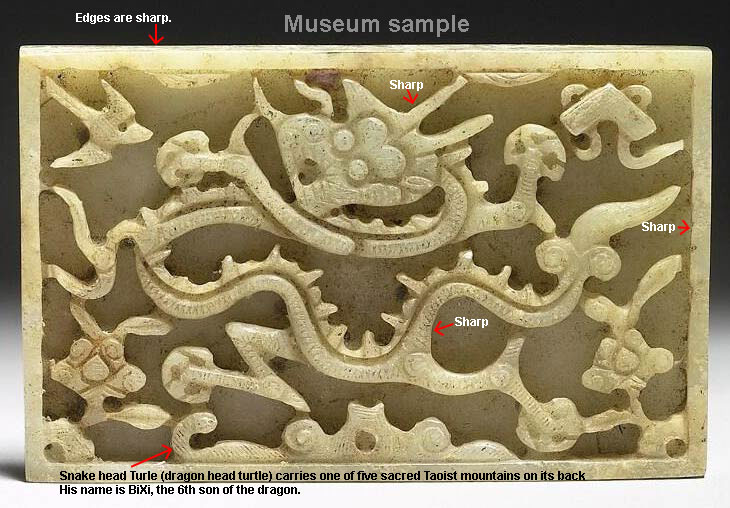
Posted By: Anita Mui Fri, Jan 15, 2010

Dear KK

Real things are different from fantasy.

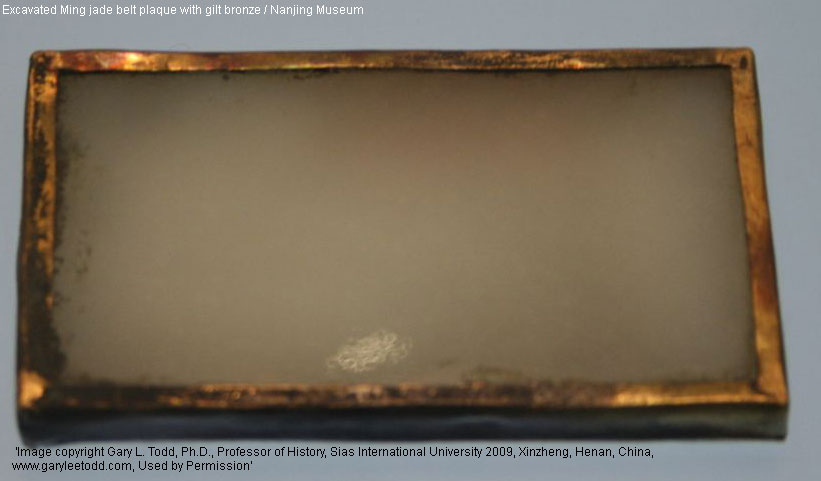
Attached are Ming jade with "bronze".

Have fun
Anita


Subject:Re: tool marks on antique jades
Posted By: Oriental Treasures Sat, Jan 16, 2010

Bonjour Mr. Allen,
Far from hiding under a pen name, we put the name and reputation of our little store, Oriental Treasures (www.orientaltreasures.org), on the line every time we post a reply. We are not in the habit of commenting, but, will do so if we believe we have something positive to contribute.
Wow, we didn’t realize one has to have credentials to respond to a posting! We thought that my partner’s and my combined experience of about 50 years of collecting jade would suffice to put in our two cents worth of comments. We thought we would like to share the trials, tribulations and triumph of collecting jade with Forum members, especially those who are new and would like to start their own collection, so that they do not go down the wrong path (like ourselves in the first several years when we collected mainly imitations and out right fakes) and/or disenchanted after buying fakes and give up on this very difficult but, ultimately, truly rewarding subject/hobby.
However, since you demanded our credentials, we will acquiesce. My partner, Mr. Fung, and I are retirees and thought we should have some fun before we get too old by opening our store 2 years ago since our children are not interested in our personal antique collections. My. Fung taught Chinese jade to the general public in Hong Kong for 5 years before his son sponsored him to immigrate to Canada. He had represented Hong Kong 3 times to attend the China Jade Culture Seminar chaired by Prof. Yang Boda in 1996 (Zhinan City, Shangdong Province), 1999 (Zhouhu City, Anhui Province); he has forgotten details of the 3rd occasion. Other countries that sent representatives included Singapore, Taiwan, Vietnam and Japan.
Last year, from October 17 to December 19, we conducted a 10-sessions Seminar on Chinese Jade covering the earliest excavated jade (a pair of jue or slit ring) from the Xinglongwa Culure (circa 6200 – 5000 BC) till Qing Dynasty. Of course we could only scratch the surface with 10 lectures of about 2 hours per session on this most difficult subject. One of the members of the audience was the Curator of the Asian Arts Department of our fair city museum. We would like to think that she found our contents of our Seminar interesting and our knowledge of Chinese jade passed muster because she has invited us to conduct a jade seminar for the Friends/Members of the museum in early 2011 to coincide with the grand opening of their new wing dedicated exclusively to Asian Arts. Our next in-house seminar is scheduled for next May/June. Therefore, if you or any Forum member happens to be in Montreal during these dates, we would like to invite you as our guest to attend our talks if you are so inclined.
While there is no way we can prove our combined 50 years of collecting jade, we hope the above count as “credentials” since they can be easily verified.
We think what we write is more important than "credentials". If you believe our comments are baseless, then by all means, pick us apart with detailed analysis of your own.
Therefore, quid pro quo, why don’t you share your credentials with Forum members whom, we are certain, would love to hear from you.
Hope you have a successful trip in China.
Best,
Oriental Treasures

Subject:Re: tool marks on antique jades
Posted By: Oriental Treasures Sat, Jan 16, 2010

Bonjour Ms. Mui,
Yes, our web site is www.orientaltreasures.org. And yes, we are quite aware of most of the notes you quoted from http://www.china.org.cn. But no, sorry to disappoint you, KK didn’t buy his jade from us. We wish he had. Then again, we are glad he didn’t, or else we might be accused of collusion. We believe the only time KK and us were “in contact” was when we responded to the thread posted by “tati” in December 2009 regarding Wanli Kraak porcelain. We posted a couple of shipwrecked Kraak specimens salvaged by our principal, Nanhai Marine as we are their distributor for Canada (you may wish to check out Nanhai Marine’s web site for verification).
Since you believe that our “so-called ancient jade in your collection” is/are not as described, we would be happy to receive your comments of each suspect item. Incidentally, almost all the jades are from our own personal collections. We assure you that we will digest your interpretation carefully and hope that you will critique and cover these points:
1 Is it nephrite? If yes, is it Hetian jade?
2 The form or shape to ascertain which period they belong to.
3 The cutting or carving style of that particular period.
4 –ditto- for the holes made.
5 How about giving us their stylistic analysis?
6 What about their patina?
7 Is the polish appropriate for that epoch?
8 If the item has colours, are the colours natural, before or after burial, or artificial?
9 Is the overall “spirit” right for that era?
10 Do the images/”drawings” conform to other media of that period?
The above are some of the points we go through when examining a jade, and you are welcome to add more criteria please.
Best,

Oriental Treasures

Subject:Re: tool marks on antique jades
Posted By: kk Sat, Jan 16, 2010

Anita,

They are nice pictures but they are more backing up my points not yours.

Your first three pictures (marks modern toolings) show low end cravings made from stone, not hetian jade as the pieces I show. Like I said new repro more likely make from cheap material not expensive hetain jade. (If you still see molded Peking glass in my pic? I can show you pictures of what Peking glass really look like)

The tools marks from your new repro clearly different than my examples. What kind of modern tools can make these marks as show in jade plaque picture with two black circles? Please answer this question.

I double any one will disagree with me on the styles of the above jade belt plaques I post. They are classic Ming style!!!!!!! Anyone disagree here? It is not hard to find similar piece in books /museums/ internet if he or she just try a little harder. Such as these three I post from the Beijing Museum.

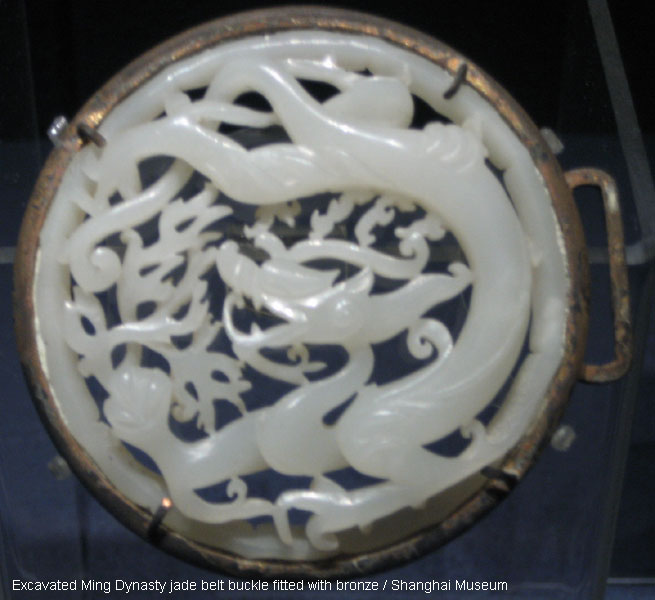
Anita, I have a lot of Shanghai museum jades in my digital library including these two dragon pieces you post. Do you know these two dragon are the some of the Finest Ming belt plagues exist today, possible from imperial workshops and 99 % of the Ming Dynasty belt plagues are no where near the quality of these two pieces. (very much like the difference between Ming period Mienyao and Ming perid Imperial ware porcelain)

Why don’t you show us lesser Ming piece from Shanghai Museum collection??? I will show you one here! This piece shows identical Ming style dragon comparing to my other post. Are you going to said this is fake as well? Please answer this question as well.


Picture of a Ming period jade belt plaque from the Shanghai Museum with very similar dragon design and tool marks:


Subject:Re: tool marks on antique jades
Posted By: LEE Mon, Jan 18, 2010

This cup stand does look ming so does your bronze mounted bird and flower plaque however I am not so sure about the rest. I have a cup stand like this one but has pheonies scroll rather than dragon. However I suspect mine is a lot latter may be late Ching, republic replica of the ming. I will post photos when I have time to take them.

Subject:Re: tool marks on antique jades
Posted By: kk Sat, Jan 16, 2010

What is Ming style in jade craving?

Some jade collectors are more familiar with 18th/ 19th Qing Dynasty jade and expect the same fine elaborate, smooth craftsmanship in Ming period jade. This is a big misunderstand.

Ming period jades are known for their simple, reductive (minimum cuts as possible) , rouge cravings. There is a Chinese term for it “chu da ming”. Ming jade are often small, made from lower quality jade compare to Qing jades because the Ming Empire was within the Great Wall, they had no control over the Xinjiang area where produce the fine heitain jades.

To answer Anita's question
“In case the holes were drilled to insert sling and tied up with bow string to cut jade and make open work on jade, why the artisan will not polish the drilled marks after all the work was done? Just left them ugly like that? why?”


The Ming jade cravers don’t have 21st century taste and don’t think they were ugly and 99% of these open work jade plaques were not smooth out in the openings.

Here are some similar jade plaques from a book on Ming jades. please see the same style dragon and tool marks. Anita, this is not a “fake book” from China. :)


Subject:Re: tool marks on antique jades
Posted By: Anita Mui Mon, Jan 18, 2010

Dear KK

Ming Dynasty sealed itself with their extension of great walls but it did not mean that the trade route with the west was also closed.

"In 1406, the Ming Dynasty set up a Hami Garrison Command, and appointed the heads of the leading families in Hami as officials to manage local military and administrative affairs, so as to keep the trade routes to the West open and bring the other areas of the Western Regions under its control."

Source:
History and Development of Xinjiang (Part 3)
Embassy of PRC in USA
http://www.china-embassy.org/eng/zt/zfbps/t36559.htm

Trading in the Ming Dynasty was flourish with ocean commerce, as well as in the empire itself.

It was the first time in Chinese history that commoners allowed to own jade with limited design and jade must be with good meaning.

The need of jade was hot with new design and much more appreciation than function. Jade work shops were big business than before, and supply of raw material was continuously from the west. One of the Philosopher of the Ming Dynasty even said that "White and green stones are "true jade" other colors are not jade at all."..If the supply was short "why so picky"?

Jade in Ming style are mostly small as you said because they had to buy raw material not a tribute from Xinjiang as of the Qing Dynasty.

Pls watch educational VDO from National Palace Museum Taipei below:-

http://www.translucentworld.com/forum/phpBB3/viewtopic.php?f=6&t=126

**********************
You said:

The Ming jade cravers don’t have 21st century taste and don’t think they were ugly and 99% of these open work jade plaques were not smooth out in the openings.

My reply:

Those Ming jades in museums do not look ugly, the pure art from primitive tool will never be ugly, because the artisans had no intention to forge modern jade as old work.

Why Ming jade in museums and famous auction houses do not have drilled holes being seen. in contrast to Chinese private collectors with self-proclaimed expertise and eBay, all tool marks left noticeable.....why?

Because they are selling fake as real and someone have no basic understanding of Chinese art will fall for it..

Have fun
Anita

Subject:Re: tool marks on antique jades
Posted By: kk Sat, Jan 16, 2010

more from this book


Subject:Re: tool marks on antique jades
Posted By: Oriental Treasures Sun, Jan 17, 2010

We are of the opinion that the latest posting of the dragon plaque (slightly damaged at the top and side) is also typical late Ming.

Based on the carving, motif and form of the "lucky wheel" we believe it to be Qing. In Cantonese we call this form "fook joy ngan chin", meaning luck and prosperity are in front of our eyes. This form started out during Ming. It is true Chinese do not like broken pieces, especially jade, but, the damage may have occured long after it was made.

Oriental Treasures

Subject:Re: tool marks on antique jades
Posted By: Anita Mui Mon, Jan 18, 2010

Dear KK

Your jades are newly copied from books, and they have nothing to do with authentic Ming jade.

If you have a closer look at the Ming jade I posted, they do not leave drilled marks at the open work.

Your bird is surely a magpie with wood pecker head (or no head at all) not related to any of Ming Dynasty bird medallion.

And your broken green dragon plaque has any suspension holes on the back?

The luster of your white jades are suspected to be Peking glass, pls do specific gravity test for all of them. Because I made mistake of buying white Peking glass as white jade before. It's very hard to detect these days.

Dear Oriotreasure

It's not my place to talk about your jade, the opinion is yours alone. People who collect ancient jades with that price tag knows well, and they send what they bought to "real" expert to authenticate (not you, and surely not me) and that is the last answer of all doubt.

Those bats have triangular faces which depict "modern", and the cracks were polished smooth which mean that they were intentionally being cracked from the first carving process.

The four bats depict 4 high point of man's life or 4 happiness joined together which will come with stylized character "shou" (longevity) or "swastika" (10,000 years) in the middle..I haven't seen spining "coin" in the middle before but modern piece.

The ‘four happiness in man's life’, started as of the Ming Dynasty which basically were:

1)a wedding night, (fertility)

2)passing the imperial exams,(wealth and Prosperity )

3)running into a friend in a faraway place,(fortune)

4)rain after a long drought.(wealth and Prosperity)

The Symbol in the middle must be the bless of longevity because it is the one blessing that lost, and in order to fit well with the 4 bats and it is a bless to the long life span of the owner of this jade piece must meet that 4 happiness...Why coin have to repeat those 4 happiness again?

You have to understand Chinese Culture of both ancient and commercially modern.

Have fun
Anita Mui


Subject:Re: tool marks on antique jades
Posted By: LEE Wed, Jan 20, 2010

Yuan jade plaque of falcon attacking swan mounted on a 19th century hand mirror. Handle is a jade hook possibly Ming.


Subject:Re: tool marks on antique jades
Posted By: Anita Mui Mon, Jan 18, 2010

Dear Oriotreasure

I don't think that those sign of age are from burial environment.

See attached.

Have fun
Anita


Subject:Re: tool marks on antique jades
Posted By: kk Tue, Jan 19, 2010

Anita,
Some of your comment is kind of comical to me by now. You can’t see the vertical cuting marks in my detail photo (Pic w/ 2 black line circles); you believed the veins should not be connected. You can’t see the head of the bird on the jade/bronze plaque, you can’t see the Hetain jade features (read Jan 11, 2010 IP: 76.203.49.130 post), so luster = Peking glass. You can’t recognize a typical classic Ming Style both in the dragon plaque and bird plaque. I showed you examples from Beijing Capital museum and Shanghai museum, you didn’t respond. I show you examples from a Book on Ming jade,you said “they have nothing to do with authentic Ming jade.”

Here are two more pieces from the Palace Museum. I am sure you will say they are not related to my examples. This is no surprise that almost all jades show up on this forum is modern in your eyes except you own collection.

The first two pictures are from palace museum in Beijing, the third picture is from Anita’s collection. Real things or fantasy? Do I have to say any more? The only person can stop you finding the real piece is yourself.

kk


Subject:Re: tool marks on antique jades
Posted By: Anita Mui Wed, Jan 20, 2010

Dear KK

Style of your dragon plaque is Ming Dynasty = Yes!

Are they authentic? depend upon your photos = "I don't know", they are possibly replicas from that book, because those things came out in the market after museum samples were published.

Did I say from the beginning about "personal handling" on the good fakes?

I advised you to buy a hanging scale to do SG test, and pls be frank and sincere to yourself. I bought fine carved openwork Ming Dynasty white jade plaques before, didn't see any bubbles at the shop and then found out at home that they are pressurized and carved Peking Glass after performing SG test. I took them back to the shop the day after.

-----------------------
About my jade.

Is it jade = yes!

Is it beautiful = yes!

Is in correct style and craftsmanship of the period claimed = yes!

Is sign of age natural = yes!

I don't have problem with my collection, and I think you should concentrate on your collection in this topic. Pls do not take a detour, take a short cut!

And see attached, hope it help.

Have fun
Anita


Subject:Re: tool marks on antique jades
Posted By: Anita Mui Wed, Jan 20, 2010

Dear KK

See attached.

Have fun
Anita


Subject:Re: tool marks on antique jades
Posted By: LEE Wed, Jan 20, 2010

Some photos from of the "Ming" cup holder I bought 10 years ago from a deceased estate. It is probably republic or Ching or Ming who knows, has been latter modified with old cut jewels, in the 1900. The side of the plate has tread though holes originally for tying pearls I suspect, but has been modified for stone. Also photo of a pendant with a movable disc in the middle 19th century framed in a 19th century cloisonne box.


Subject:Re: tool marks on antique jades
Posted By: Lee Wed, Jan 20, 2010

More interesting jades. Round green jade block reputedly from temple of heaven, Beijing, used for jade sacrifice. A han dynasty jade bear and a qianlong white jade pendant.A Yuan shi Kai dollar coin for size comparison.


Subject:Re: tool marks on antique jades
Posted By: Anita Mui Wed, Jan 20, 2010

Dear Lee

Your "Yuan jade plaque of falcon attacking swan mounted on a 19th century hand mirror. Handle is a jade hook possibly Ming."

It's a modern replica.

-------------
Looking at your Ming plaque inlaid with turquoise and rubies is possibly authentic but pls test on those precious stones may be polymer and glass. The real stuffs were already removed.
------------

You said :

"Round green jade block reputedly from temple of heaven, Beijing, used for jade sacrifice."

My reply:

NO.

The one you have is not green bi disc with hole in the middle for sacrifice to heaven.

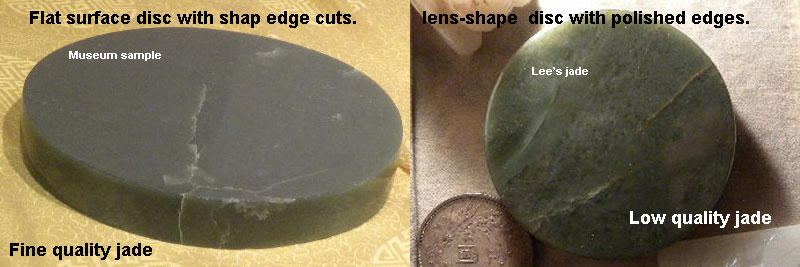
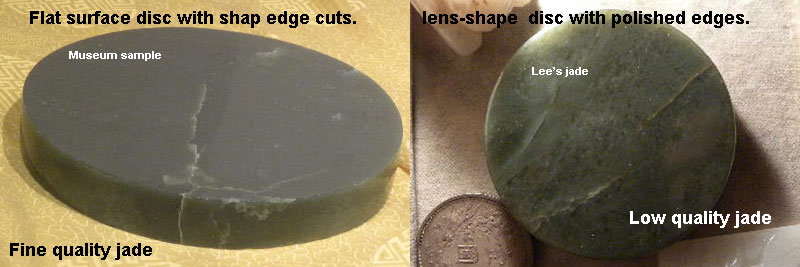
The round lens shape disc like you have is on the floor at temple of heaven for the son of heaven (the Emperor) to stand on it, and it's bigger than that of yours (see picture attached), and it's made of white stone, and it is still there from the Ming Dynasty to present.

"The obsession with numbers is taken to its height at the Circular Mound Altar. A single block of flat circular stone, where the Emperor would stand in the moment of his holy communion with the gods, stands atop three terraces, each approachable by four flights of stairs. The small marble disc is surrounded by blocks of artemisia leaf gray stones, spreading out in concentric circles, the number of slabs increasing in multiples of 9."

Source: China Daily 04/10/2009 page19

--------------------
Your 4 bats circle symbol of the "yi" (sun) which can be interpreted to swastika or "wan" (10,000 years). Swastika developed from symbol of the sun. And your jade is in correct style of the late Qing Dynasty, unlike the one that circle "coin".

Attached is a gold plate symbol of the sun or swastika, a parasol top fitting found in the tomb of King of Nan Yu, the Western Han Dynasty.

'Image copyright Gary L. Todd, Ph.D., Professor of History, Sias International University 2009, Xinzheng, Henan, China, www.garyleetodd.com, Used by Permission'

Have fun
Anita


Subject:Re: tool marks on antique jades
Posted By: LEE Fri, Jan 22, 2010

Hi Anita, Those pieces of jade have been purchased and been authenticated by auction houses. I am not a fake jade collector. Anyway the jade mirror comes from a very old European collection. It could be a Ching replica but not modern. There are pieces like this one in the palace museum collection in Taipei and Beijing. My collection has been formed over many years I am a 3rd generation Chinese art collector, so we know what we are collecting. Anyway here are some pictures of the green circular jade in the temple of heaven museum. Notice the shape of the jade and the color. I thought it was a fake as well till I visited Beijing last year. Some more jade pieces. Ming mystical beast, Yuan fish pendant and Ching buffalo and pendants.


Subject:Re: tool marks on antique jades
Posted By: LEE Fri, Jan 22, 2010

More pics.


Subject:Re: tool marks on antique jades
Posted By: kk Thu, Jan 21, 2010

Dear all, thanks four participate in this discussion. I believed I made my point. So I will no long respond to Anita’s comment. She can continue to believe in her jades and everything out there is faked.

For anyone who like to continue the study of Ming Dynasty jade belt plaques, here is a Google picture search in Chinese words 明龙纹带板 (Ming dragon belt plaque). There are 100+ of them on the internet. (careful, there are a few new reproduction mix in there)

http://images.google.com/images?hl=en&client=firefox-a&rls=org.mozilla:en-US:official&um=1&q=%E6%98%8E%E9%BE%99%E7%BA%B9%E5%B8%A6%E6%9D%BF&sa=N&start=0&ndsp=21


Lee ,
Here is my humble opinion base on your poor pictures.

Circular plaque, hetaian white jade, old, probably not yuen.

jade hook, hetain white jade, Qing Dyn. Qing Style dragon, not Ming.

“cup holder” hetain jade, Qing or older.

cloisonne box is Late 19th Cen, pendent older, Qing Dyn.

three smaller pieces in the box, I can see a thing in this picture.

cheers

KK


Subject:Re: tool marks on antique jades
Posted By: LEE Fri, Jan 22, 2010

more pics, han bear and qianlong pendant, green jade disc at temple of heaven.


Subject:Re: tool marks on antique jades
Posted By: Oriental Treasures Sat, Jan 23, 2010

Bonjour Ms. Mui,
You appear to misspell our name on purpose (you spelled it correctly the first time – ORIENTAL TREASURES). We believe you did the exact same thing to others on this Forum when they disagreed with your views. That itself speaks volume of your pettiness and character.
You said “It's not my place to talk about your jade, the opinion is yours alone.” If that’s the case why did you post “then compare to your so-called ancient jade in your collection” in the first instance? Could it be because you are now unable to answer our questions?
Believe you me, we know our Chinese history. To add on to KK’s Chinese term for his “lucky wheel” as “chu da ming”. For those who don’t speak Chinese, the phrase simply means “crude, big Ming”. The “big” does not mean large physical size, rather it implies the comparative proportions. This is especially true for later Ming pieces. In the last third or quarter of Ming rule, the country was in bad shape. Floods and famines took millions of lives. Law and order was breaking down and people would risk their lives just for a full belly by stating “better to die with a full stomach for once”.
Besides the form of KK’s “lucky wheel”, many other forms with allusion to longevity, prosperity, having plenty of off springs, etc. are especially common during later Ming. These were also found on other arts such as paintings, ceramics, lacquer, etc. It was as if that the then society needed these “blessed amulets” to constantly protect them from evil and misfortunes, and bring them luck.
This, we believe, was a reflection of the psyche of the Ming government and society as a whole as the dynasty slowly rotted away. We always maintain that for really serious jade collectors, it is imperative that they learn about Chinese history, culture and other contemporaneous art forms.
Reference to your eBay belt buckle, can you tell us why you think it is a fake Ming? Is it because it is from eBay? While it is true that there are a lot of fakes on eBay, we are certain there are genuine articles too, albeit far and few in between. We are not trying to find fault with you, but, the quality of the photo does not permit us to see any modern tool marks, or lack of them too. However, the form, motif, over all “spirit”, etc. do suggest that it could be another of the “crude, big Ming”. Either way, we can not be certain if it is a fake or not without handling it.
We are posting 3 excavated Ming jade. Our 1st photo is that of a Guanyin. Look how crude the carving which is quite disrespectful of the subject matter to say the least. It was found in the tomb of Madam Lok in Putong, Shanghai. The 2nd photo is of an even cruder Guanyin (we think) excavated from the tomb of Ming Mu Rui in Nanking City, Jiangsu Province. The 3rd photo is from San Yau village in Xian. All 3 pieces are dated to late Ming. These are good examples of “chu da ming”. Your eBay belt buckle shares many of their traits.
Now, Ms. Mui, if you do not even know classic, quintessential Ming plaques, it begs the question, how knowledgeable are you really? The obvious conclusion is that you are not as knowledgeable as you think you are.
Best,
Oriental Treasures


Subject:Re: tool marks on antique jades
Posted By: Oriental Treasures Sat, Jan 23, 2010

Bonjour,

We agree with Ms. Mui that Peking glass at times can fool the best of collectors. However, without meaning to contradict her well intention, the SG test could be a double-edged sword. This is because certain Peking glass has SG very close to that of nephrite. In fact, just 2 or 3 years ago, one of our collector-friends bought an eponymous “qi-gan” pendant with poor carving but superb mutton-fat nephrite, or so he thought. His intention was to recarve it and sell for large profit since the price of even new “qi-gan” pendant has gone ridiculously high. The fakery was discovered when it was worked on. He did a SG test and found it to be slightly above 3.0!
We believe it is best to rely on one's observation and touch. When you pick up a piece of Peking glass (provided it is not too small) you might be able to detect the weight/density which is not normal/standard for nephrite of similar proportion; please be aware that some Peking glass has almost similar SG as nephrite as per above paragraph. More importantly, Peking glass does not have the coldness and relatively quick warming up, and the unctuous property of true nephrite. It is surprising that many collectors, either are not aware or do not bother to do this simple but effective test to rule out glass.
Oriental Treasures

Subject:Re: tool marks on antique jades
Posted By: Anita Mui Mon, Jan 25, 2010

Dear Oriotreasure

Glass is glass, it is a man made stuff and it will never have Specific Gravity close to nephrite, unless that faker know how to balance his mixture of mineral in glass he made which would take life and much more science in his knowledge to do that, and I will present him Jade Grammy Award to him myself.

Glass 2.4 to 2.8
Nephrite 2.90 to 3.30

You said that 4 triangular-faced bats surrounding "coin" with broken rims is genuine Qing Dynasty piece...find me a museum sample one, pls.

The easy one is to compare Lee's bats and that KK's green bats with coin, which one is correct in style, motifs meaning and craftsmanship to the Qing Dynasty?

If you can not tell that the meaning and style of the piece is so "wrong" and against the flow of "genuineness" and you are now turning your target to me, not the jade we talking about. Then we would not go any further but keep on calling other "fake"...what good would that do?

Thank you for pictures of museum samples, but those museums samples are "not intentionally" made jade crude to present "hand made". They are crude because they do not have "motor" to do their jade art. Modern crude pieces and ancient crude pieces is different, experience collectors will know. And your museum samples do not have craftsmanship errors as of the Ming pieces that KK showed.

If you think that those eBay Ming jade belt plaque is authentic, you may buy it and add-up another $ 1000 to be sold in your website as Dr.MV, but people who collect jade they search internet everyday..they know where it from.

Again, it is not my place to talk about your collection, unless you posted it here for us to discuss.

***********************
Dear Lee

Thanks for your picture, I saw picture of that green disc in your collection is in lens-shaped, not flat. That green disc is so easy to make.

And those green disc for sacrifice to heaven were made "annually",or "occasionally"? which mean that 267 years of the Qing Dynasty will have heavenly ceremony each year?, so it would have 267 pieces? Or just "one" and kept it there at the temple, and bring it out to be used at each ceremony?

And thanks for your background of your jade collection...People can talk anything on the internet forums.

To be crystal clear, any evidence to support your claim? paper from auction houses perhaps?

Have fun
Anita

Subject:Insisting to be rude?
Posted By: Bill Wed, Jan 27, 2010

I wonder if Ms. A Mui really read any responses written by Mr. Oriental Treasures, or she just tried to be rude? I believed he had corrected her that his name was not "Oriotreasure" but it seems she still insisted in calling him "name".

The reason is why?

Why such disrespect for another jade collector just because he did not agree with her?

B

Subject:Re: tool marks on antique jades
Posted By: Anita Mui Mon, Jan 25, 2010

Dear Lee

You said:

Those pieces of jade have been purchased and been authenticated by auction houses. I am not a fake jade collector.

Anyway the jade mirror comes from a very old European collection. It could be a Ching replica but not modern. There are pieces like this one in the palace museum collection in Taipei and Beijing.

Anyway here are some pictures of the green circular jade in the temple of heaven museum. Notice the shape of the jade and the color. I thought it was a fake as well till I visited Beijing last year.

My reply:

Any document prove from auction houses and EU collection?

And pls see picture of comparison below. And your green disc is flat or lens-shaped. I saw it is a lens-shape depend upon your small picture.

-------------------------

Dear Oriotreasure

You said:

You said “It's not my place to talk about your jade, the opinion is yours alone.” If that’s the case why did you post “then compare to your so-called ancient jade in your collection” in the first instance? Could it be because you are now unable to answer our questions?

My reply:

What are your questions?

******************
You said:

Believe you me, we know our Chinese history. To add on to KK’s Chinese term for his “lucky wheel” as “chu da ming”. For those who don’t speak Chinese, the phrase simply means “crude, big Ming”. The “big” does not mean large physical size, rather it implies the comparative proportions.

My reply:

The word "Da" in front of Chinese dynasty means "the great" or in front of the word King (wang) also means the great.

For example, Da Song, Da Ming, Da Tang, Da Qing and they called their king as "Da Wang"...it doesn't mean "big" as you understood.

Chu Da Ming means "crude jade work of the Great Ming Dynasty". Not "crude and big piece of jade work of the Ming Dynasty" as you roughly interpreted.

******************

You said:

Besides the form of KK’s “lucky wheel”, many other forms with allusion to longevity, prosperity, having plenty of off springs, etc. are especially common during later Ming. These were also found on other arts such as paintings, ceramics, lacquer, etc. It was as if that the then society needed these “blessed amulets” to constantly protect them from evil and misfortunes, and bring them luck.

This, we believe, was a reflection of the psyche of the Ming government and society as a whole as the dynasty slowly rotted away. We always maintain that for really serious jade collectors, it is imperative that they learn about Chinese history, culture and other contemporaneous art forms.

My reply:

I could only find a grain of rice floating in your empty ocean. But find me a museum sample of any kind of Ming and Qing art that have 4 bats circle "coin".
******************

You said:

This is especially true for later Ming pieces. In the last third or quarter of Ming rule, the country was in bad shape. Floods and famines took millions of lives. Law and order was breaking down and people would risk their lives just for a full belly by stating “better to die with a full stomach for once”.

My reply:

That history lesson does not support "modern crude work".

Yes, they starved themselves to death but kept money for food to buy jade with "4 bats circle coin".....for luck!

Have fun
Anita

Subject:Cu Da Ming 粗大明
Posted By: Bill Thu, Jan 28, 2010

Dear Ms. A Mui:

You said, "The word "Da" in front of Chinese dynasty means "the great" or in front of the word King (wang) also means the great.

For example, Da Song, Da Ming, Da Tang, Da Qing and they called their king as "Da Wang"...it doesn't mean "big" as you understood.

Chu Da Ming means "crude jade work of the Great Ming Dynasty". Not "crude and big piece of jade work of the Ming Dynasty" as you roughly interpreted. "

I guess in a way you are correct that Da Ming or Da Qing can indeed be used together to mean "The Great Ming Dynasty" or "The Great Qing Dynasty" as you interpreted. Unfortunately, it is totally incorrect here due to two disadvantage you have:

(1) You do not write or read Chinese;

(2) You do not have access to any jade literature written in Chinese and you do not try to read those that were translated into English but only
depend on English jade literature written by non-Chinese "jade experts".

That may cause your misinterpretation of the term:

Cu Da Ming

(Chu is actually Cantonese; Cu will be Mandarian)

Please allow me to quote the definition of Cu Da Ming from:

http://www.yuyuan.cc/dzzk/005/index.htm

明 代 玉 雕
明代玉雕,古玩鑒賞家有“粗大明”的口頭語。“粗”即不注重細部的表現,

“大”即厚重,明代玉雕胎体較厚重,尤其是壺、杯等器物。明代人物、動物造型

雕刻也只是注重外形而不追求細部加工,細部刻畫則以象征性的刻痕進行勾勒,傳神達意即可,這樣,意境往往更含蓄,更深刻。

"Antique connoisseurs use the term Cu Da Ming to describe Ming dynasty jade carvings. Cu means not focusing in fine details (of the jade carving).
Da means thick and heavy (referring to the jae carvings) because the raw jade used for the making of Ming jade carvings are usually heavy and large, such as teapot or cups. The carvings of humans and animals therefore focus on the outer appearance and not on all their smaller details. Very often, details were expressed with only a few carving lines ...."

We also have to be very careful in not to translate Cu as "Crude" and a better translation may be unpretentious, unpretending or not showy.

Another reference:

http://www.caoyuanlang.com/bbs/viewthread.php?tid=11095&page=2

a. 粗大明明代玉器的碾玉特點

~ 明代玉器的碾玉特點是粗獷渾厚,不拘小節,這應是由大刀闊斧的元代北方之工匠碾玉演變而來,古玩鑒賞家將這些特點形象地概括為「粗大明」

~「粗大明」意思是粗獷、寬大的玉器屬明代,也就是說,明代的碾玉特點粗獷、寬厚,常常忽略細部的處理。

"The unique characteristics of Ming dynasty jade carvings are unpretentious and solid (heavy), ignoring small details. This type of jade carving style was probably inherited from the jade carvers from Northern China during
the Yuan dynasty and the antique connoisseurs label this type of jade carvings
as Cu Da Ming.

The meaning of Cu and Da are:

Cu Quang 粗獷 (rustic, unpretentious)
Kuan Da 寬大 (wide and large)

Therefore Cu Da Ming are those Ming dynasty jade carvings that are big, heavy, wide and unpretentious, because their carving characteristics are unpretentious,
thick and heavy by ignoring small details.

In short, I am sorry to inform you, Ms. Mui, I believe you are wrong in your interpretation of "Cu Da Ming" because although the character "Da" can mean "BIG" but not the "Great Ming dynasty" as you believe but instead it is referring to the unique characteristic of Ming jade carvings, that many of them are large, heavy and wide, and their unique unpretentious carving styles displayed on them, focusing in BIG details only and ignoring small details. Therefore, in this case, the character "Da" refers to the jade
item and not the dynasty.

Cheers!

Bill


Subject:Re: Cu Da Ming 粗大明
Posted By: Anita Mui Thu, Jan 28, 2010

Bill

My answer to your "intelligence" is at my forum, you know where to find it, right?

Anita

Subject:What is the purpose?
Posted By: Bill Fri, Jan 29, 2010

Hi, Miss Ah Mui-zai:

I have finally come to the conclusion that it does not serve any purposes to read anything you may have posted in your forum which only serves as a sounding board for your egotism. It is because anybody who disagree with you are not allowed to participate in your forum and any messages that you disapprove will not get to be posted in your forum. Yet you were complaining about your "freedom of speech" being taking away in this forum?

You also give me the impression that you are the number one authority in jade, Chinese history, Chinese language, Chinese mythologies, Chinese customs, Chinese geography, geology, science and your opinions are final and absolute. Therefore anybody who dare to disagree with you have to be "wrong". I have not yet seen you once eaten the "humble pie" and admitted that you could be wrong.

You also seem to believe that any jade carvings posted by anybody other than you in this forum or other forums or their we sites are modern, not authentic and made of inferior or non-jade material. It seems only the jade carvings coming from your own collection can be authentic, superb and made of the highest quality jade.

You seem to depend on the "modern tool marks" found on your "pet modern jade puzzle ball" as a standard for you to judge that ALL parallel lines displayed on any jade carvings posted by other collectors must be therefore "MODERN". You do not seem to know that there are indeed parallel lines shown on authentic Hongshan jade carvings.

You seem to pay lip services to some of the jade experts in China, such as Yang Boda, Guo Da-shun or even Gu Fang whenever they were convenient to you, but you did not attempt to study the contents of the jade books or literature written by them, or better yet, going to China and attend a jade seminar offered by one of them such as those were offered by Mr. Yang Boda. Without a complete acceptance and respect of the Chinese culture and knowledge/expertise of Chinese jade experts, I am afraid you will forever believe that you many be the no. 1 authority in all the aforementioned fields especially jade. We have a Chinese saying for this type of attitude:

"It is like a frog who is sitting at the bottom of a well, looking at the sky and complaining that the sky is simply too small for him."

I hope you will really think about what I am saying because I really want to share our jade knowledge together and may be we (all the jade lovers) can help and benefit each other but I believe your pride had prevented all of us in making further progress. Of course, I admit that I might be equally guilty in what I might have accused you of. However, if you are willing to change, I will also.

B

Subject:Re: Cu Da Ming 粗大明
Posted By: Anita Mui Fri, Jan 29, 2010

Bill

You just translated Chinese word "da" to fit your thought.

How can "Da" mean thick and heavy?
So? Da Wang can mean "Fat King"?

You can not interpret all surrounding words and then make meaning of the whole sentence up by yourself.

See below.

Anita
P.S. I like what Roger said about you above..a lot.


Subject:The difficulty in translating Chinese!
Posted By: Bill Sun, Jan 31, 2010

For some strange reasons some time this forum will accept Chinese but some time it won't. If anybody can advise me in how to fix this problem, I will be forever grateful. Since the presense of Chinese are vital in my respons to Ms. Mui's interpretation of Cu Da Ming, therefore I have to post part of my message including Chinese as pictures. Sorry about the inconvenience.

************************************************************************************

My message to A Mui:

Hi, Ms A Mui:

Some time it is all right to admit that you might be wrong or might have made an error because such courageous and humble act will only earn the respect and admiration of others.

Did you not read the two sources of jade references from where I quoted how the jade term Cu Da Ming was being used among Chinese jade collectors and jade community?
I did not make up the interpretation myself. Must you continue to insist in your own interpretation of it based on an on-line Chinese-English Dictionary?

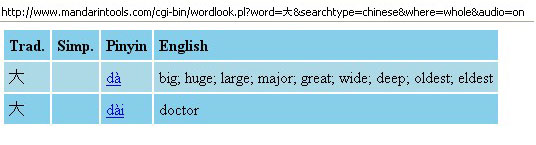
First of all, please take a look at your own picture posted for the meaning of Da or Dai,
Do you not know that:

´ó does not mean doctor? But rather ´ó·ò Dai Fu means doctor?
However, if you would just check on the meaning of each individual character,you may end up translating Dai fu as a BIG husband or a BID MAN, would you?

Now how would you translate:

´ó Ä‘ Da Dan? Would you translate it as a BIG gall bladder?

Now what about the Chinese idiom Ä‘´óÐļš Dan Da Xin Xi?

Would you translate them as Big gall bladder but a small heart or Big gall bladder but a little mind (brain)?

Now you may say that it is not fair because these may be too complex for you, let me give you an easy one:

´óÅ® Da Nu ¨C would you translate them as BIG girl or BIG female?

How will you translate ´ó·½ Da Fang, BIG SQUARE?
Or how about ´ó±ã Da Bian, BIG convenience?

What about ÀÏ´ó Lao Dai, would you translate it as OLD and BIG or an old and big person?

What aboutϲšgÕf´óÔ’, would you translate them as ¨¯like to speak BIG words?
or like to make BIG talks (speeches)?
What does Dai Hua ´óÔ’ mean here?

Since you reside in Hong Kong you must have heard the following Chinese terms:

´ó¶ÇÆÅ Da Tu Pao (or Dia Tao Pau in Cantonese), would you translate them as the grandma or mother-in-law with a BIG belly (or a BIG tripe)?

How about ÀÏÆÅ´óÈË Lao Pao Da Ren (or Lo Pau Dia Yan in Cantonese), would you translate them as the old woman (or old grandma) who is also a BIG person?

You see, Ms. Mui, the reason the Chinese language is so very difficult to comprehend or to master, even for Chinese, is because even if you can understand the meaning of each Chinese character which will have different meanings and different pronunciations just like English and other languages, very often it will depend on how it forms a compound word with other characters
in deciding their final meanings and interpretations. For example:

¿ì˜· Kaui Le = Happy
Òô˜· Xin Yue = Music

You see the character ˜· is pronounced differently and has total different meaning depending on how it was used in each of the above specific compound words. In this case ˜· was pronounced as Le in the first compound word
that means Happy and as Yue in the second compound word that means Music.
Do you realize that?

Now would you please translate the following Chinese idiom by using your online Chinese-English dictionary for me?

˜·É½˜·Ë® Yao Shan Yao Shui

You can see now the same character˜·was pronounced as Yao, not Le and not
Yue. Do you know what it mean?

You can find out by going to this link:

http://tw.18dao.net/%E6%88%90%E8%AA%9E%E8%A9%9E%E5%85%B8/%E6%A8%82%E5%B1%B1%E6%
A8%82%E6%B0%B4

Therefore, what I am attempting to show here by providing all these examples
is that it is difficult enough even for a Chinese person like me who learn Chinese as a first language, who have been diligently studying Chinese for many years albeit getting rusty aftet I came to the States, who had to memorize at least the most famous 300 Chinese Cheng Yu ³ÉÕZ (idiom) each with an actual or fictional historical Chinese story behind them, who had finished reading every single Chinese classics such as the Dream of the Red Chambers and many others by the time I had turned 12 years of age, who had won or placed in every Chinese essay writing contests (open to public or student) I had entered and had got my poems published in major Chinese newspapers and Chinese magazines by the time I turned 17, I still have to admit that the meanings of some Chinese characters and idioms still occasionally evade me and I have no choice but to study and research them.

In that regard, why would you believe by using an on-line dictionary you will show how wrong I might be? Have you done any researches yourself regarding Cu Da Ming? Now of course, I could be wrong since this is a Chinese jade term and I am a novice with jade. But why would you doubt the words of Mr. Oriental Treasures or his jade partner who seemingly has a lot more experiences in jade than you?

Lastly, for you to have to say : P.S. I like what Roger said about you
above..a lot.
simply show your pettiness and vindictiveness. Why do you have to continue
to debase other people to make you feel good?

May be you should reread my suggestions made in my recent message to you, it is time for you to show respect for other members and vice versa I would do the same for you.

Cheers!

Bill

P.S. I would like to apologize to the moderator in this forum and other members that I have no intention in turning this forum into a place for brawling and my primary intention of this message is simply to show Ms. Mui and other members how hard it is to translate Chinese accurately and precisely by quoting actual examples. If I have inadvertently offended any members, I would like to apologize in advance. Thanks.


Subject:Re: Cu Da Ming 粗大明
Posted By: Bill Sat, Feb 06, 2010

In order to interpret the term Cu Da Ming correctly, one must define the parts of speech and the exact meaning of Ming being used in the term.

Ms. Mui believes Ming should mean "Ming Dynasty" such as in "Da Ming" and therefore the whole term, in her opinion, should mean "the Crude & Big Ming Dynasty". First of all, "Crude and Great Ming dynasty" does not make a lot of senses because it is a Chinese jade term. Also, Da Ming using together will become an adjective (compound word) such as used in Da Ming Huang Di (Great Ming Dynasty emperors). Da Ming itself will no longer serve as a noun, but rather it will become an adjective. It is grammaractically incorrect to have three adjectives using together in forming a specific term without any nouns in the term. There should be a noun in the term if the term is used as a noun.

Therefore, the logical and proper meaning for Ming will be "Ming dynasty jade carvings". Ming is used as a noun here. Cu Da are used together as an adjective (compound-word) which mean "crude and big". In short, Cu Da Ming should mean "Crude and Big Ming dynasty jade carvings" and not the meaning - Crude and Big Ming Dynasty interpreted by Ms. Mui.

Now of course, if Ms. Mui or any members can provide any credible references to the contradictory, I will stand corrected. Otherwise, I will rest my case.

Bill

Subject:Re: tool marks on antique jades
Posted By: Anita Mui Mon, Jan 25, 2010

Dear Lee

Sorry, I forgot to attach picture.

Have fun
Anita


Subject:Re: tool marks on antique jades
Posted By: kk Mon, Jan 25, 2010

Here are three 3 NEW Ming styled dragon jade plaques for your comparison. They are jadeite but the style of the dragon is off.


Subject:Re: tool marks on antique jades
Posted By: LEE Mon, Jan 25, 2010

Compare the cuts with KK's bird jade plaque mounted on bronze. Also compare that with the rest. You can see that KK's bird plaque is genuine but the rest else than the museum pieces are questionable. more pics.


Subject:Re: tool marks on antique jades
Posted By: LEE Mon, Jan 25, 2010

detail pics showing cuts on Yuan dynasty Spring water jade plaque. Detail pics of haidongqing attacking a wild goose.


Subject:Re: tool marks on antique jades
Posted By: Anita Mui Mon, Jan 25, 2010

Sorry, Lee. The material is fine but it is a modern Yuan style goose. And where is a "mirror"? Let see how is your mirror look like. It was coated with silver or mercury?

Fine material doesn't mean that they are authentic.

And a buffy is modern but nice material.

-----------------------------

Dear KK

They are jadeite? They don't look jadeite to me.

******************

My freedom of speech was banned by moderator here, but you can read what I said to Oriotreasure at my forum.

The word "Da" in front of Chinese dynasty means "the great" or in front of the word King (wang) also means the great.

For example, Da Song, Da Ming, Da Tang, Da Qing and they called their king as "Da Wang"...it doesn't mean "big" as you understood.

Chu Da Ming means "crude jade work of the Great Ming Dynasty". Not "crude and big piece of jade work of the Ming Dynasty" as you roughly interpreted.
-------------------------

I rest my case here.

Pls visit:

http://www.translucentworld.com/forum/phpBB3/viewtopic.php?f=5&t=233&p=1912#p1912


Subject:Re: tool marks on antique jades
Posted By: LEE Tue, Jan 26, 2010

Hi Anita, this green jade disc is very unusual in that the jade is the Hetian variety but it is moss green in color with which whitish rice specks. Very translucent. It has a slightly bevel border and a old finish. It has a 1900s fitted leather box. It is not modern as it has been in European collection for over a hundred years. For a long time I thought it was a Victorian paper weight until a jade expert told me it was chinese from the jade material. Anyway it was just something interesting to show the audience.

Subject:Low quality green jade disc?
Posted By: Bill Thu, Jan 28, 2010

I may not know how to attribute jade carvings but I did study the material of many jade carvings, roughs, slabs, blocks that were made of different type of jade and non-jade material. Many of them are nice nephrite including Hetian jade especially Mutton-fat jade. Therefore, I was very puzzled when Ms. A Mui labeld Lee's green jade disc as "low quality" jade. Low quality in what aspects, may I ask? Low quality because its S.G. is low or because its MOH hardness is low? Or because you do not like its appearance or its color? Do you believe it was made of Hetian jade?
It is truly amazing Ms. A Mui seemed to be able to judge the quality of simply green jade disc without even need to touch or study it.

B

Subject:粗大明 Cu Da Ming
Posted By: Bill Wed, Jan 27, 2010

Wow, Ms. Mui:

I am so sorry that your "freedom of speech was banned by moderator here". I cannot wait to hear what you will be saying in your own forum and what kind of jade theory you may come up with.

You said, "The word "Da" in front of Chinese dynasty means "the great" or in front of the word King (wang) also means the great.

For example, Da Song, Da Ming, Da Tang, Da Qing and they called their king as "Da Wang"...it doesn't mean "big" as you understood.

Chu Da Ming means "crude jade work of the Great Ming Dynasty". Not "crude and big piece of jade work of the Ming Dynasty" as you roughly interpreted. "

I guess in a way you are correct that Da Ming or Da Qing can indeed be used together to mean "The Great Ming Dynasty" or "The Great Qing Dynasty" as you interpreted. Unfortunately, it is totally incorrect here due to two disadvantage you have:

(1) You do not know Chinese and do not really try to very hard to understand it like Bill H or John who have a much better understanding of the Chinese language;

(2) You do not have access to any jade literature written in Chinese and you do not try to read those that were translated into English but just depended on English jade literature written by non-Chinese "jade experts". Trish at least read English translations of jade literature written by Chines jade experts. In that, she may be much better informed about jade than you, I believe. It is simply not possible for a true jade lover or collector to excel by neglecting the opinions and works of Chinese jade experts

It is because of the above disadvantages which may result in your misinterpretation of the Chinese jade term:

Cu Da Ming

(Chu is actually Cantonese; Cu will be Mandarian)

(*It is not intended as disrespectful to you because I simply state the facts)

Please allow me to quote the definition of Cu Da Ming from:

http://www.yuyuan.cc/dzzk/005/index.htm

明 代 玉 雕
明代玉雕,古玩鑒賞家有“粗大明”的口頭語。“粗”即不注重細部的表現,
“大”即厚重,明代玉雕胎体較厚重,尤其是壺、杯等器物。明代人物、動物造型
雕刻也只是注重外形而不追求細部加工,細部刻畫則以象征性的刻痕進行勾勒,傳
神達意即可,這樣,意境往往更含蓄,更深刻。

"Antique connoisseurs use the term Cu Da Ming to describe Ming dynasty jade carvings. Cu means not focusing in fine details (of the jade carving). Da means thick and heavy (referring to the jae carvings) because the raw jade used for the making of Ming jade carvings are usually heavy and large, such as teapot or cups. The carvings of humans and animals therefore focus on the outer appearance and not on all their small details. Very often, fine details were expressed with only a few carving lines ...."

We also have to be very careful not to translate Cu necessarily as "Crude" and a better translation may be unpretentious, unpretending or not showy.

Another reference:

http://www.caoyuanlang.com/bbs/viewthread.php?tid=11095&page=2

a. 粗大明明代玉器的碾玉特点


~ 明代玉器的碾玉特点是粗犷浑厚,不拘小节,这应是由大刀阔斧的元代北方之工匠碾玉演变而来,古玩鉴赏家将这些特点形象地概括为「粗大明」

~「粗大明」意思是粗犷、宽大的玉器属明代,也就是说,明代的碾玉特点粗犷、 宽厚,常常忽略细部的处理。

"The unique characteristics of Ming dynasty jade carvings are unpretentious and solid (heavy), ignoring small details. This type of jade carving style was probably inherited from the jade carvers from Northern China during the Yuan dynasty and the antique connoisseurs label this type of jade carvings as Cu Da Ming.

The meaning of Cu and Da are:

Cu Quang 粗犷 (rustic, unpretentious)
Kuan Da 宽大 (wide and large)

Therefore Cu Da Ming are those Ming dynasty jade carvings that are big, wide and unpretentious, because their carving characteristics are unpretentious, thick and heavy by ignoring small details.

In short, I am sorry to tell you, Ms. Mui, I believe you are wrong in your interpretation of "Cu Da Ming" because although the character "Da" does mean "BIG" but not the "Great Ming dynasty" as you believe but instead it is referring to the unique characteristic of Ming jade carvings, that many of them are large, heavy and wide, and because of mostly the unique unpretentious carving styles displayed on them, focusing in BIG details and ignoring small details. Therefore, in this case, the character "Da" refers to the jade item and not the dynasty.

Cheers!

Bill


Subject:Re: tool marks on antique jades
Posted By: kk Tue, Jan 26, 2010

Lee,
a lot of beginning jade collectors expect old jades to be very well design,carved, a lot of smooth modeling, no craving marks, made in fine white hetain jade. They want to see fine ornate 18th Century Qianlong style on everything. But They will be very disappointed. Much of the old Ming/Qing jades are fairly simply craved. The fact is modern Hetain Jades are better in craving in my humble opinion. This is why they are often more expensive than the simply craved antique jade from Ming Qing period.


I use the following points to authentic jade, identify jade material, designs and style, tool marks, patina. I already go over some of these point earlier, so I will not repeat myself.

Don't take my words for it, please go check out those 100+ belt plaques in the link I post earlier. There are many museum sample there. I think you are able to read Chinese, right?


Subject:Re: tool marks on antique jades
Posted By: kk Tue, Jan 26, 2010

Lee,
A lot of your piece are old IMHO, Qianlong pendant and water buffalo could be newer. The craving seem too good. I wish your picture is as good as mine.

cheers

kk

Subject:Re: tool marks on antique jades
Posted By: Oriental Treasures Tue, Jan 26, 2010

Bonjour A??mui,
As we said before your purported knowledge of nephrite is laughable. You don’t even know that the SG of nephrite is about 2.90 – 3.02 (http://www.gehnabazaar.com/gemstones/56/jade.html or http://www.geo.utexas.edu/courses/347k/redesign/gem_notes/jade/jade_main.htm). And please don’t tell us now that it was a typographical mistake, or that you were referring to jadeite which indeed has SG of 3.3 – 3.5 (same web sites above).
Also, the SG of glass depends on the amount of lead added, and we all know (perhaps except you) that lead is very heavy with a SG of 11.35. Check out this web site: http://www.engineeringtoolbox.com/specific-gravity-solids-metals-d_293.html which will confirm that glass can have SG of 3.0.
Oriental Treasures

Subject:Re: tool marks on antique jades
Posted By: Anita Mui Wed, Jan 27, 2010

Dear Oriotreasure

I took SG result of actinolite instead of nephrite by mistake from

http://www.galleries.com/minerals/silicate/actinoli/actinoli.htm

Sorry, hurry made me blind.

--------------------
If those people who can add lead to match SG of nephrite, that people would do anything good in his life far more better than forging jade.

Again I have never heard it before. You should send your story to the media and go global.{=[='}

You said that 4 bats circle coin are authentic of the Qing Dynasty, and spring and autumn disc filled with polymer and then ran over by a military tank are authentic, and Chu da Ming is rough big Ming jade that is ridiculous.

And pls enlighten me about your so-called Ming Dynasty bixi with bird on its buttock what is the meaning of it? I have never seen that Chinese will make jade figurine without any auspicious meaning of it recorded in the Chinese art history. And why Bixie, and why Ming, and why authentic?

Item# MING JADE BIXIE & BIRD - CJ029

http://www.orientaltreasures.org/main.php/v/Nephrite+Jades/CJ029/

Have fun
Anita

Subject:Re: tool marks on antique jades
Posted By: Oriental Treasures Wed, Jan 27, 2010

Dear Ms. Ah mui-zai,
Re our Item #CJ029, no, we do not wish to explain to you why we believe it to be Ming because you would not understand. Even if you do, you would still deny the facts because of your self-grandiose and inability to swallow your pride (try it, it is non-fattening) when you are proven wrong.
However, because you brought it up, we do believe we owe all Forum members with our explanation and reasoning and leave it to them to draw their own conclusions. Therefore……………………
Hello fellow Forum members,
The Item #CJ029 Ms. Ah mui-zai refers to is as posted. Before we bought this item we did due diligence as outlined earlier and reproduced for easy reference:
1 Is it nephrite? If yes, is it Hetian jade?
2 The form or shape to ascertain which period they belong to.
3 The cutting or carving style of that particular period.
4 –ditto- for the holes made.
5 How about giving us their stylistic analysis?
6 What about their patina?
7 Is the polish appropriate for that epoch?
8 If the item has colours, are the colours natural, before or after burial, or artificial?
9 Is the overall “spirit” right for that era?
10 Do the images/”drawings” conform to other media of that period?
We concluded that it is Ming based on:
1 It is typical “chu da Ming”. In later Ming the carvings of animals, birds, etc. appeared “dumb”, stiff and generally lack of movement and/or vitality.
2 Only during bixie, or mystical animal, is carved as if it has no front knee joints.
3 Both the eyes of the bixie and bird appear to be carved with hollow metal tubes (Ms. Ah mui-zai may want you to believe small hollow bamboo was used) which explained the roundness and protruding eyeballs.
4 The forehead of the bixie is consistent with Ming models.
5 The feathers are also reminiscent of Ming style.
6 The patina and micro scratches (sui yueh heng) show definite age and handling.
7 The poor quality nephrite is also typical later Ming.
We will post photos of similar “dumb” and stiff looking Ming animals later.
Best,
Oriental Treasures


Subject:Re: tool marks on antique jades
Posted By: Anita Mui Thu, Jan 28, 2010

Your answer is at my forum.

Have fun
Anita

Subject:Re: tool marks on antique jades
Posted By: Oriental Treasures Wed, Jan 27, 2010

Bonjour Ms. Ah mui-zai,
These are “dumb”, stiff and lifeless “chu da Ming” carvings which are from the Beijing Palace Museum, and they have many similarities with our Item #CJ029.
Check them out if you want.
We rest our case.
Oriental Treasures


Subject:Re: tool marks on antique jades
Posted By: LEE Wed, Jan 27, 2010

more pics of the yuan dynasty spring water jade plaque. Very special piece as usually such mirrors are put together in the late 19th century with Qing dynasty jades. Very seldom Yuan jade. For other example of hand mirrors put together with Qing or Ming jade view Christies.com. More pics of the pure white jade pendant- Qianlong period.


Subject:Re: tool marks on antique jades
Posted By: LEE Tue, Jan 26, 2010

Hi KK, yes it can be hard to tell sometimes between real and replicas. The feel is important. old jade feels smoother between the fingers even though it is not as polished or shinny as new jade. However even that has been replicated just like the old cutting techniques. A expert told me if you find one single machine mark the jade piece will be considered fake as the faker probably forgot to work it over the old way. The more expensive the fake the better the quality. The material is important but there are so many fakes made from good jade material as well. The only way to guarantee the piece is genuine is the provenance, or it has an attached wood stand which can be age tested more easily. Most of the pieces of jade I display are previously from Western collection form in the early 20th century. The hand mirror for example came from a European collection, bought in the 1900s from Peking. The jade pieces were probably Qianlong's collection, stolen from the palace by eunaches and put together in paktong, silver and copper into hand mirrors to be sold to tourists.

Subject:Re: tool marks on antique jades
Posted By: kk Wed, Jan 27, 2010

Lee,
It is not that difficult to tell between real and replicas, specially Ming and Qing jade. (Earlier jades are more difficult) I believe understanding of styles and designs, craving techniques and tools marks are the keys.

I don't know how many members here also go to some of the major jade forums in Chinese language antique websites. I hope someday we will have higher lever of discussion in jade like them. This is the reason I share these detailed tool marks pictures here. I don't think you can find such clear pictures in any English website.

Subject:Re: tool marks on antique jades
Posted By: LEE Wed, Jan 27, 2010

Hi KK, I do have a few pieces with cruder carvings on them, I will post them when I have some time to photograph them.

Subject:Re: tool marks on antique jades
Posted By: Oriental Treasures Fri, Jan 29, 2010

Bonjour Ah Mui-zai,
Felicitations to Bill for clearing up the phrase of “chu da Ming” with proof which is most important in the field of studying jade because of its inherent difficulties in determining age, and even the stone itself.
Now, are you willing to eat humble pie and admit that you are wrong?
Oriental Treasures

Subject:Re: tool marks on antique jades
Posted By: Oriental Treasures Fri, Jan 29, 2010

Bonjour Ms. Ah mui-zai,

No thanks. We are quite happy here and have no desire to visit your forum.

Your clumsy excuse to hide the fact that you did not know that the SG of nephrite is 2.90 to 3.02 and jadeite has SG of 3.3 – 3.5 is so ridiculous and inexcusable. You were the one who “advised” others to use SG for verification and you are now telling us you goofed and expect us to swallow it? If you truly know what you are talking you should know the SG of nephrite and jadeite by heart, and not mistook it for actinolite or whatever.
We will list your many failings from this thread alone:
1 You thought Ming jade carvers were using bamboo to drill holes.
2 You can not identify classic Ming plaque.
3 You did not know about “chu da Ming” until KK mentioned the term. Even now that Bill has posted the meaning of “chu da Ming” you are still in denial.
4 You posted the best of museum pieces and compared that with “chu da Ming”. KK summed it best by stating “99 % of the Ming Dynasty belt plagues are no where near the quality of these two pieces. (very much like the difference between Ming period Mienyao and Ming perid Imperial ware porcelain”.
5 You do not know that glass can have SG of 3.0.
6 By your own admission, the moderator censored your comments. This must be because your caustic and unfounded remarks offend well-meaning Forum members.
7 Now, you just showed you don’t even know the SG of nephrite and jadeite!
Need we continue?
Oriental Treasures

Subject:Re: tool marks on antique jades
Posted By: LEE Fri, Jan 29, 2010

some pics of crudely carved jade pieces.


Subject:Re: tool marks on antique jades
Posted By: LEE Fri, Jan 29, 2010

Old beveled glass mirror, paktong, silver and copper frame. Olde English 1910 fitted box for green jade. Anita, LEE has lots of experience dealing with jade and other Chinese antiques. LEE attend plenty of auctions and museums worldwide to look at Chinese art. If you have a piece you want to share pls post it here for discussion. LEE will try to educate you on the subject. Little knowledge very dangerous.


Subject:Re: tool marks on antique jades
Posted By: Robert Grady Mon, Feb 01, 2010

This thread has some very hot and interesting topics. Regardless of anyone else's opinion, to my eye and knowledge, the mirror looks like a copy. What is that blob between the handle and mirror's face section? Looks like very shoddy workmanship if that is solder. How old do you believe this bevelled glass mirror to be? Is the box inscribed with the date it was made(the box, I mean)? How do you know it is not a copy of an English box made in 1910? Auction houses in HK sell lots of (fairly)old stuff fitted with newly made boxes. There needs to be more evidence for believing this is an authentically old item. For me anyway. Although one would have to be blind not to see the huge blob of solder, and naive not to question it.

Subject:Re: tool marks on antique jades
Posted By: LEE Fri, Jan 29, 2010

more pics of green jade disc


Subject:Re: tool marks on antique jades
Posted By: kk Fri, Jan 29, 2010

Oriental Treasures' piece (#CJ029) is Ming style and Ming period IMHO.

Anita please compare this Hetain jade piece from the Palace Museum to your spitfire monster. If you still see jadeite in your piece, I will suggest you not to buy any jade piece in the next two years.


Subject:Re: tool marks on antique jades
Posted By: LEE Sat, Jan 30, 2010

KK, you getting there, the first piece is Han dynasty from Taipei national palace museum the second piece is fake, unfortunately. It appears to be either imported nephrite or jadiete and has been stained with artificial brown stain. It is highly polished and the style is very modern.
It appears to have it's tail curled between it's back feet. That's what dogs do when they are scared. I never seen a piece with so much imagination.

Subject:Re: tool marks on antique jades
Posted By: Anita Mui Sun, Jan 31, 2010

Dear Lee

Pls explain welding mark on your Qing Dynasty copper work.

Have fun
Anita


Subject:Re: tool marks on antique jades
Posted By: LEE Sat, Feb 13, 2010

Hi Anita, solder is a material invented and used by the Chinese since the Han dynasty. It is commonly found in Chinese metal work. It is very different from welding you can read about it on Wilkepeadia. This is a bronze mystical animal censer dating from the Ming dynasty taken from a temple in China during the Boxer rebellion 1900s. notice the solder repair on the rim and on the joints.


Subject:Re: tool marks on antique jades
Posted By: Anita Mui Sun, Feb 14, 2010

Lee

That is not a repair from Ancient time. It is a modern time repair for commercial purpose. And pls notice that it is a blob from lead on brass work.

Pls look carefully.

Have fun
Anita


Subject:Re: tool marks on antique jades
Posted By: Anita Mui Sun, Jan 31, 2010

Dear KK and Lee

Yes, everything is a fake because it do not fit your theory. Your collection which do not fit museum samples said for themselves.

Pls do not forget that National Palace Museum Taipei Collection are also doubtful, because there's no even "one" excavated piece but Qing Dynasty Imperial Collection which possibly being forged by Suzhou jade artisans which were recorded and studied by Qianlong Emperor himself. Plus private collection donated to the museum.

How can you say that my dragon is "jadeite"? Those two minerals are very different.

And Han empire had 50 millions population count which exclude non-Han Chinese. The Hun was surrendered. Trading along silk road was the first time that secured by the Han army. Can you imagine how many aristocrats who had right to own jade?

My answer for your question is at my forum, you know where it is.

And Lee's mirror is a fake, not even close to the Yuan or now you down graded it to Qing Dynasty copy Yuan work..it doesn't fit the fact but modern copy marketed today, pls look at a perfect 20th century mercury coated mirror and brass/copper frame dipped in hydrogen sulfide.

Have fun
Anita

Subject:Beg to differ with Lee or kk's opinions in the material of Anita's jade dragon
Posted By: Bill Mon, Feb 22, 2010

I have no idea how old Anita's jade dragon is and do not know what dynasty she attributed it as.

However, I do not believe it was made of jadeite or it is a "cheap fake". (because it would not be cheap) I believe it was made of nice celadon Hetian nephrite jade. I believe its S.G. will be between 2.92-3.00 and its hardness will be around 6.5 For some reasons, the Chinese seem to grade celadon Hetian nephrite jade below Mutton-fat, White and White with a green tint, however, for some reasons it is extremely difficult to find any celadon nephrite jade (not just Hetian) with vivid and bright celadon color. I only have two pieces myself and only one piece has "gem" luster.

Therefore, celadon Hetian nephrite jade is not as common or as cheap as one may think. May be they were all used in the making of imitation archaic jade carvings that were being sold in local auctions for high prices.

While it is true that with Jadeite one can achieve a "glassy" luster with modern high-rpm polishing with diamond grit, however with nephrite jade, especially those that has a hardness of 6 or below, it is simply a diffent story.

Many jade collectors or even jade experts believe "polishing", waxing or bluffing will result in gem luster of nephrite jade carvings. That is simply not true or correct. The luster of a nephrite jade carving, unlike that of jadeite, depends a lot on the quality of its jade material but most important of all, it depends on the quality of its polishing. Prior to the middle of the QianLong era, many jade carvings were painstakingly being polished by hand for more than a year in order to acheive a superb luster. Later, improved polishing method using higher-hardness grit were introduced and as a result the time in polishing Qing jade carvings was greately reduced. That is one of the reason why genuine QianLong jade carvings are so expensive today. Modern polishing simply cannot replace meticulous OLD hand polishing. Therefore, many authentic Hongshan jade carvings, despite being buried underground for thousands of years, once they were evacuated and were cleaned with soft brush, soap and water, they were soon recovered to their original pristine conditions, with this type of gem luster that will blind you eyes. Many jade collectors often mitakened them as newly made "fakes" or believe such luster were the results of "repolishing" or extensive waxing, buffing. In their minds, an authentic Hongshan jade carving that was more than a few thousand years old, would be weathered and and full of calcifications. The easy way in telling an authentic Hongshan jade from a fake one, in my opinion, would be the quality of their polishing. Look at the pictures of some of the museum Hongshan pieces posted by kk, you would understand what I meant. Of course, not all authentic Hongshan jade carvings will have superb luster especailly those that were made of softer non-jade stones.

I cannot tell for sure how good the luster of Anita's dragon is because it almost seems likethe picture was taken with flashlight or being enhanced with photo editing software. It would be helpful if she will take pictures of it under sunlight and post a few of them here.

The only thing I DO NOT like about her dragon are those crack lines with reddish-brown stains. They do look suspicious but I cannot tell for sure if they are indeed artificial unless I can examine them closely under a 10x loupe. There are a lot of Chinese books discussing in how to tell if these crack lines are the results of burial or not.

However, I truly DO NOT believe any jade collectors, can base on one or two digital pictures in telling immediately how bad or how good a jade carving is or even the jade material it was made of. After studying over the material of 2,000 pieces of jade carvings/slabs/roughs, the probability of my being right in being able to tell what a jade carving is made of, actually dropped from the original 90% I believed I could to the current 70% because the more jade carvings I have examined and tested the more I understand how much I do not know and will therefore miss. If you DO NOT agree with this, I can post pictures of ten carving and I can almost guarantee you would not be able to identify their material correctly with more than a 70% sucess rate. The jade collector who knows about jade material the most is Mr. Randy Lee.

If Anita's jade dragon was indeed made of celadon nephrite jade, then I do not believe it would be cheap, unlike Anita,s once telling me she could buy a nice nephrite pig dragon (like one I have) for $1 in Hong Kong and BC nephrite jade rough could be bought in China for US$ a kg. I told her I would buy every single one she could find.

Now whether it is fake or not, I simply cannot tell. However, since none of us are truly professional, therefore I believe anything said by any of us can only be taken with a grain of salt.

Bill

Subject:Re: tool marks on antique jades
Posted By: Anita Mui Mon, Feb 01, 2010

Dear Lee and KK

Pls do understand that Empire of Han was vast and wealthy, with 50 millions population count that was Han Chinese only. Aristocrats and local officials were over 10%, which roughly mean 5 millions who had right to own jade.

There are hundred of wooden boxes in National palace Museum Taipei that still not be opened, and kept in the valve buried in the tunnel in the mountain where museum stands. And the museum is going to be relocated to new and bigger place, you'll be surprise when all the treasure can be on displayed in the new place.

Imagination of the Han Dynasty artisans is far more elaborate with the influence from the west than you could understand.

Hope this helps.

Anita


Subject:Re: tool marks on antique jades
Posted By: LEE Tue, Feb 02, 2010

Hi Anita, you bring that piece for valuation at any major auction houses and they will tell you it is fake. No question about it. that is what you call a cheap fake

Subject:Re: tool marks on antique jades
Posted By: Robert Grady Sun, Feb 14, 2010

To call a copper fake-patina-ed mirror with a huge blob of sloppy, very visible solder and two metal "shou" characters on the upper handle connecting the mirror oval which still have uncleaned metal fill from a mould between their horizontal strokes as "real archaic", and then to call Ms. Mui's beautifully carved water spitting dragon, whatever its period may be, a "cheap fake", is simply being selectively blind in one's own interest. Even if Ms. Mui's water dragon were a fake--and it would be a darned good expensive fake--at least it has no signs of in-your-face "cheap" like the mirror does, that's apparent to anyone with a pair of properly functioning eyes.

Subject:Re: tool marks on antique jades
Posted By: LEE Sun, Feb 14, 2010

Sorry Rob, I stand by my opinion, that mystical beast carving is a cheap fake. Not even carved out of native Hetian jade. It is cooked with a brown chemical dye and polished vigorously with modern aluminium oxide abrasives till it shines with a glossy texture. Try taking it to Christies HK at Alexander house and get it valued. It goes to show one can study cuts and etc but when it comes to really authenticating objects as genuine or fake, they fail. Sorry to say but the only person in this forum that has any experience in dealing with genuine jade is KK. He is right most of the time.

Subject:Re: tool marks on antique jades
Posted By: Anita Mui Mon, Feb 15, 2010

Lee if you think my dragon is a cheap fake, buy me some, just like that one I have, or you can go to lapidary workshop and make me some, and I hope you can have the answer of workmanship cost from the workshop as cheap as you said. But I can buy you similar pieces of your self-proclaimed authentic pieces on the street of HK in pile of "cheap fakes".

You show a little bit knowledge about jade carving. Nephrite is hard to carve in complicate design like that by both modern tools, no need to talk about ancient tools because you do not know about it, unlike your lens-shape flat disc claim as heaven offering piece which is so different from museum sample whether in shape or material...and you still claimed that "it's the same"

Your expertise and KK's expertise is recorded in this forum, And you both failed to recognize many little and important things about jade and other antiquity so many time, and both of you seem to support each other no matter what.

You may let the readers decide.

HAve fun
Anita

Subject:Re: tool marks on antique jades
Posted By: Anita Mui Thu, Feb 18, 2010

Lee

See similarity of street "cheapest fake" craftsmanship.

Hope it helps.

Have fun
Anita


Subject:Re: tool marks on antique jades
Posted By: LEE Mon, Feb 22, 2010

Anita, this mystical animal is typical ming and it is usually bought for infant boys, so that they can attain scholarly success. The hole was made for a cord as such pieces were used as a pendant. Most small pieces of jade were made for pendants with holes to hang cords. This piece was obviously buried possibly with it's owner as it has a lot dark inclusions along the cut lines and cracks. It has a beautiful smooth satin feel. It has a provenance from a Western collector bought in China in the early 1900's. This piece has been seen and authenticated by specialist from a major auction house. I definitely trust their valuation, more than yours Anita. Other examples of such carvings can be viewed on christies.com

Subject:I told Anita so
Posted By: LEE Sun, Mar 07, 2010

There is a very nice Yuan dragon plaque from a hand mirror, in Christies Chinese art sale in New York coming March 26th. If you read the condition report you will know that this mirror has solder as well where the handle metal joints with the metal frame, exactly the same area as my mirror. Well this proves that Anita was wrong, and my jade plaque is authentic as I said before Yuan or Song. Anita find me a piece at auction that is similar as your water dragon. You show me one and I will take back my words that your dragon is nothing more than a cheap fake.


Asianart.com | Associations | Articles | Exhibitions | Galleries |