Either/or
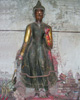
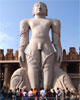
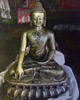
Google normally searches for pages that contain all the words you type in the search box, but if you want pages that have one term or another (or both), use the OR operator -- or use the "|" symbol (pipe symbol) to save you a keystroke. [standing | buddha]
Quotes
If you want to search for an exact phrase, use quotes. ["standing buddha"] will only find that exact phrase.
Not
If you don't want a term or phrase, use the "-" symbol. [-standing buddha statue] will return pages that contain "buddha" and "statue" but that don't contain "standing".
Similar terms
Use the "~" symbol to return similar terms. [~sitting bodhisattva -standing] will get you pages that contain "sitting boddhisattva", "sitting" and "bodhisattva" but not "standing boddhisattva".
Wildcard
The "*" symbol is a wildcard. This is useful if you're trying to find a phrase, but can't remember the exact phrase. [* of a standing Buddha] will return "Sculpture of a standing Buddha" or "Torso of a Standing Buddha".
|
|
 |
Cāruvatī Thūpa: Kirat period inscription from Nepalmandal: By Kashinath Tamot |
|
 |
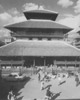
This is the only inscriptional evidence of the Kirat period in the history of Nepalmandala. Cāruvatī is named Charumati in the vernacular chronicles as the name of the daughter of Ashoka, who the chronicles recount was married to a Nepalese prince Devapal of Devapatan. The evidence of this inscribed brick lends credence to the stories mentioning Ashok's dharmayatra (religious voyage); the inscription on the Lumbini pillar is evidence of his visit there, and this inscribed brick suggests that his religious journey may have also brought him to the Nepal valley. |
| Published: June 07, 2025 | |
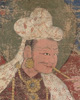
A Portrait of BARAWA GYALTSEN PELZANG (1310-1391): By Amy Heller |
|
This thangka’s regional provenance of western Tibet / western Himalaya is apparent from the composition of the thangka: the center is devoted to the monumental throne with ornate draperies at the center of the throne base holding the lotus on which Barawa Gyaltsen Pelzang is seated, the upper register is sub-divided by trilobate arches with individual portraits, the two lateral borders also with the series of portraits of the monastic lineage, and the lower register with the consecration scene and the protectors. In particular, such throne draperies are characteristic of paintings – portable and murals – from western Tibet since ca. 12th century. |
|
Published: May 16, 2025 |
|
Same Source, Different Responses: Two Mughal Reinterpretations of a Flemish Print by Stephen Markel |
|
 |
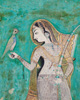
Much has been written about the nature of copying in Mughal painting and drawing. This essay will focus on two Mughal reinterpretations of a Flemish print. Mughal artists often responded to the European prints they encountered by reinterpreting the images through a Mughal lens with selective changes in figural style and composition [as well as proportion and perspective]. Important identifications of European prints re-envisioned in Mughal art were seminally recognized by Milo Cleveland Beach, and later principally by Gauvin Alexander Bailey, Gregory Minissale, and S. P. Verma. |
Published: April 02, 2025 |
|
Photographs: The Architecture in Nepal: By Pratapaditya Pal |
|
These black and white images formed the second part of Dr. Pal's dissertation, Architecture in Nepal, submitted for the degree of D. Phil. (Arts) of the University of Calcutta in 1962, and were published by The Kathmandu Valley Preservation Trust along with the facsimile text of the dissertation, in Architecture in Nepal, 2024. This gallery of images accompanies Dr. Pal’s recent afterword to the KVPT publication, reproduced here on asianart.com. In some cases, we have added present-day color photos, taken by asianart.com assistant editor and production manager - and professional photographer - Sameer Tuladhar. |
|
Published: December 12, 2024 |
|
Afterword: The Architecture in Nepal: By Pratapaditya Pal |
|
|
I was enchanted when I first visited Nepal as a tourist in the autumn of 1957, a visit which may have inspired me the following year to choose the architecture of Nepal as the subject for my dissertation for my doctorate degree of the Calcutta University. However, it is one thing to write a thesis and another to convert it into a book. Imagine my surprise when around my 88th birthday in 2023 I received a letter from my friends and esteemed colleagues Niels Gutschow and Erich Theophile informing me that the Kathmandu Valley Preservation Trust wished to publish a limited facsimile edition of my Nepal architecture dissertation. |
Published: May 17, 2024 |
|
Empty Niches of Nepalese Licchavi Caityas: By Ulrich von Schroeder |
|
There has been much speculation and disagreement regarding the empty niches of Licchavi caityas. Some scholars maintain that the empty niches are part of the original features, others claim that the empty niches are the result of forcibly removed images. There is strong evidence that sometimes in the past a purge directed against Licchavi caityas happened during which their sculptural decoration was replaced with empty niches. Its existence is manifest through the almost three hundred of desecrated Licchavi caityas dispersed all over the Kathmandu Valley. The exact date and length of this purge remains unknown, but all affected caityas pre-date the Malla Period (circa 1200–1769). The principal reason for the purge of Licchavi caityas was their resemblance with Śiva-liṅgas. |
|
Published: March 18, 2024 |
|
Stella Kramrisch and Ananda Coomaraswamy: By Pratapaditya Pal |
|
|
In 1921, four years after Ananda Coomaraswamy settled in Boston, Stella Kramrisch arrived in India. The diminutive, slim, shy, 25-year-old woman from Vienna—with a German accent and a soft voice—must have been quite awkward and uneasy on her arrival in India. Moreover, she was transplanted not to a metropolitan and cosmopolitan city like Bombay or Calcutta with urbane and sophisticated society and atmosphere, but to Santi Niketan in rural Bengal. The only person she knew was the poet whom she had briefly met in England and who was a larger-than-life celebrity. |
Published: February 03, 2024 |
|
A New Bronze Age for Nepal: By "Alexander Duncan" |
|
Almost every time I have asked a sculptor what his father did, the answer is that he made pots and plates. Were it possible to follow the family occupation back several more generations, it would almost certainly be found that the original family occupation was image making. Now the earlier trend from statues to utensils has been reversed, and sculptors are rediscovering the skills of their ancestors, which for two centuries lay in hibernation. Little by little, the casters relearned the techniques they had lost. Working from antique examples, the sculptors began to recapture the grace and elegance of earlier Nepalese statues. |
|
Published on asianart.com: October 19, 2023 from an 1980 original |
|
Prolegomena to the Study of an Early Wood Bodhisatva from the Himalayas: By Pratapaditya Pal |
|
|
In an important recent publication, the late Mary Slusser convincingly presented results of scientific examinations of many Nepalese wood sculptures, which revealed surprisingly early dates. Apart from carved timber struts in situ in Kathmandu Valley urban centers, she published at least two freestanding sculptures now in private collections in the west that, thanks to carbon-14 tests, can be dated to the Licchavi period. To these two we are happy to add a third, and certainly the earliest and most attractive example, with this brief prolegomena. |
Published: February 18, 2023 |
|
A bronze statue of a standing Buddha in the Cleveland Museum of Art: By Dr. Nayanath Paudel (English Translation, Ian Alsop) |
|
In the thirteenth chapter of his recently published Nepali language book Lichchavi Lipi, Dr. Nayanath Paudel presented a detailed study of the numerals available in the records of the Lichchavi period. In a section of that chapter Dr. Paudel studied in detail the inscription on the pedestal of the bronze statue of the standing Buddha located in the Cleveland Museum. Dr. Paudel decided that Dr. Gautamavajra Vajracharya's date of 513 is not correct: the date of this inscription is 113. In the Nepali version of this article we present this section of Dr. Paudel’s book verbatim. |
|
Published: August 16, 2022 |
|
क्लिभल्याण्ड म्युजियममा अवस्थित, उभिएका बुद्धको कांस्यमूर्ति: डा. नयनाथ पौडेल |
|
 |
डा. नयनाथ पौडेलले हालै प्रकाशित नेपाली भाषाको पुस्तक लिच्छवि लिपिको तेह्रौं अध्यायमा लिच्छविकालका अभिलेखमा उपलब्ध अंकहरूको विस्तृत अध्ययन प्रस्तुत गरेका छन् । त्यस अध्यायको एक खण्डमा डा. पौडेलले क्लिभल्याण्ड सङ्ग्रहालयमा अवस्थित उभिएको बुद्धको काँसाको मूर्तिको पादपीठमा रहेको अभिलेखको विस्तृत अध्ययन गरेका छन्। डा पौडेलले डा. गौतमवज्र वज्राचार्यको ५१३ को मिति सही नभएको निर्णय गरे: यस अभिलेखको मिति ११३ हो। |
| Published: August 16, 2022 | |
Christians at the Malla Court: The Capuchin 'piccolo libro': By Ian Alsop |
|
No single group of Westerners had a longer or more intimate connection with medieval Nepal than the Capuchin missionaries of the province of Ancona, who were given charge of the Tibet Mission in 1703 by the Congregation of the Propaganda Fide in Rome. Over the years , scholars in Nepal have managed to find several Christian texts in Newari left behind by the Capuchin fathers. One of these, the most original and the most interesting, is the "piccolo libro" composed by Padre Vito da Recanati and the other fathers of the Bhaktapur mission of 1740, presented in this article. |
|
Published: March 11, 2022 |
|
Image Casting in Oku Bahal: By Ian Alsop and Jill Charlton |
|
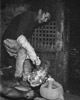 |
Of all the ancient art forms still practiced in the valley of Kathmandu, the one which is most vibrantly alive is that of image casting in metal. The city of Patan is the modern as well as traditional center of the practice of casting, and within the city itself it is the Newar community of Oku Bahal to which Nepal's most respected and skilled sculptors and casters belong. This report will focus its attention on these men and their traditions, on the past which formed their vision and technique, on the changed present in which they work, and on the future of their art which so many assume to be dead. |
| Published: March 02, 2022 | |
|
||||||||
The Thoughtgem and Wheel Avalokiteshvara and Lokeśvara of Wish-fulfilling Gems Revisited: By Pratapaditya Pal |
|
|
In this two-part article which spans over 50 years of scholarship, Dr. Pal revisits an article published in Calcutta in 1968, in which he examined two important forms of the great bodhisatva Avalokiteshvara: the Cintāmaṇi Cakra Avalokiteśvara in China and Japan and Nepal’s Cintāmaṇi Lokeśvara. In a detailed afterword, Dr. Pal traces the international scholarship in the study of Buddhist iconography and expands our knowledge of both forms of Avalokiteshvara, particularly the Nepalese form of the Lokeśvara of Wish-fulfilling Gems, which Dr. Pal traces back to an Indian sculptural tradition. |
Published: September 20, 2021 |
|
In the Khasa Malla Tradition: A Thangka of Vikram Shahi (r. 1602-1631) King of Jumla: By Ian Alsop, Kashinath Tamot and Punya Prasad Parajuli |
|
This painting is a unique representation of King Vikram Shahi, an early 17th century King of the Kalyāla dynasty of the Jumla valley, one of the hill states of Nepal that were the heritors of the great Khasa Malla kingdom of the 13/14th centuries. It is an unprecedented combination of Tibetan thangka painting format and style and Indian courtly portraiture. King Vikram Shahi was known for his close relationship with and protection of the Buddhist lamas and monasteries of his kingdom, a continuation of the remarkable bi-cultural and bi-lingual tradition of the Khasa Malla kings. |
|
Published:April 20, 2021 |
|
About the portraits of Tibetan masters: By Jean-Luc Estournel |
|
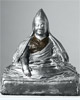 |
It is a commonly accepted convention among scholars that "only deceased monks are usually depicted on a lotus pedestal " since it is only after their death that they acquire a more or less divine character. Which begs the question: are all representations of lamas not resting on lotus pedestals but on cushions then to be considered as having been made during the lifetime of the model? An analysis of the large corpus of masters portraits quickly shows that this is not the case. It is therefore necessary to look elsewhere for potential elements that could provide us with an answer. |
| Published: February 28, 2021 | |
|
||||||||
Laureillard, Marie and Cléa Patin (eds.): À la croisée de collections d’art entre Asie et Occident: Du XIXe siècle à nos jours: By Freya Terryn |
|
 |
In this collection of twenty-eight essays scholars and specialists in the art world identify the types of collectors of Asian art, the purchased Asian art works, and the mechanisms at work in constituting Asian art collections from the 19th century onward. By devoting significant amount of space to the discussion of not only art collections, but also craft collections and those constituting out of artifacts of daily, popular, and ritual use, the editors of the present volume succeed in enriching our understanding of the artistic and cultural exchange taking place in art collections across Asia and the West. |
| Published: December 15, 2020 | |
Born of Two Cultures, but a Man for all Seasons: By Jane Thurston-Hoskins |
|
| To be able to write about so many aspects of a remarkable mind is an achievement in itself and Pratapaditya Pal has produced a work that is informative, thought provoking and a pleasure to read. He is uniquely qualified to write on Coomaraswamy. From 1967 to 1969 he held the post of “Keeper” (Curator) of Indian Art at the Museum of Fine Arts in Boston (MFA), following in the footsteps of AKC, who had sat at the same desk between 1917 and his death some thirty years later. |  |
| Published: November 16, 2020 | |
|
Rölpai Dorje was for half a century during the reign of the Qianlong Emperor the principal authority of Tibetan Buddhism at the Chinese court. Dragpa Sonam– his personal name – was born in 1717 in a prominent Tibetanised Mongol family near Tsongkha in the modern Gansu-Qinghai border area. Having been recognised as the reincarnation of the First Changkya Huthugthu, Ngawang Losang Chöden (1642–1714), the spiritual mentor of the Kangxi and Yongzheng Emperor, Rölpai Dorje entered the nearby Gönlung monastery at the age of three; he was the abbot until 1769. |
Published:November 08, 2020 |
|
About the 18 stupas and other treasures once at the Densatil monastery: By Jean-Luc Estournel |
|
| Since the end of the 1960s, public and private collections around the world have housed an important group of Tibetan objects with a very strong typological, iconographic and stylistic unity, constituting a particular group among all those recorded to come from the “land of snows”. Densatil monastery, the origins of which can be traced to ca. 1198, was perhaps first founded by the monk Dorje Gyalpo (rdo rje rgyal po) who, nearly half a decade ealier in 1158, had settled the area of Phagmodru (phag mo gru). | 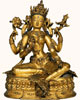 |
| Published: September 29, 2020 | |
The Standing Buddha of Guita Bahi: Part I: By Ian Alsop |
|
|
A standing Buddha in Guita Bahi in eastern Patan, over life-size and probably the largest Nepalese metal sculpture now known, must be counted as one of the great marvels of Nepalese metalcraft. This Buddha presides as the main deity of Prathamaśrī mahāvihāra, the largest of the three viharas that make up Guita Bahi. At 6 feet 8 inches, (2m 3 cm) it is the largest of the main deities of the viharas of Patan, and likely of the entire Kathmandu valley. A recently discovered inscription leads us to conclude that it is also the oldest dated Buddha sculpture in Nepal. |
Published: June 30, 2020 |
|
Engaging with Jain Visual Culture: By Pratapaditya Pal |
|
My engagement with Jain art and architecture began when I was 10 years old in 1945. I still vividly remember being taken to the Jain temple of what we Bengalis call Pareshnāth in Kolkata (then known as Calcutta in English). It was a memorable visit as it was so different from the famous Kālı temple in south Calcutta (the Jain shrine was in the north of the city) for it differed notably from the former with its large crowds and hustle and bustle where getting a glimpse of the image of the goddess was an intimidating experience for a Hindu lad. |
|
Published: June 27, 2020 |
|
|
||||||||
BOUNDLESS: Contemporary Tibetan Artists at Home & Abroad: By Gary Gach |
|
| “BOUNDLESS is an exhibition of work by seven members of a burgeoning, vibrant, cohesive community of contemporary Tibetan / Himalayan modern artists who know and support each other's work. Some live in the East; some in the West. Some are self-taught; others, highly trained.” In this article, San Francisco author and poet Gary Gach takes us on a virtual tour of this small but energy-filled exhibition put on by the Berkeley Art Museum (and Pacific Film Archive) in late 2018 and early 2019. As he exits, Gach remarks, “BOUNDLESS renews my vision of what is possible…”. |  |
| Published: October 17, 2019 | |
The Dancing Men of Kanchipuram, an Anomaly in Pallava Land: By Drs. Liesbeth Pankaja Bennink |
|
|
The courtyard of the Kachabeshwarar temple is a wide-open space with shrines arranged around its periphery, except for the Ganesha shrine which is standing free in the open space by the side of the temple tank. At the northern corners of this North-facing mandapa we find two unique artifacts standing lost in space, in retrospect seemingly forgotten in plain sight. These two remainders of pillars are, on the one hand clearly Indian in their artistic vocabulary, but on the other hand they don’t fit in with any of the categories usually applied to classify South Indian art. |
Published: July 30, 2019 |
|
Faith and Empire: An Overview: By Karl Debreczeny |
|
| This article is the Overview first chapter of the book Faith and Empire: Art and Politics in Tibetan Buddhism which complements the exhibition of the same name held at the Rubin Museum, New York from February 1 – July 15, 2019. The article explores the dynamic intersection of politics, religion, and art in Tibetan Buddhism. At the heart of this dynamic is the force of religion to claim political power. Tibetans also used the mechanism of reincarnation as a means of succession, a unique form of political legitimacy that they brought to empires to the east. Images were a primary means of political propagation, integral to magical tantric rites and embodiments of power. |  |
| Published: May 30, 2019 | |
The Sacred and the Profane – Part Two: On the Representation of the Third to the Eighth rJe btsun dam pa Khutukhtus in Mongolian Buddhist Art: By Dr. Elisabeth Haderer |
|
|
In my recently published article, The Sacred and the Profane - Part 1, I analyzed in detail some portraits of the first and second rJe btsun dam pa Khutukhtus or Bogdo Gegens, the highest Buddhist representatives of Outer Mongolia, from the seventeenth century forward. In this paper, I will continue to investigate some portraits of the third to the eighth rJe btsun dam pa Khutukhtus (Figs. 2-25) in terms of their iconographic features, the portraiture and the style of the paintings and sculptures. |
Published: February 27, 2019 |
|
Nepal Saṃvat and Vikrama Saṃvat: Discerning Original Significance: By Gautama V. Vajracharya |
|
| The Newars of the Kathmandu Valley celebrate the New Year’s Day of the Nepal Era in autumn with an elaborate indoor ritual known as Hmapūjā (often spelled mhapūjā). Likewise, they participate enthusiastically in the celebration of the New Year’s Day of the Vikrama Era (Vikrama Saṃvat) with a boisterous outdoor festival called Biskā jātrā. We will make here a novel and unconventional endeavour to detect the original significance of both these eras on the basis of a comparative study of Vedic literature and careful observation of the annual rituals of the new year celebrations in the Valley. |  |
| Published: November 06, 2018 | |
Defining the Style of a Group of 13th Century Tibetan Gilt Copper Statues: By David Weldon |
|
|
Fourteen Tibetan gilt copper statues with distinctive sculptural characteristics form a hitherto undocumented style group. Works from Densatil, commonly dated to around the fourteenth century and generally considered to have Nepalese influence, afford a convenient comparison with the sculptural style of this group. While Densatil figures are predominantly well rounded, flamboyantly modelled and richly embellished with jewel settings, this group follows a rather different aesthetic with emphasis on athletic posture, clean lines and relatively restrained jewel adornments. |
Published: September 13, 2018 |
|
Review Article of Robert Elgood, Rajput Arms & Armour: The Rathores & Their Armoury at Jodhpur Fort: By Stephen Markel |
|
| Dr. Robert Elgood is renowned internationally as being among the world’s leading experts in the field of Indian and Islamic arms and armor and has published extensively. His latest two-volume masterful study, Rajput Arms & Armour: The Rathores & Their Armoury at Jodhpur Fort, was written in tandem with his 2015 catalogue, Arms & Armour at the Jaipur Court: The Royal Collection. Together, the two catalogues provide astute historical introductions, exceptionally well-illustrated object entries, and state-of-the-field analyses of two of the most significant intact royal collections of arms and armor. |  |
| Published: May 22, 2018 | |
The spiritual career of Buddha Śākyamuni on the portal of Khorchag (Khojarnath): By Christiane Kalantari and Eva Allinger |
|
|
At Khorchag (’Khor chags,), or Khojarnath, the mandala as perfect divine structure is manifested not only in the medium of wall painting for the first time in historical Western Tibet, but a complete mandalic programme is also represented on a monumental wooden doorway. The iconographic programme on this doorway represents the earliest known example in this region. Khorchag Monastery was founded in 996 by Khorre, ruler of the kingdom of Purang, who—together with his brother Yeshe-Ö—transformed the region into a Buddhist kingdom. |
Published: May 14, 2018 |
|
Seeing these fragile treasures endangered and still relatively undocumented, Thomas Laird developed new methods to capture three hundred of the greatest murals painted in Tibet during the past thousand years, at life size resolution: gigapixel images. When a 10th century mural is 5 x 15 ft. his image is the same size, at a resolution of 300 dpi. Prior to the digital revolution images of murals in Tibet of this scale and resolution were impossible. These images allow global access to one of the greatest artistic treasures of Tibet for the first time. |
|
Published: March 16, 2018 |
|
|
||||||||
Paul F. Walter (1935-2017): Personal Memories: By Pratapaditya Pal |
|
I once read a book by Sir Erwin Panofsky which asserted that all artists were born under Saturn; today I would say that so are all curators and collectors of art. Paul Walter, however, must have been an exception; as a collector he was so passionate, avaricious, curious, eclectic, impulsive, gregarious and generous that I always felt he must have been born under all the planets and shared bits of all the zodiacal signs. He was a big man, with a big appetite and a big heart, like Mr. John Wayne of Hollywood fame. |
|
Published: October 24, 2017 |
|
Mary Slusser: Remembrance of things past: By Mary Shepherd Slusser |
|
|
A lawyer recently told me that for institutional beneficiaries of my Estate I should write something about my life since often they like to know a little about the donor. Since there already exists on file in the Library of Congress an oral history recorded by the Society of Women Geographers, additional information seemed unwarranted, but the lawyer’s advice raised a storm of far more intimate, near century-long memories that will not be stilled until I set them down as I do here. |
Published: August 16, 2017 |
|
A Tale of a Collector and Curator: The Ross-Coomaraswamy Bond: By Pratapaditya Pal |
|
When I first encountered Coomaraswamy’s multivolume catalogue of the Boston Museum collections in the Calcutta University library as a student in 1956, I learnt that the great Indian collection for which the museum was famous at the time was identified as the hyphenated “Ross-Coomaraswamy Collection.” The “Ross” part of the moniker, however, remained a mystery until I came to occupy the position of Keeper of the Indian Collections in 1967 – exactly two decades after Coomaraswamy passed away. |
|
Published: August 16, 2017 |
|
On the Use of Carbon-14 Dating in the Study of the Art History of Nepal; A note on the Use of "Old Wood" in Nepalese Carving: By Ian Alsop |
|
|
Mary Slusser in her 2010 book, The Antiquity of Nepalese Wood Carving: A Reassessment (2010, University of Washington Press), made a remarkable reassessment of the previously accepted dating of the earliest Nepalese wood sculptures, relying in large part on the modern technique of carbon-14 dating. In a review in 2012, Gautama Vajracharya challenged her use of C-14 testing, writing that … "the custom of keeping a huge log protected within a monastery…. may indicate the historicity of the monasterial tradition of preserving aged tree trunks for carving divine images." |
Published: July 31, 2017 |
|
Indian Art “Auditions” in Hollywood: By Pratapaditya Pal |
|
…My initial encounter with Hollywood occurred on my first visit to Los Angeles in the summer of 1964: I must admit the tiled star-studded stretch of Hollywood Boulevard and the Grauman's Chinese Theatre (as it was then known), were not what I expected of Tinseltown. There really was no arcadian, territorial Hollywood; only a state of mind. In any event on that initial visit, as I did walk the walk of fame on Hollywood Boulevard, I never dreamt that I would one day work in the neighborhood or meet any real movie stars. |
|
Published: May 11, 2017 |
|
Review of Pratapaditya Pal, In Pursuit of the Past. Collecting Old Art in Modern India, circa 1875-1950.: By Anne Vergati |
|
|
The most recent book of Dr. Pratapaditya Pal is an important contribution to the history of Indian art. While Indian museums are well known to specialists, Indian private collections and collectors are largely unknown to both the specialists and the larger audience. Le dernier ouvrage de Pratapaditya Pal est une contribution importante à la connaissance de l’art indien. Les grands musées indiens sont assez bien connus par les spécialistes mais les collections privées indiennes et les collectionneurs restent relativement ignorés par les spécialistes et le grand public. In English and French. |
Published: April 07, 2017 |
|
Mānadeva Saṃvat: Old Problem, New Evidence: By Gautama V. Vajracharya |
|
The Mānadeva and Śaka eras, both of which were referred to in inscriptions made during the Licchavi period (C. 200-879) in Nepal, have been a subject of scholarly debate for over a century. However, a highly significant piece of information unfortunately escaped the attention of international, as well as native, scholars. None of them realized that the Licchavi period inscription carved on the pedestal of the monolithic statue of Śiva and Pārvatī at Sikvabahi (or Siku Bahi) Patan is actually the Rosetta Stone; the date of the inscription being recorded there in two different eras, namely, the Mānadeva and the Śaka eras. |
|
Published: February 14, 2017 |
|
Yongle Period Metalwork: The British Museum Sakyamuni: By David Weldon |
|
|
While the authenticity of the da Ming Yongle nian shi mark on the BM gilt brass statue of Shakyamuni Buddha is now generally accepted, doubts have been raised over the age of its separately made throne back (torana or prabhamandala) and the throne base into which the figure is secured. The authors of a technical and stylistic study concluded that the sculpture of Buddha was of the Yongle period but the throne and torana were probably of a later date. This article contests that conclusion, maintaining that both sculpture and throne are of the same period. |
Published: January 19, 2017 |
|
Revisiting a Kashmiri-Style Buddhist Image of Vajrasatva with Consort: By Pratapaditya Pal |
|
This exquisitely rendered sculpture debuted in the seventies of the last century when it was included in the exhibition of the renowned Pan-Asian collection formed by the prodigious collector of Asian art, Christian Humann. It is a pleasure to revisit the object almost half a century later, as it has remained not only an intriguing and rare representation of Vajrayana Buddhist deities but, with a great deal of material from Kashmir and the contiguous regions in Western Tibet published since, it is now possible to throw more light on its origin and iconography. |
|
Published: September 19, 2016 |
|
The Xi Xia Legacy in Sino-Tibetan Art of the Yuan Dynasty: By Yury Khokhlov |
|
|
The Mongol adoption of Tibetan Buddhism has been traditionally ascribed almost solely to missionary activities of Tibetan clerics. Recent scholarship, however, has revealed a more complex picture, which shows the Xi Xia background of Tibetan Buddhism in Mongolia and Yuan China. This essay aims to highlight the Xi Xia traits in Sino-Tibetan art of the Yuan Dynasty. In addition, it challenges the notion of the existence of a dominating Nepalese style-based tradition, allegedly established within the Yuan Imperial workshops by Anige (also known as Aniko and Arniko/Araniko). |
Published: September 15, 2016 |
|
On the Loss of Cultural Heritage in Quake-Ravaged Nepal: By Mary Shepherd Slusser |
|
Beneath the Kasthamandap railing was a band of intricate carving and lower still a narrow strip of floral design fringed with pendants. As an unexpected anomaly, on one face only the band of floral design became a charming frieze. Neither this frieze nor any part of it has yet turned up among the meagre corpus of pieces salvaged from the building. I am emboldened to share my old photographs of this frieze, both in some way as my duty to preserve through photographs at least a part of the vanished frieze, and in another way, to symbolize through this one small object the magnitude of what Nepal — and all of us — have lost. |
|
Published: July 04, 2016 |
|
Statue Stolen from Gakar Gompa in Dolpo, Nepal, on 4/10/2016: editors |
|
|
On the evening of April 10th, 2016 at about 11 pm, several armed thieves stole four statues and a fine Buddhist manuscript with wooden covers from the house of the caretaker of Gakar and Mekin gompas in upper Dolpo, Nepal. Two of the thieves have since been apprehended and the manuscript and three of the four statues stolen were recovered. However, the most precious and important of the sculptures, a 16-18 inch, ca. 15th c. bronze figure of Sakyamuni is still missing, and may be in the Kathmandu area with one of the other members of this gang. |
Published: April 25, 2016 |
|
Two Medieval Nepalese Buildings: An architectural and cultural study: By Mary Shepherd Slusser and Gautamavajra Vajrācārya |
|
Asianart.com is pleased to republish this important early article - originally published in 1974 - as part of the documentation on the damage inflicted by the earthquakes of April and May 2015, the first of which totally destroyed Kāṣṭhamaṇḍapa. Please also see the article by Dipesh Risal published on Sept. 13, 2015, Kasthamandap: Microcosm of Kathmandu's Living Culture and Storied History. Another important article by Mary Slusser on this important and now lost structure will be published soon. |
|
Published: April 25, 2016 |
|
The ruins of Sen palace and temple in Saptari district of Nepal: By Sanjib Chaudhary |
|
|
Thought to be the ancient kingdom of Sen kings, Saptari district in Eastern Nepal houses the ruins of a palace and a temple in Kanakpatti village and Chandrabhoga jungle in the Chure hills. Though some select artefacts have been collected and established in temples at Shambhunath and Aginsair, most of the valuable items lie unattended and uncared for at the fate of nature, with many pieces being stolen by art thieves. It seems the area was a hub of ancient settlement long before Sen dynasty rule. The whole area, if excavated, can perhaps unearth an ancient settlement like Lumbini. |
Published: February 02, 2016 |
|
The Splendor of Wall Paintings in Bundi: A Review Article of The Bundi Wall – Paintings in Rajasthan (Rediscovered Treasures): By Pratapaditya Pal |
|
What is striking about the murals at Bundi and other palaces of the period is that they are merely larger versions of the portable pictures, mostly on paper, that were also produced at court simultaneously. Often the wall paintings are one gigantic assemblage of a group of smaller and complete pictorial compositions, each of which, if cut out from the plaster and affixed to paper, would become a complete picture in its own right. |
|
Published: January 26, 2016 |
|
Newar urban settlements: the evolution of Newar seismic engineering solutions? |
|
|
The April and May 2015 Great Gorkha earthquakes in Nepal destroyed over half a million "low strength" houses in the rural areas to the north, east and west of Kathmandu. The stand-alone temple structures in the Kathmandu Valley suffered considerable if not catastrophic damage. However the historic densely packed high-rise tenement style urban settlements of the Kathmandu Valley were generally relatively unscathed. The question that this paper seeks to address is why was there not more damage to the main Newar urban centres? |
Published: January 25, 2016 |
|
Nataraja, Mysteries and More…: By Drs. Liesbeth Pankaja Bennink |
|
At first glance the two Natarajas appear to be the same. But careful observation reveals a few differences. Where the larger Nataraja's locks are spread sideways from his head, reflecting the sculptor's intention to suggest the wild gyrating movement of his dance, the small Nataraja's locks fall on his shoulders and down his back, suggesting a much softer, quieter movement. Two diminutive figures sit at his feet, accompanying his dance with percussion instruments. Less obvious differences can be found in the divine dancer's headdress. These differences represent a mystery that has not yet received much attention. |
|
Published: November 23, 2015 |
|
Giuseppe Tucci's remarks on the state of preservation and conservation of Tibetan monasteries in the 1930s and 1940s: By Erberto Lo Bue |
|
|
Throughout his writings Giuseppe Tucci complained frequently, sometimes bitterly, about the poor state of conservation of important ancient temples and religious images in Tibetan monasteries, especially those not belonging the Dalai Lama's religious order, at the time of his expeditions to Tibet. This contribution is meant to analyze the Italian scholar's remarks on the conditions and problems of conservation of religious buildings, images and texts, as well as on Buddhist practice, as he could observe them particularly in West Tibet and Southwest Tibet, prior to the Chinese invasion. |
Published: October 19, 2015 |
|
Looking at "Himalayan style" following the earthquake in Nepal: By Claire Burkert |
|
The writing of Himalayan Style, took seven years. I could not have presaged the earthquakes in the spring of 2015 that damaged or destroyed each of the buildings in Nepal that we depicted in our book. Many of the traditional houses in the Kathmandu Valley and in 14 outlying districts were damaged or destroyed. After the earthquake, Thomas Kelly revisited and photographed the lost or damaged sites we'd earlier documented. We realized that our book had become an important record for Nepal, as well as a source of inspiration for rebuilding. |
|
Published: October 09, 2015 |
|
Questions Regarding the Word Mudra: A Preliminary Survey of Gestures on Indian Icons and their Designation: By Richard Smith |
|
|
If we look at this Indian Buddhist figure, who would not agree is shown forming the Bhumisparsha Mudra? This term for this hand position, or its translation into modern languages, has become standardized and is used by art historians with little question of its appropriateness. This essay is an attempt to raise questions about such designations, especially the usage of the word mudrā, its history, and what it may actually refer to when it is used in various periods. Or perhaps, not refer to. |
Published: September 09, 2015 |
|
Kasthamandap: Microcosm of Kathmandu's Living Culture and Storied History: By Dipesh Risal |
|
Kasthamandap is no more. It collapsed into a pile of rubble in the first of the earthquakes that rattled Nepal in April-May, 2015. Kasthamandap, originally a public rest-house (sattal), has also served many social and religious functions over its lifetime. It was easily the oldest standing building in all of Nepal, dating back to at least 1143 CE. … Let us locate the treasures lost in the debris of Kasthamandap, and let us rebuild it back to its original iconic status. If we do not act, a significant part of Nepal's heritage will be lost forever. |
|
Published: September 03, 2015 |
|
Living masks of the Newars: The itinerant masked dances of the Kathmandu Valley: By Gérard Toffin |
|
|
The author situates the goddess choreographies of the Kathmandu Valley within the wider context of masked dances among Newars mainly by opposing Devī pyākhã to the well-known Nava Durgā goddess troupes. The opposition between these two traditional pageants highlights contrasting features of dance and theatre in Newar culture. In Devī pyākhãs, the deities are pacified and mild, whereas in Nava Durgā performances, they are wild and untamed. |
Published: August 28, 2015 |
|
The Enigmatic Image: Curious Subjects in Indian Art: By Stephen Markel |
|
| For many viewers the rudimentary subject of most Indian paintings is understandable even without a specialist's knowledge of the identity and history of the figures portrayed. However, many works feature complex subject matter, symbolic nuances, and/or compositional substructures that require an in-depth explanation to understand their layers of meaning and raison d'être. Together, these pictorial intricacies form a corpus of subtextual approaches by artists intended to convey deeper levels of interpretation than are apparent at a superficial glance. | 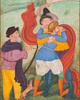
|
| Published: July 30, 2015 | |
|
||||||||
The Eight Cornered Gift: Why was the Mandap not destroyed this time?: By Götz Hagmüller and Suresh Shrestha |
|
The three Durbar Squares of the Kathmandu Valley captivate with the richness of their architectural heritage. But those who know what they were like before the 1934 earthquake also feel the loss when they look at them. In the late 1980s, two architects decided to rebuild one of Bhaktapur Durbar Square's most iconic buildings, the Chyasilin Mandap, in an effort to give back to the square its most gorgeous building. |
|
Published: June 14, 2015 |
|
Nepal Earthquake: Rebuilding Hope, Rebuilding a Nation: By Dina Bangdel |
|
|
If the world has imagined and experienced the beauty of Nepal and its people as an idyllic Shangri-la, the brutal aftermath of the April 2015 earthquake has forever shattered that dream. The massive quake changed the fate of Nepal—from a fragile, emerging democracy still recovering from a crippling decade of civil war, to a nation in crisis and mourning. |
Published: June 10, 2015 |
|
Ten days ago, on April 25, Nepal experienced a major earthquake, which caused widespread destruction throughout a large portion of central Nepal. So far the death toll from the quake is over 7000, and the number of injured is more than double that. These figures are expected to climb much higher as the devastation in the remoter areas comes to light. |
|
Published: May 05, 2015 |
|
Problems in Dating Nepalese Metal Sculpture: Three Images of Viṣṇu (corrected): By Ian Alsop |
|
This article was first published in 1984 in CNAS journal of Tribhuvan University in Kathmandu. In an article published in 2012, Gautam Vajracarya made an important correction to the dating of the first Visnu sculpture presented in this paper. This correction shows how over the years, those interested in the art history of Nepal have made consistent strides to better our understanding of this important tradition. Internet publishing allows us to publish this paper once again with this important correction. |
|
Published: February 04, 2015 |
|
|
||||||||
The Date of the Chandi Murals in the Hanuman Dhoka Palace: By Deepak Shimkhada |
|
The paintings under investigation in this article come from Mohan Chowk in the Hanuman Dhoka palace of Kathmandu, Nepal; they are neither dated nor signed. Additionally, there are no literary, historical and oral accounts giving information about their existence. In the absence of this information, how does an art historian find out when they were painted and by whom? In this paper, the author goes one step further like a criminal investigator as to why they were painted. |
|
Published: October 28, 2014 |
|
|
||||||||
Buddhist Feminine Divinities beloved and adapted by Mongols and Buriats: By Surun-Khanda D. Syrtypova |
|
The significance of the cult of Tārā is exceptionally high in Tibet and Mongolia, as well as in Buriatia. Numerous research works dedicated to the cult of Tārā are already published. However the regional features of female deities are still poorly understood and there is still much room for interesting studies on the adaption of cults to the different historical, cultural, and geographical specifics of different regions of the Buddhist world. |
|
Published: June 26, 2014 |
|
Buddhist Initiation Paintings from the Yuan Court (1271-1368) in the Sino-Himalayan Style: By Jane Casey |
|
|
This essay examines a group of Buddhist initiation paintings. They are likely to be rare surviving examples of a Himalayan-inspired school of art that flourished at the Chinese Yuan court. The style combines Tibetan Buddhist iconography and mid-thirteenth century Newar painting traditions with elements of style—notably textile and costume design—that are demonstrably Chinese Yuan. Moreover, two paintings within the group portray a Yuan Mongol emperor and a Tibetan Buddhist Sakya hierarch. |
Published: June 16, 2014 |
|
An early Tibetan mandala of Ekallavira Achala in a private collection: An Art Historical Analysis: By Pratapaditya Pal |
|
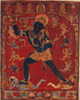
The history of portable Tibetan painting can now be confidently pushed back to the eleventh century. Buddhism was officially introduced to the country under the great ruler Song-tsen Gampo (r. 609-649) of the Yarlung dynasty and one can form a good idea of the architecture and sculpture of this early historical period; but significant evidence for Tibetan painting of any kind, cannot be traced back much earlier than the tenth century. |
 |
Published: September 09, 2013 |
|
Shiva's Karanas in the temples of Tamil Nadu: the Natya Shastra in stone: By Liesbeth P. Bennink, and Kandhan, Jayakumar and Sankar Raja Deekshithar |
|
|
Karana means 'action' and in the context of dance it indicates a coordinated action of the body, the hands and the feet. 108 such karana or units of dance are named and defined in the Natya Shastra, the most ancient text on the performing arts composed by Bharata Muni. This text is dated to a period of around 2000 years ago, within a margin of 500 years and has been the most influential in defining and shaping Indian performing arts. |
Published: August 20, 2013 |
|
Metal sculptures of the Tibetan Imperial period: By Yury Khokhlov |
|
The fully developed production of metal sculptures during the Tibetan Imperial Period (600-842 AD) has been extensively documented by Tibetan historical sources. However, only a few Tibetan statues have been attributed to that time and the stylistic features of Buddhist art at this stage remain debatable. On the basis of two published sculptures attributed to the Tibetan Imperial period and two examples from the author's collection, this article provides additional data and highlights the key features of sculptural art during the Tibetan Imperial period. |
|
Published: January 24, 2013 |
|
The Sculpture of Chöying Dorjé, Tenth Karmapa: By Ian Alsop |
|
|
Establishing a chronology and a meaningful inventory of the sculptures of Chöying Dorjé, the 10th Karmapa, is a daunting task. There is considerable confusion and disagreement regarding who made what, and when. Six extraordinary sculptures analyzed in this article are believed by Ulrich von Schroeder to be ancient works of artists from the seventh to eighth century, while Ian Alsop, the author of this article believes they are the works of this master himself. This article attempts a new examination of this great artist's sculptural works. |
Published: January 07, 2013 |
|
The Arts of Tibetan Painting: Edited by Amy Heller |
|
| The Arts of Tibetan Painting: Recent Research on Manuscripts, Murals and Thangkas of Tibet, the Himalayas and Mongolia (11th-19th century) is Asianart.com's first venture in online publication of a complete volume, comprising 13 articles which stem from the 12th Seminar of the International Association for Tibetan Studies (Vancouver 2010). This volume presents recent major discoveries and analyses by distinguished scholars of Tibetan and Mongolian art, history, and language. |
|
Published: September 20, 2012 |
|
The Rise and Fall of the Hindu God of War: A Review article by Pratapaditya Pal |
|
|
The Rise of Mahāsena: The Transformation of Skanda-Kārttikeya in North India from the Kusāna to Gupta Empires, by Richard T. Mann (Brill: Leiden. Boston 2012. pp. XIV and 282. Figs 43), is a study of the early history or development and decline of the god of war in the Brahmanical/ Hindu pantheon. |
Published: August 01, 2012 |
|
Nepal's Oldest Himalayan Buddhist temple and monastery threatened by Floods: An eyewitnness account by Astrid Hovden |
|
| With about 400 inhabitants, Halji is the most populous village in Limi VDC of Humla district in north western Nepal. The village is situated at an altitude of 3650 metres on the northern banks of the Limi River, a tributary to the Karnali. Halji village is constructed around the 11th century Rinchenling Monastery, the oldest Tibetan Buddhist monastery in Nepal and a potential World Heritage Site. Since 2006 the monastery and the village has been threatened by flash floods caused by the overflow of a glacial lake. The last flood struck the village in the afternoon of June 30th 2011. |
|
Published: July 16, 2012 |
|
THE INVISIBLE ENVISIONED: Phantoms of Asia : contemporary awakens the past: By Gary Gach |
|
|
One of the great, deep-water ports of the world, San Francisco is a natural gateway to a cosmopolitan diversity of people, goods, and views. Now its Asian Art Museum opens its first large-scale exhibition of contemporary Asian art. This renewal of vision is well-timed, given current, unprecedented global interest in Asian art. As always, the Asian delivers the goods in its distinctive, signature style. |
Published: July 13, 2012 |
|
Shiva's Dance in Stone: Ananda Tandava, Bhujangalalita, Bhujangatrasa: By Liesbeth Pankaja Bennink and Kandhan, Jayakumar and Sankar Deekshithar |
|
| Nataraja or the Dancing Shiva is one of the best known and possibly most studied representations of the divine form within Hindu art. Shiva is pre-eminently the deity who expresses his divine being through dance. Although many different Tandavas or heroic dances are known from the tradition, the one called Ananda Tandava or Dance of Bliss is without doubt the one best known both for its artistic beauty and for its philosophical merit. |
|
Published: June 29, 2012 |
|
Tibetan Traditional Art and Contemporary Painting: By Sherab Gyaltsen |
|
|
Sherab Gyaltsen of Lhasa explores traditional Tibetan themes in painting and the possibilities of expressing and relating to them in his own painting style within a contemporary art context. "When a work of art or any phenomena touches my soul, no matter whether beautiful or ugly, I believe this impression to be art. Naturally, my art is seeking to always express my internal spirit world; the wide and generous Buddhist world is my artistic resource." |
Published: May 30, 2012 |
|
The Earliest Datable Mughal Painting: By Laura E. Parodi and Bruce Wannell |
|
The album or group of albums known as "Gulshan" , alternatively named after the Mughal emperor Jahangir, now dispersed in various collections, contain a few rare paintings attributable to the reign of the second Mughal ruler, Humayun. Among these the most famous is probably a large composition known to scholars as "Humayun and his Brothers in a Landscape". In terms of size and quality, it is without doubt one of the finest works from the Mughal school and has unsurprisingly attracted considerable scholarly attention. |
|
Published: November 18, 2011 |
|
Thirteenth or Eighteenth Century? A response to David Weldon’s “On Recent Attributions to Aniko”: By Michael Henss |
|
|
It is my opinion that Nepalese and Tibetan art of the 13th and 14th century was influenced considerably by Indian Pala style models in a great variety of forms and atelier traditions. However, a closer look at all these “Pala-Newari” and “Pala-Tibetan” or Nepalo-Tibetan artistic traditions will naturally help identifying specific stylistic groups beyond a simple Pala pattern which I feel characterises – in different degrees – the great majority of “Himalayan” art works of that period. |
Published: February 14, 2011 |
|
On recent attributions to Aniko: By David Weldon |
|
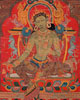
Publications of late have seen a trend in the attribution of sculpture and painting to Aniko (1245-1306), the renowned Nepalese artist and architect. While these recent attributions could be important steps forward in our understanding of thirteenth century Tibeto-Chinese metal sculpture and portable painting, how can we be sure of the attributions when there is a paucity of his works with which to compare them and no inscriptional evidence relating to the attributed works? |
 |
Published: October 21, 2010 |
|
A Voyage to Kanchipuram: By Thomas Cole |
|
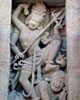 |
Passing through the verdant landscape of south India (in contrast to the parched countryside of the north from whence we had come), one can’t help but recall the epic tales of the Ramayana and the Mahabharata, stories of chivalry and treachery, virtue and deceit, as well as enduring love and extended war. Paintings and sculpture depict some of the epic events of this history, complete with aspects of the rich landscape that could be seen from the windows of our train. |
Published: June 07, 2010 |
|
Shamans, Ancestors and Donors: A look at tribal arts and cultures in old Asia: By Christian Lequindre and Marc Petit |
|
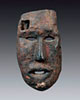
This art comes from the Himalayas, and more specifically from Nepal. Nearly a century after the Cubists and Fauvists discovered the “Negro arts” of Africa and Oceania, half a century after André Breton and Claude Lévi-Strauss exhumed Amerindian and Inuit arts from the storerooms of ethnological history museums, a handful of adventurers, travelers, artists, collectors, and dealers, joined by a few ethnologists, have now unearthed the existence of a new, still largely unexplored continent. |
 |
Published: June 07, 2010 |
|
Mysterious Pavilion 2, The wonder continues: By Raja Deekshithar |
|
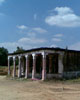 |
In my previous article “Mysterious Pavilion: Document in stone of astronomical events” I reported on my accidental discovery of a pavilion near Mahabalipuram where unusual reliefs on the ceiling expressed astronomical events through unusual symbolism. At that time these reliefs and their astronomical and (art) historical implications seemed to be like the pavilion itself: isolated, away from any relevant link or context in the landscape. A one-off, unique. Amazingly interesting and mysterious. Maybe even impossible to interpret beyond speculation. |
Published: May 20, 2010 |
|
The Miniature Paintings of Mongolian Buddhism: By Stevan Davies |
|
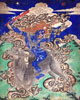
In Mongolia burhani zurags were used by both Mongolian laity and Mongolian monks for devotional purposes and to attract the favorable attention of the deity represented in the painting either to bring benefits or to protect from inimical force. Mongolian miniatures have no standardization in size whatsoever except (by definition) to be small. They are painted on cloth usually and paper occasionally but they are not made of stiff cardboard material and the cloth they are painted on may or may not be sized. |
 |
Published: April 08, 2010 |
|
Tracing the History of a Mughal Album Page in the Los Angeles County Museum of Art by Laura E. Parodi, Jennifer H. Porter, Frank D. Preusser, Yosi Pozeilov |
|
 |
This article presents recent research on a Mughal album page whose image panel bears a date corresponding to 1591 CE. On the basis of the suggestion that certain areas of the recto page may have been repainted, a technical examination focusing on the image panel was carried out. A complex sequence of successive interventions has been documented whose dates span a minimum of seventy years, from the mid-16th to the early 17th centuries. |
Published: March 08, 2010 |
|
Mysterious Pavilion: Document in stone of astronomical events: By Raja Deekshithar |
|
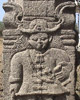
Mamallapuram is a repository of architecture and sculpture created by the Pallava dynasty. Little is known about the Pallava emperors who built it, why they built it and why it was built here. A little away from this busy tourist spot, across a bridge on the other side of s little back-water water, stands an unremarkable pavilion. It looks insignificant and isolated by the side of the road. But the unexpected and unknown treasure it contains is in its own way as mysterious, as significant, and as valuable as the World Heritage Site of Mamallapuram. |
 |
Published: February 01, 2010 |
|
Seeing, Rather Than Looking At, Nepalese Art: The Figural Struts by Mary Shepherd Slusser |
|
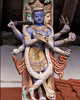 |
Not far from the royal square of the old city of Patan in Nepal is an active Buddhist institution, a monastery in name but one that no longer houses celibate monks. Among several popular names, the most favored is Uku, to which Nepalese append bāhāḥ or bāhāl (from vihāra, Sanskrit for monastery). Ukubāhāḥ is one of the few essentially physically complete and active monasteries among more than 150 that once crowded the small city. |
Published: December 18, 2009 |
|
Indra’s Ratha in Melakkadambur, a Chola Masterpiece by Raja Deekshithar |
|
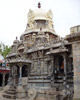
It is one of the least known treasures of South Indian art. Hidden in the isolated village of Melakkadambur, the Amritagateshvara temple is unique for its sculpture, its architecture and its astronomical significance. The shrine has been constructed as a ratha or chariot. |
 |
Published: September 22, 2009 |
|
Sphinxes in Indian Art and Tradition by Raja Deekshithar |
|
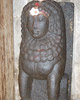 |
A pair of purushamrigas (sphinxes) guard the entrance of the Shri Shiva Nataraja temple in Chidambaram, India. With lion bodies, full flowing and curling mane surrounding their human faces, looking out at the worshippers with a Mona-Lisa-like smile, they accurately correspond to the sphinx so well known from the mythology and art of other parts of the ancient world. |
Published: July 31, 2009 |
|
The Silver Jug of the Lhasa Jokhang: a Reply by Ulrich von Schroeder & Joachim G. Karsten |
|
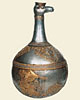
In 2003 Amy Heller published an article, where she attributes the famous silver jug with an animal head in custody of the Lhasa Jokhang indisputably to Tibetan craftsmen. She refutes categorically the possibility that Sogdian craftsmen from western Central Asia could have created this masterpiece. |
 |
Published: July 13, 2009 |
|
NAGESHVARA NATARAJA; 885 by Raja Deekshithar |
|
 |
Nataraja is called “one of the most popular forms of the god Shiva” by the great scholar of South Indian art and architecture, Dr. Douglas Barrett. Following his and other scholars’ work, many authors support the idea that the Dancing Shiva as Nataraja was a tenth century innovation by Chola artists and architects. |
Published: July 06, 2009 |
|
THE LUNGTA COLLABORATIVE: The Living Blessings of Lo by Maureen Drdak |
|
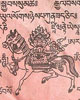
LUNGTA - The Windhorse, is a collaboration of art, music, and dance, premiered to standing room only at the University of the Arts in Philadelphia on March 6th, 2009. The impetus for the collaborative and the imagery for its visual component-the LUNGTA Triptych - springs forth form from that sublime altar of the earth that is the Himalaya—the Abode of the Gods, and from an artistic response to the global impact of accelerating change on its remarkable cultures. |
 |
Published: June 03, 2009 |
|
The Repoussé Images from Pharping by Kamal P. Malla |
|
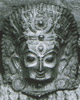 |
This paper attempts to analyze a group of sacred images and objects as the images specifically made for festivities/Skt.utsavamūrtis of the Navadurgās made of gilt copper repoussé. It is focused on the social and cultural functions of these images, and as a historical context, a dated copperplate, too is discussed. |
Published: May 19, 2009 |
|
The Creatures of the Rain Rivers, Cloud Lakes: Newars Saw Them, So Did Ancient India by Gautama V. Vajracharya |
|
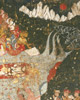
The magnificent works of the Newar artists and architects of the Kathmandu valley include not only paintings, sculptures, residential houses, public building and royal palaces but also water fountains comfortably positioned in public places near the residential area or inside the palaces. This article approaches presents a novel study on the artistic significance of the water fountains and the meaning of the various creatures sumptuously carved on the spouts. |
 |
Published: January 07, 2009 |
|
Reflections on Amy Heller’s Early Himalayan Art by Melissa Kerin, Ph.D. |
|
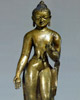 |
A review article: With upwards of 60 exhibitions and collections catalogues on Himalayan art published internationally since 1970, this genre has proven to be the most prevalent and well supported venue for addressing Himalayan material culture. Dr. Amy Heller’s handsomely produced 175-page catalogue, Early Himalayan Art, while not an example of the massive, multi-authored undertaking of late, is indeed a volume of great significance. |
Published: December 29, 2008 |
|
A Painted Book Cover from Ancient Kashmir by Pratapaditya Pal |
|
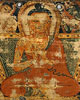
The history of architecture and sculpture from Kashmir’s pre-Islamic past (1st c. BCE – 1300 CE) is well-apprised but nothing is known about painting. No example of pictorial art has yet come to light in the Valley of Kashmir. The purpose of this article is to discuss a painted panel in wood that was introduced in the recent exhibition of the arts of Kashmir. This painted panel is the only known object of its type that can be clearly traced to Kashmir itself and the artists there. |
 |
Published: December 22, 2008 |
|
A four-fold Vairocana in the Rinchen Zangpo tradition at Halji in Nepal by Mimi Church and Mariette Wiebenga |
|
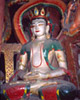 |
Halji is a village of some 85 households in the Limi valley of northwestern Nepal. It lies directly south of Mount Kailash and Lake Manasarovar, separated from them by the Gurla Mandata massif. The village lies between steep rocky mountainsides and small terraced fields that descend to the river. The southeastern entrance to the village suggests the village’s importance as a religious center, with walls and cairns of inscribed stones between two stupas that each arch over the trail. |
Published: October 21, 2008 |
|
The Future of Nepal’s “Living” Goddess: Is Her Death Necessary? by Deepak Shimkhada |
|
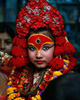
Many sensational articles have recently appeared in the Western media, some with titles such as “Kumari in Peril,” “Kumari Sacked from Her Throne,” “Nepal’s Living Goddess Retires,” and “Nepal’s Living Goddess May Die Soon.” The last title may prove to be prophetic because Kumari, as a tradition, is about to become extinct, if elements of Nepal’s new government and some Western human rights groups have their way. |
 |
Published: September 10, 2008 |
|
Chinese Thumb Rings: From Battlefield to Jewelry Box by Eric J. Hoffman |
|
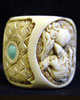 |
It is not often that an implement of warfare evolves into an item of jewelry. But that is precisely what happened with Chinese archer’s rings. From ancient times, archery in Asia was well developed for warfare, hunting, and sport. Archery implements have been unearthed in Chinese tombs going back at least 4000 years. A number of technological developments contributed to the success of archery in north-eastern China. Among these was the use of archer’s rings, called she in ancient China (modern term banzhi). |
Published: September 01, 2008 |
|
The Tibet Artisan Initiative and the Dropenling Handicraft Development Center by Claire Burkert and Tony Gleason |
|
In the heart of the old Tibetan quarter in Lhasa, just a ten minute walk from the Jokhang temple, is the Dropenling Handicraft Center. Because it sells crafts made only by Tibetans, Dropenling has been popular with tourists who want to purchase authentic Tibetan crafts. In 2007, Dropenling became a self-sustaining business whose profits are re-invested into further support of the Tibetan artisan community. |
 |
Published: August 01, 2008 |
|
Mughal Jades - A Technical and Sculptural Perspective by Stephen Markel |
|
 |
As the French physician François Bernier observed in a letter written in 1665 while traveling in Kashmir with the court entourage of the Mughal emperor Aurangzeb, jade was highly valued by the Mughal emperors. Mughal jade working presumably began under the Mughal emperor Akbar, but did not achieve its full efflorescence as an art-form until the reigns of the two great aesthetes of the dynasty, the emperors Jahangir and Shah Jahan. |
Published: July 14, 2008 |
|
TIBET – Monasteries Open Their Treasure Rooms by Michael Henss |
|
A detailed review of a landmark exhibition of the art of Tibet: "monasteries and other institutions like the Potala and the Norbulingka palaces in Lhasa have opened their doors – in many cases for the first time – and sent their treasures abroad, together with cultural relics now preserved in the Tibet Museum at Lhasa...". |
 |
Published: December 25, 2007 |
|
Old Chinese Jades: Real or Fake? by Eric J. Hoffman |
|
 |
No material is more closely associated with China than jade, a stone the Chinese have used and revered for over 7000 years. But whenever growing numbers of collectors are chasing a fixed number of archaic and antique items, a profusion of copies, reproductions, and fakes arises to meet the demand. This article provides some hints on how to avoid being taken in when collecting Chinese jades. The focus is on older Chinese jades, which are typically carved from nephrite jade. |
Published: December 10, 2007 |
|
A Rarity in Chinese Contemporary Art by William Hanbury-Tenison |
|
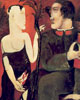
Rarely, if ever, does the auction market afford a comprehensive snapshot of another time and another place. Yet, on the 20th September 2007 at 2pm, Sotheby’s New York will be offering 12 paintings from the 1980s in China at the auction Contemporary Art Asia. |
 |
Published: September 10, 2007 |
|
Snowlions Dancing on Clouds by Thomas L. Guta |
|
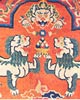 |
Finding
the core of weaving in Tibet is like unravelling a tangled skein. Loosening
and loosening the loops and catches; getting down to the very heart
of the knot, its nub, and seeing it to be but a single strand. The realization
dawns that nothing was ever there. This is the empty ground, the field
of the rug upon which fertile imaginations played. |
Published: August 21, 2007 |
|
Snake earrings of India by Waltraud Ganguly |
|
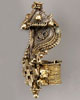
Traditional earrings in the villages and tribal areas of India are manifestations of symbolism, religious meaning and social significance. A woman wears a particular type of earring as a sign of identity, of membership in the defined social group into which she was born. Wearing the specific earrings of her community, she continues the tradition of her ancestors. |
 |
Published: July 20, 2007 |
|
Organic Avatar: Teapot and Drinking Vessel Design Approach Nature from the East and West by Julie Rauer |
|
 |
Nature abounds in Yixing teapots, collaborative late Ming and Qing dynasty masterworks of artist-scholars, potters, calligraphers, poets, painters, and seal engravers. Quintessential literati object of the East, the Yixing teapot is one of dual refinement—as much intellectual vessel as pragmatic artwork—addressing the architecture and forms of the natural world on both intensely cerebral and purely aesthetic levels. |
Published: May 14, 2007 |
|
Auspicious Carpets: A Tibetan View of Aesthetics by Ted Worcester |
|
This seminal article on Tibetan carpets by Ted Worcester article first appeared in The Nepalese-Tibetan Carpet, edited by John Frederick, a special issue for the carpet trade published by Nepal Traveller, January 1993; one of a series of issues on Himalayan carpets. Asianart.com will be publishing further articles from this now rare series. |
 |
Published: May 11, 2007 |
|
A Visit to the Artistic treasures of Maiji Mountain caves by Alok Shrotriya and Zhou Xue-ying |
|
 |
Maijishan, a Chinese word which literally means wheat stack mountain, is the name of a 142 meter high hill located in the Xiaolongshan forest 45 kilometers southeast to the Tianshui city of the Gansu Province in China. Its location is also significant since it lies just a few miles south of the Silk Road. Its topography and location attracted Buddhist monks, artisans and artists who dug out the caves, meditated, sculpted and painted over a period of many centuries. Consequently it was gouged with grottoes and adorned with sculptures and murals from different historical periods. |
Published: April 17, 2007 |
|
Aṣṭasāhasrikā Prajñāpāramitā Manuscript from the Yarlung Museum by Eva Allinger |
|
This manuscript was previously in Keru Lhakhang monastery, Yarlung valley. It is written in ink on palm-leaves and consisting of 139 leaves it has seven lines per page divided into three sections divided by decorative bands of color. A colophon on folio 139v mentions the donor and king Sūrapāla. The manuscript was written in his second year of reign, in the late 11th c. |
 |
Published: December 27, 2006 |
|
Hidden Meanings: Symbolism in Chinese Art by Gary Gach |
|
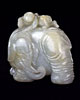 |
Scholar-curator Terese Tse Bartholomew’s work is known to many. Hidden Meanings is an exhibition which opened at the Asian Art Museum October 7, 2006 and runs through December 31, 2006, accompanied by an over-sized, indispensable book. First conceived with her thesis at UCLA, it's the fruit of nearly 40 years' labor, and the results are essential, exquisite, and utterly charming. |
Published: November 29, 2006 |
|
Oriental Sacred Art and the Art of Collecting in the West: By Ana Pániker |
|
There are many kinds of collectors and many reasons that induce people to collect objects: the compulsion to accumulate things, ostentation, emulation, the irrational fascination for a specific kind of object, the pleasure of owning and contemplating, and, lastly, the interest in collecting and classifying objects to obtain an explanation of the culture they represent. Or perhaps, to a greater or lesser degree, all collectors have a measure of all these characteristics at the same time. |
 |
Published: November 14, 2006 |
|
The Last Feast of Lady Dai:By Julie Rauer |
|
 |
Remains of Lady Dai’s last feast—provisions to span the ages—still linger in her sublime lacquerware, vestiges of beverages and comestibles lurking amongst some of the sixteen distinctive types of lacquer objects discovered. Testament to the legacy of longevity, the corpse of Lady Dai at once reveals a luxurious existence of sedentary pleasures, exceedingly rich diet, and rampant lifestyle intemperance—mitigated by the remarkable effectiveness of Chinese medical ideas, calculations, techniques, and practices. |
Published: November 02, 2006 |
|
Tracing the Reception and Adaptation of Foreign esthetic elements in Tibetan sculpture: By Amy Heller |
|
Criss-crossed by trade routes since time immemorial, the earliest historic records of Tibet in the 7th century describe a flourishing kingdom actively engaged in political and matrimonial alliances with rival tribes and foreign powers. To appreciate how the Tibetans developed their distinctive fusion and adaptation of foreign styles and techniques, this article examines the multiple influences inspired by the arts of Central Asia and China, as well as of India and the Kashmiri and Nepalese schools. |
 |
Published: September 20, 2006 |
|
Klee's Mandalas:By Julie Rauer |
|
 |
Klee’s mandalas, both his kaleidoscopic middle eastern cities of iconic character and timeless historical presence in the psyche of mortal thinkers and builders, and his graphically arresting portraits of interior landscapes made manifest, curl through the waking and dreaming minds of those who see rather than simply observe, uncoiling with the sinuous architectural grace of the human body and the eternal philosophical searching of the human mind. |
Published: June 27, 2006 |
|
West meets East: Making a Murti in Kathmandu: By Karla Refojo |
|
For the last five years, Karla Refojo has been working in the Kathmandu Valley with Newar bronze casters to create a larger than life-sized murti, or sacred statue. This article is a brief account of her experiences and the incredible and challenging process by which a statue was created and a sculptor was transformed. |
 |
Published: May 12, 2006 |
|
Stripes and Patterns: The Significance of Locality and Social Relationship in Textile Designs in Eastern Indonesia:By Krista Knirck-Bumke |
|
 |
Textiles are a sign of belonging to a certain locality and/or ethnic group of people. In a more specific way, the social relationships are expressed in the layouts and patterns that these textiles expose. Textiles are a means to bind the traditional groups of kin visibly together and underline the existing social ranks. |
Published: April 17, 2006 |
|
The Lhasa gtsug lag khang: Observations on the Ancient wood Carvings: By Amy Heller |
|
In the ninth century inscriptions on the Karchung rdo ring, the foundation of the Lhasa gtsug lag khang, the most revered Lhasa temple, is attributed to the reign of Srong btsan sgam po. The Tibetans had encountered the marvels of Buddhist art as an indirect result of their military expansion towards the Himalaya as well as to the Silk Routes and China. |
 |
Published: April 07, 2006 |
|
The Lhasa gTsug lag khang ("Jokhang"): Further Observations on the Ancient Wood Carvings:By Mary Shepherd Slusser |
|
 |
The role of Newar carpenters from the Nepal Valley in decorating the interior of the gTsug lag khang, Lhasa’s revered Jokhang, has been long recognized. Traditionally, the Nepali carvings are dated about the middle of the seventh century, and in them they expressed the unmistakable aesthetics that characterized their homeland, politically the domain of the Licchavi dynasty. |
Published: February 07, 2006 |
|
Fathomless Skin: By Julie Rauer |
|
One of the more resonant echoes of the human imperative to venerate nature by virtue of mimicry has been virtually overlooked thus far. Chinese lacquer, particularly the inlaid and carved polychrome Yuan and Ming dynasty masterpieces, evolved in both materials and technique to embody the strongly analogous structure and singular, intrinsic properties of arthropod physiology. |
 |
Published: January 13, 2006 |
|
Untitled Identities: Contemporary Art in Lhasa, Tibet:By Kabir M. Heimsath |
|
 |
Contemporary art in Tibet has to do with a much wider field than thangka painting and it should be considered independently of that specific tradition. There is an overt effort on the part of artists in Lhasa to break down the norms and expectations both of the western art world as well as the western Tibetophile world that ignores their paintings. |
Published: December 16, 2005 |
|
A note on a disputed Khmer sculpture of three figures from the Bàkoṅ known as the Lord Umāgaṅgāpatīśvara: By Annette L. Heitmann |
|
At the time of its apogee (ca. 9.-13. c.) ancient Khmer culture created sculptures at a temple complex known as the Bàkoṅ, about 15 km SE. from present-day Siem Rǎp, Cambodia, that proved to be influential markers for a tradition culminating in the accomplishments of Aṅkor Vat. Time’s grains of sand have worn away some of its former beauty. But the enduring solid material of the temple has preserved the monument with its inscriptions so well that its original set up and purpose are now, after efforts of restoration, evident upon sight. |
 |
Published: November 21, 2005 |
|
Conservation and Digitisation of Rolled Palm Leaf Manuscripts in Nepal:By Naoko Takagi, Yoriko Chudo, Reiko Maeda (Members of Paper Conservators Asia Unlimited) |
|
 |
During the summer of 2005, the conservation and digitisation of 400 rolled palm leaf manuscripts with clay seals housed at the Asa Archives in Kathmandu was carried out over a period of 6 weeks. The Asa Archives is a public library in Kathmandu, Nepal named after the late Mr Asha Man Singha Kansakar, father of the late Mr. Prem Bahadur Kansakar (1917-1991), a prominent activist, social worker, educationist and Newar writer who had founded several social, cultural, literary and educational institutions. |
Published: November 14, 2005 |
|
Through the Jalis: Europe's Nineteenth Century Romance with Orientalism: By Julie Rauer |
|
Danger, romance, violence, eroticism, mystery, nobility, languor, and exoticism delineated the Eastern silhouette in 19th century Western eyes, launching an abiding fascination with the Orient that infused staid European air with sandalwood, frankincense, and myrrh. The handsome chambers of the Dahesh Museum of Art in New York City have been host to three Orientalist exhibitions most recently A Distant Muse since the museum’s founding in 1995. |
 |
Published: October 28, 2005 |
|
CT Scans in Art Work Appraisal: By Dr Marc Ghysels |
|
 |
Just as the technique of computed tomography imaging revolutionized the practice of medical diagnosis in its time, contemporary use of CT scanners in the art world could ultimately change the way some works are appraised. The quality and reliability of the images produced by a CT scanner literally "undress" the art work and reveal its internal structure. (also in French) |
Published: October 25, 2005 |
|
The Metal Sculpture of the Khasa Mallas: By Ian Alsop |
|
The Khasa Mallas must be counted among the least known and the most fascinating of all the Himalayan ruling families. In their heyday from the 12th to the mid 14th century they ruled a sizeable kingdom made up of large portions of West Nepal and West Tibet. They were patrons of the arts, and they oversaw and encouraged a bronze casting tradition that produced metal sculptures of great beauty. |
 |
Published: August 26, 2005 |
|
Steaming Down the Mekong: By Mary S. Slusser |
|
 |
A dour, broken country of "dark impoverishment" now so it is described and of speedboats that rocket down the Mekong "like demented drag-car racers," it would be a world apart from tranquil Mekong travel and the beguiling land that was Laos fifty years ago. That another generation might share those bygone days seemed reason to revive this paper... |
Published: February 14, 2005 |
|
Soma, Offertory and Elixir: By François Pannier |
|
This Tibetan offertory cover is a rare and exceptional object which has until now only been described briefly. It is a head, skinned rather than stripped of flesh, in gilt iron with traces of colour - red for the mouth and blue for the hair; it is 36 cm in height, 19 cm in diameter at the ears and 16 cm at the base. Using the information obtained in Giuseppe Tucci's research, we will try to support the hypothesis of the object's function in rituals, and this will lead us to India, Gandhara and Tibet. (also in French) |
 |
Published: December 30, 2004 |
|
Elements of Newar Buddhist Art: Circle of Bliss: By Gautama V. Vajracharya |
|
 |
This article is a critical study of the Nepalese art and iconography discussed in the Circle of Bliss, Buddhist Meditational Art, an exhibition catalogue, by John Huntington and Dina Bangdel with the contribution of graduate students of Ohio State University, Columbus and some other scholars. The materials are collected and presented in the catalogue and other related works with a great effort to surpass previous scholars in excellence and achievement. This endeavor deserves admiration. |
Published: December 22, 2004 |
|
Victorious Durga: By Krista Knirck-Bumke |
|
The Museum Nasional has 32 Durga sculptures on display. They originate from various areas in Java dating from the 7th to the 15 th century, the Hindu-Buddhist period in the history of the Indonesian archipelago. The figures broadly come from three different areas of Java: West Java, Central Java and East Java. |
 |
Published: June 03, 2004 |
|
Contemporary Japanese Ceramics: By James Singer |
|
 |
The ceramic tradition in Japan is the most ancient on earth, yet one that has found vital forms of expression in the modern world. Some contemporary Japanese ceramics reflect centuries old traditions while others incorporate elements from an increasingly international arena. Many do both simultaneously. The ceramics presented in this exhibition include work by a number of contemporary artists and illustrate, in a necessarily subjective fashion, their creativity, technical virtuosity and diversity. |
Published: May 03, 2004 |
|
Metal and Stone Vestiges: By John Vincent Bellezza |
|
This article focuses on two of the most important artistic media in ancient Tibet: rock art and small metal objects. We will examine petroglyphs (carvings on rock surfaces), pictographs (rock paintings) and copper alloy artifacts known as thokchas, which range in age from deep in the pre-Buddhist period to the first five centuries of Tibetan Buddhism. |
 |
Published: April 29, 2004 |
|
Exaggerated Enmity in Early Modern Indonesian Painting: By Adrienne Fast |
|
 |
On October 23, 1938, a group of young Indonesian artists met in an elementary school classroom in Jakarta for the inaugural meeting of Persagi, the first platform for the organisation of Indonesian artists. Persagi members wrote art critiques and reviews, held classes and discussion groups, and organised exhibitions until 1942, when the group was forcibly disbanded. Yet many of the artists associated with Persagi then went on to help found other artists' groups and to teach members of the next generation of Indonesian artists. |
Published: February 23, 2004 |
|
Tantric Hinduism in Khmer Culture: By Emma C. Bunker |
|
Tantric Hinduism already had a significant presence in India by the middle of the first millennium CE, when scriptural texts (tantras) began to be compiled. “Tantras (texts) clearly state that scripture is the necessary complement to the oral teachings one receives from the mouth of one’s guru.” Much of this literature contains descriptions of deities in the form of precepts for meditation and complex mythologies that served as verbal models for artists. |
 |
Published: November 18, 2003 |
|
Ivory Carving in Thailand: By Daniel Stiles, Ph.D |
|
 |
Very little is known about the history and artistic aspects of ivory sculpture in Thailand. No art book has ever been devoted to it. This contribution aims to present an introduction to ivory carving in Thailand based on two months of research in Bangkok and central Thailand in early 2003 supported by the National Geographic Society. |
Published: August 14, 2003 |
|
Thangka Restoration and Conservation: By Marion Boyer & Jean Michel Terrier |
|
One of the defining technical characteristics of a thangka, its most distinctive feature, is that it is painted on both sides. Thangkas are painted on a canvas support prepared and coated on both sides. Thangkas are rolled, as Chinese and Japanese works often are. The back of a thangka is as carefully prepared as the front, so that consecrated formulas, mantras, and other religious or historical writings can be inscribed on it. |
 |
Published: June 19, 2003 |
|
Conservation Notes on Some Nepalese Paintings: By Mary Shepherd Slusser |
|
 |
Five of the paintings presented here are now, or will be, in the collection of the Virginia Museum of Fine Arts in Richmond, Virginia. All have undergone conservation, for the most part minimal but occasionally quite extensive. This report, including pre-restoration photo documentation, is therefore prepared as an aid to scholars and conservators who may be concerned with them. In case of doubt it clearly establishes what is original and what is not. |
Published: May 19, 2003 |
|
Correlating Paintings of Indian Decorative Objects: By Stephen Markel |
|
Scholars of South Asian sculpture are well aware of the complications involved in attempting to correlate various iconographic textual descriptions with surviving images. Due to the wide range of regional, temporal, sectarian, and artistic variations, it is often unusual to find a close one-to-one match in terms of form and attributes. The situation in correlating decorative objects represented in Mughal and Rajput paintings with extant examples is, unfortunately, much the same as the text-versus-image dilemma. |
 |
Published: February 24, 2003 |
|
Wood and Transience: By Vinayak Bharne & Iku Shimomura |
|
 |
In Japan the notion of Setsuna, meaning transience imparted to wood the same materiality of life and death as at the heart of human consciousness. It embodied an architecture of ephemerality, every building type be it a house, shrine, temple or castle using wood as its building material to bear the unpredictability of Japan's typhoons and earthquakes. This philosophical and pragmatic resultant evolved a distinctly Japanese culture of wood - that through renewal and rebuilding ritualized the transience of timber as its greatest celebration. |
Published: February 06, 2003 |
|
Ivory Carving in Myanmar: By Daniel Stiles |
|
Very little is known about the history, technical aspects and artistic features of ivory sculpture in Myanmar (Burma). Kunz devotes one paragraph and St. Aubyn does not even mention Myanmar in their seminal reviews of ivory art around the world. This paper aims to help fill this gap in our knowledge of Southeast Asian art by presenting the results of six weeks of research in 2002 with ivory carvers in Mandalay, Myanmar, sponsored by the National Geographic Society. |
 |
Published: November 19, 2002 |
|
The Silver Jug of the Lhasa Jokhang: By Amy Heller |
|
 |
At present, a silver jug stands in a wooden frame in one of the chapels of the Lhasa Jokhang, traditionally regarded as the oldest temple in Tibet. The people represented on the jug reflect Tibetan familiarity with their neighbors’ appearance and customs. The Tibetans believe this jug to be associated with Songtsen gampo, the first historic ruler of Tibet. |
Published: July 18, 2002 |
|
Darkness and Light: By Goetz Hagmuller |
|
In Asia, light and darkness seem to be much closer together than in our minds. As two sides of the same coin they belong to each other. What our occidental intellect divides into particles, opposites, contrasts, and cause and effect, in the holistic world view of the Orient appears as a whole, a totality with no distinct borders, both this and the other, yin and yang, darkness and light. |
 |
Published: March 29, 2002 |
|
Vanishing Dances of Ladakh: By Joseph Houseal |
|
 |
Today, there remain only three monasteries of the Drikung Vajra order performing intact the great ceremonies of dance. Other orders perform similar dance festivals, but the caliber of dancing varies due to many factors. Among these others, Hemis monastery has led the way in turning the sacred dances into a regional Gilbert and Sullivan entertainment for tourists. |
Published: February 14, 2002 |
|
A Kushan-period Sculpture from the reign of Jaya Varma, A.D. 185: By Kashinath Tamot and Ian Alsop |
|
In April 1992 workers digging a trench for the foundation of a house in Ma-liga-on stumbled across the most important art historical discovery in the Kathmandu Valley for many years. Lying face-down at a level of about three feet they found a life size (171 x 49 cm) standing male figure carved in pale sandstone. |
 |
Published: July 10, 1996 (Updated December 25, 2001) |
|
The "Art" of Conservation By Erich Theophile |
|
 |
Coming out of the closet about subjectivity and contradictions in an architect's conservation practice: This article grows out of Erich Theophile's introduction to building conservation in 1988 while assisting architect Götz Hagmaller in the restoration of an 18th century palace to house the Patan Museum, Nepal. |
Published: October 4, 2001 |
|
Tashi Kabum: A Cave Temple associated with Luri Gompa in Upper Mustang, Nepal: By Gary McCue |
|
Mary Slusser, in an article on this same cave temple, wrote in 1999 that other scholars "had sought (this temple) in vain following an American trekking guide's signal sometime after 1992, the year Mustang was opened to foreigners.” (Slusser and Bishop, 1999, p. 20) Gary McCue was that guide, and this is his account of the cave temple. |
 |
Published: June 18, 2001 |
|
Pata-Chitras of Orissa: An Illustration of Some Common Themes: By Bernard Cesarone |
|
 |
The state of Orissa in northeast India has a long tradition in various arts, including dance, architecture, and painting. Among the painting traditions, the devotional art of the pata-chitras, or paintings on cloth, is a folk or popular style that centers around the worship of the god Jagannath (or Jagannatha) but that depicts many other religious themes as well, using the strong line and brilliant color that are typical of Orissan folk painting. |
Published: May 16, 2001 |
|
Kuber Singh Shakya: A Master Craftsman of Nepal: By Mary Shepherd Slusser and James A. Giambrone |
|
The metallurgical arts of ancient Nepal have long been famous and their antiquity well established. Moreover, despite the well-entrenched opinion that "no living art supports [Nepal's rites and festivals] any longer," the metallurgical arts at least, yet thrive in the creation of quality sacred art that can hold its own with the best of the past. |
 |
Published: April 19, 2001 |
|
Demons & Deities: Masks of the Himalayas: By Thomas Murray |
|
 |
The powerful imagery of the Himalayan mask tradition is drawn from the diverse traditions of shamanism, village myths and the classical traditions of Buddhism and Hinduism. In this essay the author probes the 'greater context' of Himalayan masks, finding in them stylistic and thematic affinities with cultures as widespread as those of Eurasia and the Americas, and covering a period extending from the upper Paleolithic era to the presen |
Published: January 16, 2001 |
|
The Lukhang: a hidden temple in Tibet: By Ian A. Baker |
|
The wall inscriptions that accompany many of the specific images are drawn from a 15th century work entitled Kunsang Gongdu, The Realization of Vast Beneficence, a compendium of Dzogchen teachings revealed by the Terton, or "treasure revealer", Pema Lingpa. The Lukhang murals illustrate key episodes in the life of this great master, a direct ancestor of the Sixth Dalai Lama who is credited with the Lukhang's original design at the turn of the 17th century. |
 |
Published: January 04, 2001 |
|
Images of Lost Civilization: The Ancient Rock Art of Upper Tibet: By John Vincent Bellezza |
|
 |
A rock art tradition found on the highest parts of the Tibetan plateau chronicles at least 3000 years of a fascinating but little known civilization. These images in stone are one of our clearest windows into the nature of early civilization in Tibet and they are invaluable to our understanding of the pre-Buddhist economy, environment and religion. They provide us with graphic evidence of early Tibet for they were wrought by the very hand of her inhabitants. |
Published: November 22, 2000 |
|
Whiff of Luxury: By Norman A. Rubin |
|
The Mary and George Bloch Chinese snuff bottle collection is a unique assemblage that combines the expression of artistic craftsmanship with creative Chinese ingenuity. Mary and George Bloch have accomplished a collector's dream. They have, within the relatively short period of fifteen years, assembled an extensive and valuable collection of one of the finest crafts of Chinese artisans. |
 |
Published: November 17, 2000 |
|
The Synthesis of European and Mughal Art in the Emperor Akbar’s Khamsa of Nizami: By Gregory Minissale |
|
 |
The purpose of this article is to examine the adoption of the European techniques of sfumato, modeling and stereoscopic perspective in the Khamsa illustrations and then to trace the European sources for the motifs of some the key miniatures. In this regard, it is necessary also to look at the use of motifs taken from European maps for Mughal background landscapes, which is a subject that has not been dealt with in Mughal art history. |
Published: October 13, 2000 |
|
Trance-Dancers of the Goddess Durga: By Hamid Sardar |
|
Ancient Nepali chronicles agree that "no dramatic performance equals that of the Harasiddhi priests." The manifestations of the Mother Goddess and her retinue of deities possess the dancers, intoxicated on sacrificial blood and alcohol. A hypnotic musical score, punctuated by symbolic gestures accompanies the spectacle whose secret meanings remain closed to the non-initiate. |
 |
Published: August 17, 2000 |
|
Phagpa Lokeśvara of the Potala: By Ian Alsop |
|
 |
Who is Phagpa Lokeśvara? How old is his image and where was it made? For the answer to the first question we must turn to Tibetan religious history; for answers to the other two, we must attempt a stylistic analysis without, alas, a direct view of the figure itself, working only with the shadows left by countless pious copyists.... (originally published in Orientations, April 1990) |
Published: December 14, 1999 (Updated August 4, 2000) |
|
Ghosts, Demons and Spirits in Japanese Lore: By Norman A. Rubin |
|
Belief in ghosts, demons and spirits has been deep-rooted in Japanese folklore throughout history. It is entwined with mythology and superstition derived from Japanese Shinto, as well as Buddhism and Taoism brought to Japan from China and India. Stories and legends, combined with mythology, have been collected over the years by various cultures of the world, both past and present. Folklore has evolved in order to explain or rationalize various natural events. |
 |
Published: June 26, 2000 |
|
Wangden Meditation Weaving: By Rupert Smith |
|
 |
Wangden was once famous throughout Tibet for its unique style of carpet weaving, practiced nowhere else in Tibet, and in great demand by monasteries from Lhasa to Amdo to Ladakh. Wangden carpets were used as meditation mats by the Fifth Dalai Lama, and every year a new set of Wangden runners was woven for use by monks participating in the Great Monlam Prayer Festival in Lhasa, the first and largest religious gathering of the Tibetan Buddhist year. |
Published: March 31, 2000 |
|
Conservation of a 5th century Buddhist Manuscript: By Susan Sayre Batton |
|
In the fall of 1998, a professional numismatist, with a specialty in Classical antiquity, brought an early manuscript to my studio for consultation. The elongated leaves were brittle, compressed together, water damaged, and folded into a tight "S" curve, like a wad of dollar bills after the wash cycle. This manuscript was found in the Bhamiyan cave region in modern Afghanistan, purportedly from the 5th century, on birch bark, and written in the Kharoshti script. |
 |
Published: February 21, 2000 |
|
The History of an Indian Musical Instrument Maker: By Steven Landsberg |
|
 |
The shop of Kanailal and Brother was located in a cultural oasis, known as the Barabazar area of Calcutta. Both the renowned poet-philosopher Rabindranath Tagore and the maharaja Sourendra Mohan Tagore, a great patron of the arts, lived in the same area. Many musicians, poets, and writers inhabited this cultural belt of early twentieth century Calcutta and gave it the aesthetic color and feeling that is to this day an inspiration for many of Bengal's contemporary artists. |
Published: February 4, 2000 |
|
A New Ceiling for the Roof of the World: By Broughton Coburn |
|
The Thubchen Gompa, dedicated to Sakyamuni, Buddha of The Present, is located within the walled city of Lo Manthang, the capital of the formerly forbidden Kingdom of Mustang, a cultural relic of Tibet near the Nepal-Tibet border. The American Himlayan Foundation has embarked on an ambitious project to conserve and restore this ancient building and the precious paintings found within it. |
 |
Published: January 20, 2000 |
|
Changthang Circuit Expedition 1999: By John Vincent Bellezza |
|
 |
While Tibet is synonymous with Buddhist learning and culture, its civilisation extends much further back into antiquity than the Buddhist period. My findings demonstrate that Tibet supported a sophisticated culture long before the dawn of the Buddhist era in the 7th century. This earlier civilisation is closely connected with the Bon religion, an indigenous belief system which seems to have been enriched by various traditions coming from adjoining countries. |
Published: December 9, 1999 |
|
The Giant Thangkas of Tsurphu Monastery: By Terris Temple and Leslie Nguyen |
|
Each great monastery in Tibet once possessed giant silk applique hangings for public display and worship. These often huge banners comprise some of Tibet's greatest art treasures because of their spiritual significance, size and intricate design. Some survived the cultural revolution - most did not. The giant banners of Tsurphu monastery in central Tibet-traditional seat of the Karmapas-were both destroyed during this time. |
 |
Published: December 5, 1995 (Updated October 08, 1999) |
|
Thogchags, The Ancient Amulets of Tibet: Text by John Vincent Bellezza |
|
 |
Thogchags are Tibetan talismans made of bronze and meteoric metals dating as far back as the Bronze Age. While precise dates for the Tibetan Bronze Age have yet to be formulated, archaeological evidence from various sites around the country indicate that it began no later than the beginning of the Second Millennium BCE. An unbroken tradition of producing amulets extends into the Iron Age and Buddhist periods creating a cultural legacy several thousand years old. |
Published: June 1, 1999 |
|
The Murals of Baiya Monastery: By Jonathan Bell |
|
The murals of Dege County's Pewar (Ch. Baiya) Monastery are truly exquisite works of art that embrace their subject matters with a mixture of vivid color and painstaking detail. From ghastly esoteric scenes of demons wearing human skins to the serenity of buddhas seated in meditation, the depictions on the walls of the temple and upper prayer room comprise a mixture of stylistic influences from within and outside Tibet. |
 |
Published: March 8, 1999 |
|
New Archeological Discoveries in Tibet: By John Vincent Bellezza |
|
 |
In August and September of 1998 the author discovered a series of pre-Buddhist archaeological sites in the western Tibet province of Ngari (mNga' ris). Located in close proximity to what had been important prehistoric sources of fresh water, these ancient sites include burial mounds, villages and ceremonial structures. Situated at 4500 meters in the Changthang (Byang thang), the vast northern plains of Tibet, these finds significantly add to our knowledge of Tibet before the spread of Buddhism in the 7th to 11th centuries. |
Published: December 17, 1998 |
|
Augmented Nationalism: The Nomadic Eye of Painter M.F. Husain (b. 1915): By Shyamal Bagchee |
|
A study of the art of India's most famous living painter, Maqbool Fida Husain (known to millions of his admirers simply as Husain), by Shyamal Bagchee of the University of Alberta English Department. This wide ranging article examines Husain's art from the perspective of his, and the author's, Nationalism: "A point that is often missed by critics writing about Husain is that he operates out of probably the one country in the world that can mount a really serious challenge to the so called new imperialism of a postmodern, post-rational, fast replicating, information proliferating, media-dominated, United States of America." |
 |
Published: July 3, 1998 |
|
The Conservation of Tibetan Thangkas: By Ian Alsop |
|
 |
The Conservation of Tibetan Thangkas consists of a series of articles presented at papers to the Western Association for Art Conservation (WAAC) Annual Meeting in Santa Fe New Mexico in September 1992. The articles include technical notes and procedures and photographs of various stages of conservation. Published in Asian Arts 3/5/98, with kind permission of WAAC and the authors. |
Published: March 5, 1998 |
|
Bangladeshi Arts of the Ricksha: By Joanna Kirkpatrick |
|
The three wheeled pedicab or cycle ricksha of Bangladesh has been around at least since the late forties and the partition of India. In those days they were left more or less undecorated. Sometime in the sixties it began its development into a "peoples' art" that combines folkloric, movie, political and commercial imagery and techniques. It serves the expression of heart's desires of the man in the street for women, power, wealth, as well as for religious devotion. |
 |
Published: December 5, 1997 |
|
Early Portrait Painting in Tibet: By Jane Casey Singer |
|
 |
One facet of Tibetan iconic art is to be found in early portrait paintings. Portraiture figured prominently in Tibetan art between ca. 1000 and 1400 A.D., and yet almost nothing is known about its functions and its significance. This essay addresses two main questions: What aesthetic and theoretical guides did artists observe in painting historical persons? And what social, political, and religious purposes did portraiture serve in pre-fifteenth century Tibet? |
Published: November 30, 1996 |
|
China Exploration & Research Society: Conserving Tibetan Art and Architecture: By Pamela Logan |
|
The goal of the China Exploration and Research Society (CERS) projects in Tibet is to save some of the last intact monasteries on the eastern plateau. Internationally known experts are teaching Tibetans how to repair traditional buildings while retaining as much original material as possible. (Asianart.com is delighted to be able to host the CERS site here, where researchers will be periodically updating the site with CERS activities.) |
 |
Published: CERS: November 13, 1996 |
|
Intro to Kathmandu University Department of Music: By Gert-Matthias Wegner |
|
 |
The musical traditions of Nepal are as diverse as the various ethnic groups of the country. The most complex musical culture in the Himalayas is that of the Newar in the Kathmandu valley which in the course of the past 2000 years has absorbed mostly Indian influences shaping a unique musical tradition. |
Published: April 17, 1996 |
|
Images of Earth and Water: The Tsa-Tsa Votive Tablets of Tibet: By Juan Li |
|
In 1938 after returning from one of his extensive expeditions to Ladakh and Western Tibet, the great Italian tibetologist Giuseppe Tucci published a volume on Stupa symbolism as part of the Indo-Tibetica series. The second part of this pioneering study is dedicated to the votive clay tablets known as tsa-tsa. Although Tucci was not the first to write about tsa-tsa, his study remains the only extensive exploration of this art form. The present article aims at updating some the information on this neglected area of studies. |
 |
Published: November 11, 1995 |
|
Introduction to the Art of Mongolia: By Terese Tse Bartholomew |
|
 |
Tibetan Buddhism, a highly ritualistic religion with a huge pantheon of gods and goddesses, inspired the religious art of Mongolia (fig. 1). As in most religions, there is a need to create cult images in painting and sculpture, as well as ritual objects and other paraphernalia associated with worship of the deities.The objects in this exhibition associated with religious worship date from the seventeenth to the twentieth centuries and are the result of the second wave of conversion to Buddhism in Mongolia. |
Published: September 7, 1995 |
|
A Taglung Lama: By Jane Casey Singer |
|
This charming thirteenth century portrait depicts a religious hierarch from the Taglung branch of the Kagyu order of Tibetan Buddhism. Wearing monastic robes, he is seated on a throne whose symbolic significance reflects the considerable spiritual authority which the hierarch enjoyed in his day. Mountain staves, indicating that the central figure is meant to appear within a mountain cave, surround him and his attendants in the upper and side registers. |
 |
Published: March 17, 1995 |
|
An Early stone fragment in Central Nepal: By Thomas Pritzker |
|
 |
Just south of the town of Arughat, along the Buri Gandaki River in central Nepal there is a small hot spring which has been channelled into a public bath. Next to this bath are two small buildings which over the centuries were used as Buddhist and then Hindu shrines. While there are a number of sculptures of interest I would like to point out a fragment which is in the wall of the southernmost building. The figure on the left shows the visible portion of this fragment. |
Published: March 17, 1995 |
|
Licchavi Caityas of Nepal: A Solution to the Empty Niche: By Ian Alsop |
|
Among the curious puzzles of early Nepalese sculpture and architecture are the empty niches of the lovely Licchavi stone caityas that dot the Kathmandu valley. These elegant caityas are fully decorated, often with exquisitely detailed carvings, but the niches where one might suppose the figures of the Buddhas and Bodhisattvas would normally reside, are vacant. |
 |
Published: March 17, 1995 (Updated Feb. 10, 2000) |
|
Tsakli:Tibetan Miniature Ritual Paintings: By Juan Li |
|
 |
Among the numerous items employed in Tibetan ritual is a genre of miniature painting little known in the occident and rarely spoken of in the liturgical literature translated into western languages. These are the 'Tsakli' or 'Initiation Cards' . Tsakli paintings are employed in numerous ritual situations such as empowerment, ritual mandalas, transmission of teachings, substitutes for ceremonial items, visualization aids and funerals. |
Published: March 17, 1995 |
|
|
|